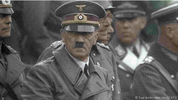
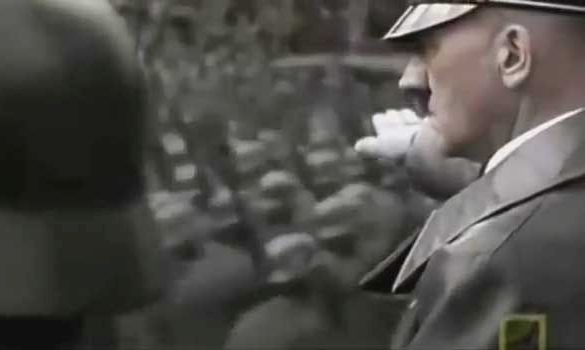

Karl Dönitz
Hitler's Successor: A Loyal Serviceman
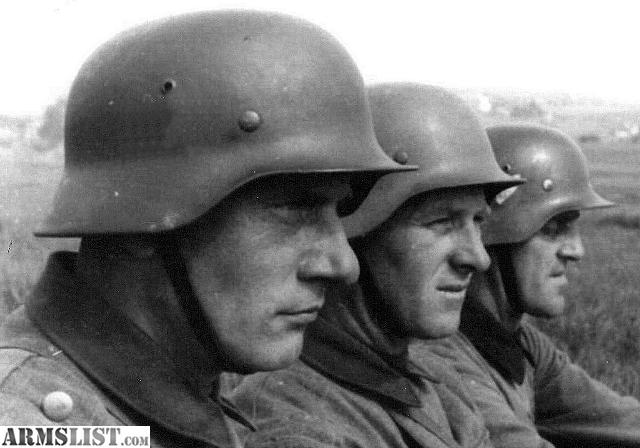
During the Second World War, German U-boats became famous worldwide for their elusive movements and devastating destructive power. They were the pride of the German navy. Yet three-quarters of their crews never returned. On the Allied side, 30,000 people died. Vast numbers of lives were lost on both sides. Command of the operations was entrusted to one capable officer. A man who won the Führer's confidence and rose to become Hitler's successor: Karl Dönitz.
(K. Tettelbach, then a German staff officer): "As a soldier, Dönitz remained utterly loyal to Hitler as supreme commander. He obeyed Hitler's orders even when he disliked them. That was the kind of man he was."
(R. G. Buchheim, then a war correspondent) ‘When the man at the top of the navy became deeply bound to Nazi ambitions, tragedy was assured. He bears responsibility for driving so many soldiers to their deaths.’
(O. Kretschmer, then a U-boat commander): "He was a one hundred percent patriot. In other words, he regarded every citizen, himself included, as a servant of the German homeland."
Faithfulness to duty would ordinarily be a soldier's praiseworthy virtue. Yet after the war, Dönitz was tried precisely for it.
[(Dönitz in court, November 1945): "I swear in God's name to tell the unvarnished truth and conceal nothing." "I consider waging the war to have been the right choice. I acted according to my conscience. I would act the same way again."]
Early Life
Berlin at the end of the nineteenth century. Patriotism, reverence for the fatherland and emperor, lived in many citizens’ hearts. Karl Dönitz was born into that environment in 1891. His mother died early, and he and his brother were raised by their father, an engineer. In this all-male household, obedience to rules took precedence over expressions of affection.
Karl was not particularly sociable, but he was an excellent student. From an early age he dreamed of becoming a naval officer. In 1910 he entered the naval academy at Flensburg in northern Germany. Cadet Karl was full of hope. Two years later, however, his father died. Having lost both parents on whom he could depend, the young man sought emotional support. Around that time he was assigned to Captain Loewenfeld, who thereafter became the object of his admiration and affection.
By the outbreak of World War I, Dönitz had become a brave, dashing career serviceman. During the war he encountered what would shape his life: the navy's outstanding new weapon, the U-boat. In 1918 he became a U-boat commander, but defeat soon followed. While he was a prisoner in Britain, revolution broke out in Germany and a republic was established.
Released in 1919, he returned to a homeland still in turmoil. Dönitz rejoined the German navy, which had barely been permitted to survive. Those around him considered him diligent and prudent, but one confidential assessment also noted: “Strong desire for self-display.”
[“Work wanted” — a job seeker wearing a placard around his neck]
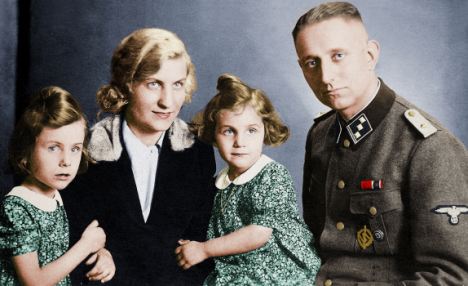
A severe economic crisis. Having a job at all was fortunate, but the Dönitz family's finances were strained. He had married young and had three children.
(Dönitz's daughter U. Hessler): “After the twentieth of each month, there was usually nothing but porridge or soup on the table. Money must have been very tight. But my mother was never good at managing a budget, so it was not entirely my father's earnings that made things difficult.”
A U-Boat Commander under Hitler's Regime
One man exploited the public's sense of crisis to gain power. Adolf Hitler stirred up the desire for a mighty Germany and rapidly captured votes.
<[January 1933: Hitler's government is formed]>
Even the Nazis' violent behavior appeared to people as evidence of strong leadership.
⟨(Hitler's speech) “My goal is to sweep thirty political parties out of Germany.”⟩
The strong leader began by eliminating obstacles. The German navy obeyed the new head of state unconditionally. Like many military men, Dönitz welcomed this resolute leader. The Hitler regime's rearmament plans particularly appealed to his ambition for military glory.
〈[Film from the early Nazi regime, 1933] “We march. Our destination is England.” “That is the signal to move.” “The British army.” “Come on, let's go.”〉
In 1936, Dönitz was selected to command the U-boat fleet as a captain. He developed a submarine strategy. His enthusiasm and extensive knowledge attracted even Hitler's attention.
(H. von Schröter, then a U-boat captain): “Whenever Dönitz was asked for a report, he had all the material ready by the following morning. He discussed U-boat development and training clearly. His rapid assessment of situations and decisiveness distinguished him as a commander.”
The naval commander-in-chief at the time regarded large battleships, rather than submarines, as the strategic cornerstone. With Hitler's approval, plans for giant battleships began before the war.
[Battleship Bismarck]
Dönitz, however, doubted the emphasis on battleships. Germany's formidable naval enemy was the island nation of Britain, with its vast fleet. One key to defeating Britain was cutting its sea trade routes. Dönitz emphasized submarines' advantages in mobility, but his advice still went unheeded.
⟨[August 1936: Berlin Olympics. The Nazis showcase Germany's prestige and peace.]⟩
Behind the façade of peace, racial prejudice and violence raged. Hitler had already mapped out his timetable toward war.
War Begins: U-boats in Action
〈[September 1939: the Second World War breaks out]〉
By the late 1930s, the German navy was far weaker than Britain’s. News of the outbreak of war shocked Dönitz.
(H. R. Rösing, then a U-boat commander) ‘He withdrew to his room and emerged about half an hour later. In that time he had calmed himself and come to terms with the reality facing him. It was very characteristic of him. He said firmly, “We must do it. However hopeless the situation, we must fulfill our duty.” In fact, at the time the German navy seemed to have almost no chance of victory.’
Dönitz had only about fifty U-boats at his disposal. He ordered surprise attacks. The British passenger ship Athenia was torpedoed without warning, and 112 people vanished into the sea. As the news spread around the world, Dönitz's name became synonymous among the Allies with a ruthless commander.
Only a month later, the U-boat force penetrated deep into a British naval base in Scotland and sank the battleship Royal Oak at anchor. Berlin, just after the outbreak of war, was thrilled by the U-boats' spectacular success. Together with the captain who sank the enemy ship, Commander Dönitz returned in triumph as a naval hero. No one other than Führer Hitler had been greeted with such a magnificent parade.
〈[Captain Prien] ‘We slipped past enemy surveillance and entered the British naval base in Scotland. On sighting an enemy ship, we fired torpedoes. With a tremendous explosion, the ship was devastated, and we were overcome with emotion.’〉
(L. Kennedy, then a British naval officer): "Karl Dönitz became a household name in Britain. The sinking of the Royal Oak just after war began caught us by surprise. He boldly sent his fleet right into the British naval base at Scapa Flow. After that his name was constantly in the newspapers. He was probably as famous as Göring or Goebbels."
British Prime Minister Churchill was alarmed by the unexpected attack. He later said: ‘During the war, there was only one thing I feared: Dönitz’s submarines.’
〈[June 1940: German forces occupy Paris.]〉
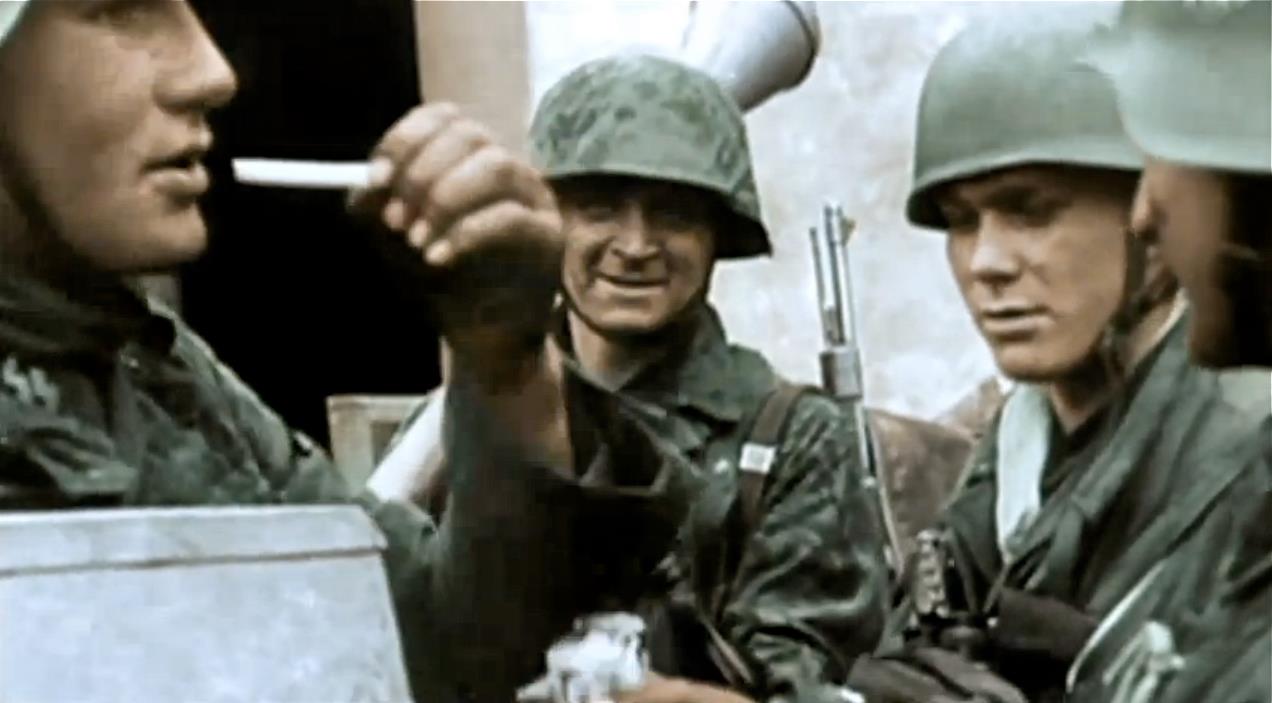
Hitler's army swept westward across continental Europe. Many Atlantic ports were now in German hands. Securing access to the Atlantic had long been the navy's dream. Using their new bases, the U-boats launched relentless attacks on British convoys. It was called wolfpack tactics: several submarines gathered like a pack of wolves and attacked simultaneously. A victorious return. The German people's enthusiastic welcome rewarded the U-boat warriors for their efforts.
(R. G. Buchheim, war correspondent at the time): “A special wave of admiration arose, almost as if they were Dönitz's volunteer corps. Crowds gathered just to see his decorations. This small submarine force had won exhilarating victories. For Germany then, it was the greatest joy.”
Crews departed on missions amid cheers. Beneath the surface, a starkly different and harsh daily life awaited them.
(A. Claasen, then a German naval officer): “The cramped space and the smell were unbearable. It was not somewhere you could stay for long. You had to carry out your duties and live together with your backs practically touching. Even now, looking back, service aboard a U-boat was an intolerable strain for me.”
With its prestige at stake, the Royal Navy began striking back at the U-boats. The sound of depth charges thundered across the sea. The merciless struggle in the Atlantic would continue until the war ended. It was fought not only with weapons but also with propaganda.
<[German newsreel] 'When U-boats pursue the enemy, there is only one watchword: ready—sink them!'>
Results of Submarine Operations
[From July to October 1940, the Luftwaffe carried out heavy air raids on mainland Britain.]
The fighting only intensified, both in the air and at sea. In their air-raid shelter, senior Royal Navy officers were gripped by a sense of crisis. Shipping losses to U-boats were rising sharply. Men suffocated in fuel oil from sinking ships. Others disappeared into the vast ocean. About a year into the war, the Royal Navy had already lost more than ten thousand men.
German-occupied France. Here, men in high spirits celebrated the U-boats' repeated successes. Commander Dönitz believed he had demonstrated the effectiveness of submarine strategy. What he wanted was a further expansion of submarine strength.
R. Hardegen, then a U-boat captain: "In those days, it was one celebration after another. We sat at elegant tables enjoying oysters and lobster—and champagne, of course. These were deserved rewards. A soldier's mission is to win, and those who fulfill it should be well rewarded."
Construction of an enormous fortress began at Lorient on the Brittany peninsula: shelters to protect U-boats in port. At last, the stronghold essential to Dönitz's submarine strategy was completed. But the German navy had a weakness: it had no naval air arm of its own. Dönitz repeatedly asked the Luftwaffe for cooperation. 〈Luftwaffe commander-in-chief Göring〉But Göring never allowed the navy to interfere in the Luftwaffe's operational planning.
Enemy aerial patrols threatened the U-boats. One captured U-boat thus delivered crucial German naval secrets into enemy hands.
Breaking Enigma and Declaring War on America
[Enigma]
Enigma: the German cipher machine that used an astronomical number of combinations and was considered unbreakable. But the British assembled experts and fully unraveled the workings of a captured machine.
(H. Hinsley, then a British codebreaker) ‘This enabled us to decipher all communications between Dönitz and his men. We then diverted convoys away from waters where U-boats lurked. The U-boats could no longer boast their former strength. Rather than defeat, it may be more accurate to say they were denied victory. Suddenly unable to find their enemy, they must have been very anxious.’
The German naval leadership never detected this grave intelligence leak. Enigma kept transmitting secret information. For Dönitz, inexplicable failures mounted.
[In December 1941, Hitler declared war on the United States.]
Germany had finally made America an outright enemy. The U-boat fleet launched what was called Operation Drumbeat. Crossing the Atlantic, they indiscriminately sank large merchant ships off America's east coast. In the six months from January 1942, they sank some five hundred vessels with their crews. There now seemed no limit to the demand for U-boats. Decorations and leave offered brief rewards. A long struggle still lay ahead for the crews.
Autumn 1942. A U-boat sank the British ship Maconia, carrying 1,500 people including prisoners of war. The captain requested rescue from the U-boat. But Allied aircraft attacked, and Dönitz ordered the rescue operation stopped.
(H. von Schröter, then a U-boat captain) ‘Inside, everyone probably felt sympathy and bitterness. But it was not the time to voice such feelings.’
To the Top of the German Navy
[January 1943: Dönitz becomes commander-in-chief of the German navy.]
Dönitz finally reached the top of the German navy and was summoned to Führer Hitler's headquarters. He had joined the inner circle. Beginning to feel trapped by the military situation, Hitler placed his hopes in this capable newcomer. Soon afterward, the army stumbled on the Eastern Front.
<[February 1943: German forces are destroyed at Stalingrad.]>
Expectations for the U-boats kept rising. Dönitz's wishes were finally granted, and production was rapidly increased. Concentration-camp prisoners did the construction work. Even in the navy, which seemed not to have directly participated in violence against Jews, proposals like this occasionally appeared as the war progressed: “On a plan to prevent Jewish refugees from escaping by ship.” Dönitz knew that this meant the slaughter of Jews.
In 1943, the battle between U-boats and Allied forces reached its peak. But Britain had developed new radar, dealing Germany a fatal blow. In May, Dönitz lost forty-one U-boats at once. Two thousand men died, including his younger son. A year later, his elder son also lost his life.
(Dönitz's daughter U. Hessler): “I remember very well when the older of my two younger brothers was killed in May 1944. My youngest brother was already dead. On the day the news arrived, I was in bed with swollen tonsils. My father appeared, took my hand and sat down without a word. I had never seen him like that and did not know what to say. The oppressive silence seemed to last for hours.”
But Dönitz had no time to grieve as a father. He had to meet Führer Hitler's expectations.
(R. G. Buchheim, then a war correspondent): "In my view, Dönitz's actions at the end of the war amounted to mass murder. He must have known the U-boats no longer had a chance of victory. Yet he would not back down, because he was obsessed with glory."
After becoming one of Hitler's close associates, Dönitz displayed exemplary loyalty and fell under the dictator's spell. He wrote: ‘How insignificant we are compared with the power radiating from the Führer. Merely to imagine that we could manage things better than he does is the height of folly.’
(A. Claasen, then a German naval officer) ‘Dönitz often gathered young officers in his room and spoke informally. I was one of those who sat at his feet listening. What struck me most was his expression when he said, “I have just returned from the Führer.” His eyes shone with pride. Then he would begin speaking deliberately.’
As Allied bombing of Germany intensified, Dönitz established his headquarters in a shelter outside Berlin, near Führer Hitler. ‘Hold out to the end.’ His orders to his men had become Nazi propaganda itself.
<[From late 1943, the Allies carried out intensive air raids on Berlin.]>
A Fanatical Nazi Leader
As the end of the war approached, Dönitz’s words and actions lost the cool judgment he had once shown as a commander. He became completely identified with Nazi fanaticism, pouring the dictator’s messages into young soldiers at every opportunity. He told them: ‘What is demanded of us now is a merciless offensive. Support our Führer and our National Socialism.’ Manifestly reckless attack orders produced disastrous results. The large battleship Scharnhorst challenged an enemy fleet in a desperate action. With 2,000 crewmen, it sank in northern European waters.
E. Reimann, a survivor of the sunken battleship: "Many people were floating on the surface. Soon cheers for the ship rose among them. Some began singing a song mourning sailors' deaths. The words, 'No roses bloom on a sailor's grave,' rang out. Then I saw the battleship's end. Its immense hull sank slowly into the sea. Eventually everything was pitch-black. I could neither see nor hear anything. All I could feel were the waves washing over me again and again. I was alone in the cold night sea."
From a calm, composed military man to a fanatical Nazi leader: the Führer welcomed Dönitz's transformation.
(R. G. Buchheim, then a war correspondent): "In the end Dönitz was merely a man driven by ambition. Had he felt responsibility as a commander, he would have told the Führer they had reached the limit before sending soldiers needlessly to their deaths."
In 1944, Dönitz officially represented the Führer at a memorial ceremony for fallen servicemen.
<'Had the Führer not united the people's hearts, our fatherland would have faced unimaginable chaos. Rival parties and the poisonous fangs of Jewry would have torn it apart. We must uphold the uncompromising Nazi worldview if we are to withstand the pressures of war.'>
<[July 20, 1944: the attempted assassination of Hitler]>
After the assassination attempt, Hitler demanded still more proof of loyalty from his aides. What counted was a submissive willingness to do anything for the Führer. Dönitz's words preserved in naval intelligence records read: 'Rather than let my grandchildren be infected by the poison of the Jewish race, I will fight on, clinging to the very earth.' This record was discovered many years after the war.
Desperate Efforts Amid Defeat
〈[August 1944: Free French and Allied forces liberate Paris.]〉
A fierce Allied counteroffensive. Even the supposedly impregnable U-boat shelters came under bombardment. But the U-boats’ defeat was already clear in the Atlantic. In a final desperate effort, Dönitz began testing a series of new arms he called miracle weapons.
H. Lautenbach, then a headquarters doctor: "It was a desperate attempt, but completely futile. These trained young men had no actual experience serving aboard ships. They had probably only just learned what a compass was. They were so innocent that they were practically children. They rushed at the enemy as ordered, and most never returned."
Replacements had to be recruited urgently. The naval commander-in-chief himself appeared in a film calling on young men to serve. Here is the reality they experienced.
Hitler's Deputy Führer
⟨[January 1945: Soviet forces surge westward toward the battle for Berlin.]⟩
Soviet forces were approaching Berlin. On Hitler's orders, Dönitz escaped shortly before the capital was encircled and continued directing the fighting in northern Germany. On April 30, a letter arrived from Nazi Party Chancellery chief Martin Bormann. Unexpectedly, it stated that the Führer had chosen Dönitz as his successor. It did not reveal Hitler's suicide. Dönitz respectfully replied: “My loyalty to the Führer will remain unchanged throughout my life. I will do everything in my power to rescue you from Berlin.”
The Third Reich was nearing its end. Fierce street fighting raged in the encircled capital, Berlin. Dönitz continued fulfilling his promise to the Führer to the very last. Soldiers were sent in one after another, with no hope of reversing the situation. On May 1, Dönitz learned that Hitler was dead.
〈‘German people, and soldiers of the Wehrmacht: Führer Adolf Hitler is dead. The German people will be overwhelmed with deep sorrow and reverence. The Führer chose me as his successor. Conscious of the weight of responsibility at this fateful hour, I shall carry on his wishes.’〉
(H. von Schröter, then a U-boat commander): "If anyone asked why he was the successor, I would immediately ask: Who else? Göring, Goebbels, and Himmler had all disappeared from the Führer's list of successors."
Fleeing advancing British troops, Dönitz moved his headquarters to Flensburg near the Danish border. By a strange coincidence, this was where the naval academy that had launched his career stood. His task was to liquidate the dream of a German empire that the Führer had instilled in the people. Hitler's empire sank into ruins.
(K. Tettelbach, then a German staff officer): "The weather was beautiful the day we arrived in Flensburg. At the naval academy gates, petty officers stood in immaculate white uniforms in the May sunshine. As Dönitz and his party approached, they straightened smartly in greeting. At first glance it was so peaceful that one could almost forget the looming reality."
With defeat now inevitable, the first priority was to reduce the number of soldiers taken prisoner as much as possible. Dönitz ordered his successor as naval commander-in-chief, Friedeburg, to buy all the time he could. German forces first made partial surrenders on the Western Front and devoted all remaining transport ships to evacuating Germans. The plan worked: more than two million people escaped from areas where the military situation had deteriorated, including the Baltic coast.
While rescuing many civilians from danger in this way, Dönitz issued orders elsewhere that could only be called ruthless. He had soldiers who had violated military discipline shot. The men made to pay with their lives were sailors who, hearing of Germany's surrender, tried to return home without permission.
(O. Kranzbühler, Dönitz's defense counsel at the trial): “On that matter, Dönitz said firmly: ‘I cannot have a double standard. Precisely because so many precious lives are being lost on the battlefield, I cannot forgive someone who secretly deserts the armed forces.’”
Dönitz sought to prolong the war further. He wanted to avoid total surrender and continue fighting the Soviets on the Eastern Front. But the victorious Western powers would not accept his wishes.
Hitler's Unwanted Successor
[On May 7, 1945, Dönitz's government accepted Germany's unconditional surrender.]
<'People of Germany, the foundations of our state have been destroyed, and we must travel a thorny road. I have no intention of turning away from that difficult path. If the people need me, I am prepared to remain in office and give everything I have. But if they tell me to leave, I believe obeying them is also service to the fatherland.'>
Surrounded by scorched earth and rubble, the German people no longer wanted a successor to Hitler.
[In May 1945, Dönitz's government ended after only two weeks.]
One U-boat that fought to the very end surrendered in London amid the mood of victory. Two weeks after the general surrender, Hitler's aides and subordinates were arrested one after another by the Allies. Six months later, the Hitler regime's war crimes would be tried before the eyes of the world. Dönitz too would have to bear responsibility as the Führer's successor.
Then came the verdict: ten years’ imprisonment.
[1956: "The sixty-five-year-old former naval commander-in-chief appeared after his release and declared to the press: 'I will say nothing.'"]
[Memorial to U-boat war dead]
A memorial to the U-boat dead. It says nothing. The silent witnesses to that era, unable to speak, still rest on the Atlantic seabed.
[Of 39,000 U-boat crewmen, 28,000 were killed in action.]