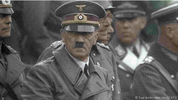

Martin Bormann
The Führer's Shadow
Berlin, May 2, 1945. As the Soviet assault reached the Reich Chancellery, four men attempted to escape. Among them was Martin Bormann, the most mysterious of Hitler's close associates. After being seen at Weidendammer Bridge, Bormann vanished without a trace.
〈‘The following are found guilty of crimes against peace, crimes against humanity, and war crimes: Hermann Wilhelm Göring, Rudolf Hess, Joachim von Ribbentrop, Robert Ley, Wilhelm Keitel, Ernst Kaltenbrunner, Hans Frank, Karl Dönitz, Baldur von Schirach, Alfred Jodl, and Martin Bormann.’〉
“In every respect, Nazism might not have existed without Bormann. He was like a shadow, supplying what Hitler lacked.” (Nazi war criminal hunter S. Wiesenthal)
Witnesses disputed the defense counsel's claim that Bormann was already dead. In the defendant's absence, judgment was pronounced on Hitler's shadow.
〈On the grounds set out in the indictment, Martin Bormann is sentenced to death by hanging.〉
"The trial ended and Father was sentenced to death, but he was never found afterward. I thought he must be surviving somewhere." (M. Bormann, Bormann's son)
In 1972, two human skeletons were discovered at the foot of Weidendamm Bridge. Experts concluded that one was unquestionably Bormann’s.
“Martin Bormann died in 1945. All the test results and circumstances indicate that. I believe it is one hundred percent certain that Bormann died in Berlin in 1945.” (Forensic scientist H. Hühne)
Early Life
Martin Bormann was born in Halberstadt in northern Germany in 1900, during the German Empire ruled by Wilhelm II. His father, formerly a cavalryman, died when Bormann was three. Unable to adjust to his new father, Bormann spent unhappy days. Then came a major turning point.
〈‘The enemy has attacked us in the midst of peace. Take up arms. Doubt and hesitation constitute betrayal of the fatherland.’ (Voice of Wilhelm II, August 1914)〉
[“Mobilization!”]
In 1914, the First World War broke out. Amid the great upheaval of the age, the young Bormann left home.
“Father apparently wanted to join the army, but he was small and weak for fifteen and was rejected. Yet he did not go home. He did not want to return to his new father.” (Bormann’s son M. Bormann)
Bormann was finally permitted to enlist just before the war ended, but it was too late. Defeat, turmoil, and socialist revolution followed. Alarmed by these conditions, right-wing forces used force in various places and severely suppressed the left.
At that time, Bormann worked as an overseer on a large estate in Mecklenburg. In 1923, he ordered punishment for a man suspected of being a communist, and his subordinates carried it out. The man died with his skull crushed. Bormann and the others were arrested. But the trial was biased toward the right, and although convicted, Bormann received a light sentence of eleven months’ imprisonment because he had not personally carried out the killing.
In November of that same year, 1923, far-right terrorists attempted the Munich Putsch. Its leader, Hitler, was sentenced to five years in prison but released after about a year. Bormann was freed soon afterward and returned to Weimar in 1925. Hitler was also in Weimar that year, but did not yet know Bormann.
Joining the Nazi Party
The Nazis sought someone to manage the storm troopers’ mutual aid fund. The requirement was Nazi Party membership. Seeing an opportunity for advancement, Bormann joined in 1927. This is the earliest footage showing him. He later married the daughter of an influential Party member, with Hitler and Rudolf Hess as witnesses.
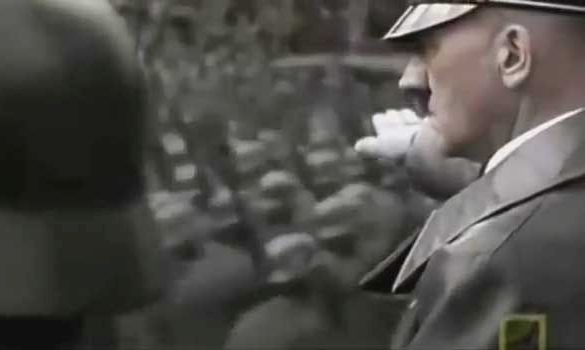
January 30, 1933. Hitler became chancellor.
〈The crowd cheers with joy; torchlight makes the square as bright as day. What a magnificent sight!〉
But Bormann could not simply rejoice.
“My father managed the Party’s mutual aid fund. But when the Nazis came to power, a state agency took over that role, and he lost his job. He asked Rudolf Hess, now Deputy Führer, for help. As a result, he obtained the position of head of Hess’s office.” (Bormann’s son M. Bormann)
Through Rudolf Hess, Bormann was able to work closer to Hitler than before. Unlike Hitler and Hess, however, he was extremely poor at public speaking.
⟨“Happiness is in our hands, for the future belongs entirely to us.” (Hitler's speech)⟩ Bormann's future certainly lay with Hitler.
"Bormann was not yet considered a major figure in the party. My impression was that he played a rougher role than others, like a sheepdog herding sheep. For example, he stood at the top of the stairs watching for latecomers and took on jobs that someone of Hess's rank could not do." (H. Fath, Hess's former secretary)
Ambition
<'The Nazis are Hitler, Hitler is Germany, and Germany is Hitler.' (Deputy Führer Rudolf Hess)>
Bormann's administrative skill gradually made him indispensable to Hess. He relieved Hess of troublesome party matters and everyday chores. While one man worked industriously, the other could dream at leisure.
“Bormann was a great workaholic, but my father preferred skiing and similar pursuits.” (Hess's son, W. R. Hess)
But the ambitious Bormann's real target was the man above Hess. To acquire greater power, he exploited every opportunity to get closer to Hitler.
"Bormann made a great contribution to the party. His aim was to make the Nazi Party the final decision-making authority in the national leadership. To achieve that, above all he needed a close relationship with Hitler. Bormann understood this well." (B. F. von Loringhoven, former Third Reich general officer)
A major opportunity came Bormann's way. Hitler's mountain residence in Berchtesgaden had become too small, and plans were made for a grand residence worthy of the Führer. Bormann was ordered to supervise construction.
“He was at the site in a gray suit, black boots and a broad-brimmed hat. I wondered who on earth that man was.” (Hitler's former attendant H. Döring)
Bormann drove the work forward relentlessly and soon became the most hated man on the site. But that was trivial to him. His aim was to make Hitler notice him through the construction of this mountain residence. Nothing else mattered.
"Bormann kept watch day and night. No one escaped his eye. If work was delayed for any reason, he immediately investigated the cause. Then it was always: That's fixed, keep the work moving." (H. Döring, Hitler's former attendant)
In summer 1936, the mountain retreat was completed in record time, greatly pleasing Hitler. Here was an able subordinate who made even impossible demands possible to satisfy his master. Hitler came to value Bormann highly. Gradually, Bormann consolidated his position as Hitler's shadow.
"Bormann made himself indispensable. Everything he did worked. But he was like a devil entrenched on that mountain. Personally, I detested him. I think he was evil to the core, like a toad that bites people." (R. Spitzy, Hitler's former adjutant)
An Able Philistine
Walking was part of Hitler's daily routine. He walked slightly ahead of his guests, with Bormann shadowing his master within earshot.
“Father always kept a stiff piece of paper like a card and a short pencil in his pocket. They fitted without disturbing the line of his clothes. He used them so he could jot down thoughts or fragments of conversation at any time.” (Bormann's son, M. Bormann)
Hitler needed Bormann's ruthless, practical abilities. Bormann, in turn, expanded his own power under the protection of Hitler's authority.
"Hitler said, 'Bormann is a cunning philistine, but no one is as capable as he is.' In fact, whatever the order, he carried it out perfectly, unwaveringly, down to the last detail." (H. Döring, Hitler's former attendant)
Everything went according to Bormann's plans, and he further consolidated his position as the power behind the scenes. His aim was to establish absolute Nazi control over the entire state. Even his superior, Rudolf Hess, could no longer ignore him.
“Whenever Hess met anyone, one of Bormann's subordinates was always supposed to be present. That was the rule. Even so, Hess sometimes met people without Bormann knowing.” (Hess's former secretary R. Schröder)
The dictator needed no deputy. What Hitler needed was a subordinate who would do anything for him. Bormann was perfectly suited to that role.
“Father said that National Socialism was the very will of the Führer.” (Bormann's son, M. Bormann)
March 1938. Hitler returned to his native Austria, with Bormann behind him. Bormann's task was to buy the house where Hitler's parents had lived and the school he had attended. Hitler had more than enough money. Bormann was his accountant.
For Hitler’s birthday, Bormann prepared a splendid gift: a luxurious teahouse at an altitude of 1,834 meters. It cost the enormous sum of thirty million marks.
“Bormann did not care about the expense. I have no idea where such enormous sums came from, but he always had money.” (Engineer M. Hartmann)
Entrusted by Hitler, Bormann was in a position to control substantial political funds. He even gave SS chief Himmler a lakeside villa. He also sent Hitler's mistress Eva Braun silk underwear, perfume and jewelry. Yet no one felt any personal affection for Bormann.
“As far as I know, everyone disliked Bormann. Even Himmler, who received a villa from him. Nazi dignitaries hated being with him too. I doubt he had any friends at all.” (Hess's former secretary R. Schroeder)
Bormann's Private Life and Affairs
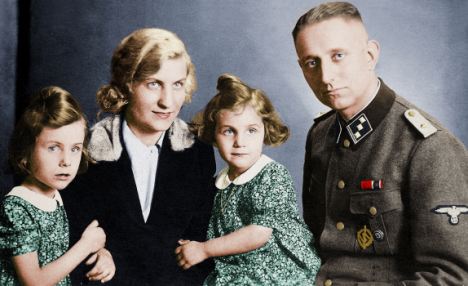
It is only natural to dislike someone who fawns on superiors and treats subordinates cruelly. Yet Bormann's wife alone remained utterly obedient to him.
"She was a happy woman and said so herself. Above all, she was a good mother to eight children and took pride in that." (E. Topp, a guest of the Bormann family)
Bormann fathered many children, as though following Hitler's wishes.
“We had a good, loving relationship with our mother. She was cheerful and spent almost all her time caring for the children.” (Bormann’s son M. Bormann)
The father was almost always with Hitler. But at a ceremony welcoming Hungary's leader, Miklós Horthy, an officer who came looking for Bormann encountered an unexpected sight.
“Bormann was in bed with a woman. I cannot say who. In any case, the situation was obvious. I was so startled I nearly jumped, but quietly closed the door and left without being noticed. It does not matter who the woman was. If Bormann had noticed me then, I would certainly have been eliminated.” (Hitler's former adjutant, R Spitzy)
In September 1939, the Second World War finally began, and Bormann no longer had time to indulge in affairs. Hitler kept him constantly at his side. Bormann's power continued to grow.
“When the war began, Father was deputy to Rudolf Hess, the Deputy Führer. At the same time, he was deputy leader of the Nazi Party and held the post of administrative chief at headquarters. In other words, he served as an intermediary in various capacities.” (Bormann's son, M. Bormann)
Bormann stayed beside Hitler even in occupied Paris. But once again, a woman appears in the background. He wrote to a new mistress: 'My beloved, a man can have several women, but a woman can belong to only one man. If you enjoy another man behind my back, I may make you suffer badly. Your Martin.'
“Bormann also said things like this: ‘Actually, I have other children too, with women other than my wife. I have superior genes, so I must multiply them many times over.’” (Guest of the Bormann family E. Topp)
Rudolf Hess's Betrayal and Promotion
In May 1941 came a sensational event: Deputy Führer Hess flew to Britain on his own initiative to seek peace. His attempt ended in complete failure. An enraged Hitler arrested Hess's collaborators one after another. Bormann, desperate to avoid being implicated, tried to impose penalties on Hess's wife to demonstrate his position.
“Bormann devised all kinds of ways to ruin my mother's life. But through Eva Braun, she spoke directly with Hitler. Soon afterward, Hitler ordered Bormann to stop the sanctions.” (Hess's son W. R. Hess)
In the end, the Hess affair did not impede Bormann’s advancement. He was promoted to head of the Nazi Party Chancellery. With his superior Hess gone, Bormann became Hitler’s shadow completely.
“My father was a man of dedication and hard work. He gave everything to his master, Hitler, sparing no effort to achieve his aims: not his own aims, but Hitler's. He believed that would benefit the German state.” (Bormann's son M. Bormann)
The surprise attack on the Soviet Union initially brought great victories as well, and Hitler's days as supreme commander became increasingly busy. Both as a politician and as a military leader, he faced a mountain of issues. Bormann therefore began selecting which information should be reported to him.
“I sometimes accompanied soldiers returning from the front to give reports. But all reports had to go to Bormann first. He decided whether they would reach the Führer.” (Hitler's former attendant K. Krause)
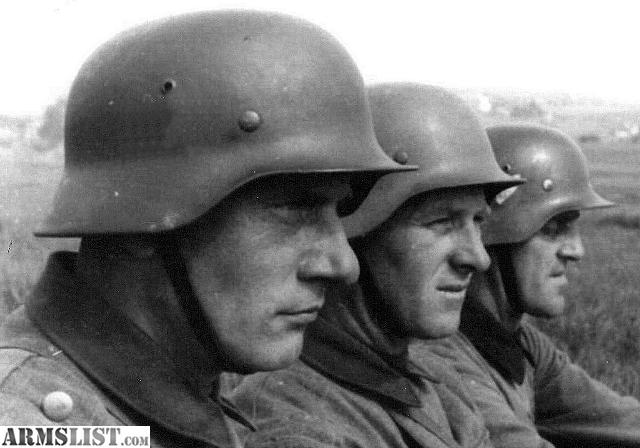
Hitler kept his generals around him. Bormann was the only party official there, so nothing concerning the Nazis proceeded without him. But the Wehrmacht leaders, who could confer directly with Hitler, were a thorn in Bormann's side.
“Obsessed with power, Bormann was desperate to gain the upper hand in his struggle with the armed forces. He therefore placed politics ahead of military matters and exerted considerable influence on Hitler's decisions.” (Hitler's former personal cameraman W. Frentz)
Bormann issued a succession of orders to senior Nazi officials.
(Bormann's voice, October 1943): “Regarding armaments and the war industry, air raids have created several difficult situations.”
Mistress
Bormann issued one order after another across the Reich. Telephone calls were connected incessantly. But they were not all official: he apparently sometimes called a new lover. The telephone operator alone knew something no one else at headquarters did.
"They exchanged sweet words—gentle, trivial things. Women like compliments, after all. Bormann praised her and she flattered him in return. They chatted like lovers without a care in the world." (A. Schulz, then a telephone operator)
His new mistress was a film actress. [Susanne im Bade (1936), dialogue: "Come in." "About the sketch?" "You only sketch women who matter to you, don't you?"] This time Bormann was serious too.
“Bormann sometimes sent me books of poetry. He knew I liked reciting poems. I thought he must like poetry too.” (Bormann's former mistress M. Behrens)
Bormann considered formally marrying her. He sent this letter home: 'My beloved mother and maiden. I have fallen deeply in love with her. You know what I want, don't you? How fortunate I am, to have two happy marriages. What do you think of this splendid knight of yours? I must take far greater care of my health than ever. Your Martin.'
Justifying Crimes
“My father certainly tended to approve of polygamy. I think Nazism instilled that attitude in him. They believed genetically superior Germans should have as many children as possible, to replace the population lost in the war quickly.” (Bormann's son M. Bormann)
By the same logic, the childless Hitler tried to justify his own crimes.
“Hitler said something like this at the time: ‘Ten thousand Germans are being sacrificed every day. But that is to prevent loathsome communism from eating away at European culture and its beautiful landscape.’ And although I would rather not repeat that man's expressions too often, to reproduce his exact words: ‘It is to prevent those Jews from living at their ease.’” (Hitler's former bodyguard W. Schneider)
Bormann understood Hitler's wishes well. When a Party member asked him about the Jewish question, he replied: ‘The solution is very simple.’
Auschwitz and the other extermination camps, and the systematic mass murder committed there: speaking of these things was forbidden. Bormann, too, seems to have taken great care to preserve the secret.
“One day, Himmler telephoned Bormann and said: ‘I have a report that will please the Führer. Another 20,000 Jews were exterminated at Auschwitz this week, as planned.’ Then he corrected ‘exterminated’ to ‘deported.’ Hearing this, Bormann shouted at Himmler: ‘Why are you making a report like that over the telephone?’” (A. Schulz, then a telephone operator)
Portents of Ruin
In 1943, Bormann was appointed Hitler's chief secretary. The Führer sought a loyal subordinate untroubled by conscience. It was a sign of the ruin ahead.
["Germany once laid down its arms too soon. We will not repeat that mistake." (Hitler's voice)]
What the future held did not matter.
"To my father, Hitler was someone to whom he could give everything—all his passion, even his life. Devotion is precisely the word. Devotion to Hitler mattered to him more than his relationship with his family." (Bormann's son, M. Bormann)
On July 20, 1944, an attempt was made to assassinate Hitler. Bormann mobilized his entire organization, arrested the perpetrators one after another, and carried out brutal reprisals. His power became unshakable; even the armed forces were no longer an obstacle. When the sister of Hitler's mistress Eva Braun married, Bormann served as a witness, alongside Reichsführer-SS Himmler. Himmler was the last person standing between Hitler and Bormann. But after becoming commander-in-chief of the forces abroad, Himmler suffered repeated defeats, and his power swiftly declined.
"It was none other than Bormann who filled the gap left by Himmler. Naturally he became actively involved in military matters and attended more and more military conferences. This was during 1944 and 1945." (B. F. von Loringhoven, former Third Reich general officer)
By March 1945, Bormann was unquestionably the Reich's number two. But it was far too late. The Third Reich's defeat and collapse had become unavoidable realities. The only path left was destruction alongside Hitler. What hopes for the future could Bormann have held then?
"In March I wrote to my father in Berlin. I wanted to ask whether he still thought we could win the war. A short reply arrived later: 'A dying lion may still deliver a final blow.'" (Bormann's son, M. Bormann)
Soviet troops were approaching Berlin. Bormann issued an urgent directive to party members: “Make the greatest possible preparations for combat for the Führer. Now the difference between the capable and the incapable will become clear. Anyone with the qualities of a leader should be able to achieve maximum combat readiness.”
“Bormann had little specialized knowledge. That was why he could not escape the illusion that Hitler would inevitably lead them to ultimate victory. If the Führer said they would win, he must have believed they would.” (A. Schulz, then a telephone operator)
April 20, 1945, Hitler’s birthday. Berlin’s fall was only a matter of time. Bormann, too, thought escaping to Berchtesgaden, where the mountain residence stood, was the best course, but the Führer decided to remain in Berlin. The atmosphere grew increasingly apocalyptic.
"For days Bormann had looked decidedly unwell. Even he must have sensed that the end was near." (R. Misch, then a radio operator at Führer headquarters)
This is the interior of Hitler's bunker, filmed just before its destruction. Hitler had already given up. The concrete bunker resembled a coffin for the Führer's ambitions. Bormann recorded his own feelings: “We rose with the Führer, and we shall fall with him and follow him unto death.”
“The outlook grew darker and darker. All anyone talked about was dying. Should we shoot ourselves in the head or take poison? Everyone was seriously considering how to meet the end. In fact, almost everyone carried a capsule of potassium cyanide for suicide.” (Former Third Reich officer B. F. von Loringhoven)
Hitler's End
Bormann had also abandoned hope for the future. There are indications that he ordered his secretary to kill his wife and children to take them with him in death.
"The secretary, Helmut von Hummel, put my mother and us children on a bus and took us to South Tyrol. Not just us, but evacuated children as well. We and the others owe our survival entirely to him." (Bormann's son, M. Bormann)
Berlin was surrounded, and blood was being shed everywhere. Hearing that Himmler was negotiating peace with the Allies, Bormann wrote in his diary: ‘To rush into negotiations at the Führer's expense! Does honor mean betrayal to them?’
“One day, Hermann Fegelein failed to appear at a military conference. He was Bormann's aide and Eva Braun's brother-in-law. Intelligence personnel searched his home and other places but could not find him. When they returned empty-handed, Bormann shouted, ‘Arrest him and bring him here immediately!’” (R. Misch, then radio operator at the Führer's headquarters)
Fegelein was found drunk, in civilian clothes, with a woman other than his wife. His luggage contained foreign currency and gold coins, clearly revealing his intention to desert. He was immediately taken back to the bunker.
“I saw Fegelein being taken to the cellar. Two SS men walked in front of him and two behind. All the many medals and decorations he had earned in earlier fighting had been stripped off.” (Former Third Reich general B. F. V. Loringhoven)
Fegelein was executed. Immediately afterward, Hitler summoned his secretary and dictated his will.
“By then, I could no longer sense any vitality in Hitler. His once-intense gaze had vanished. All that remained was a man crushed by despair.” (Hitler's former secretary T. Junge)
Hitler left this will: “My possessions belong to the Party. If the Party no longer exists, they belong to the state. If the state has perished, my wishes may be disregarded. I appoint the most loyal Party member, Martin Bormann, executor of my will.” Karl Dönitz was named the Führer's successor and Bormann head of the Nazi Party. The Führer's shadow never became Führer himself. In the bunker, Bormann witnessed his master's end.
What Bormann Lost
“Hitler's suicide showed that he did not believe in final victory and had cowardly evaded responsibility. Only then does Bormann seem to have realized his great mistake and that he had sacrificed his life for it.” (A. Schulz, telephone operator at the time)
But everything was too late.
“Bormann seemed afraid. He no longer offered opinions as actively as before. He said nothing to the officers, or at least to Goebbels.” (R. Misch, then radio operator at Führer headquarters)
Bormann was already an empty shell.
⟨(Voice of Karl Dönitz) “Members of the German armed forces, our Führer Hitler is dead. The German people bow their heads in sorrow and reverence.”⟩
But the people were desperately trying to survive rather than weeping over Hitler's death. The same was true of Bormann.
"The coward Bormann was trying somehow to escape the bunker and survive. The Führer's orders and words to us were to fight courageously to the end. Many died obeying those words. Yet Bormann ignored those victims and plotted to save himself alone." (A. Lehmann, then a courier at Führer headquarters)
On May 2, 1945, Soviet troops were just ninety meters from the Reich Chancellery. Bormann's last written words were “Attempt to escape.”
"Bormann faced decisive defeat but had made no preparations for it. Using tanks or something similar, he might somehow have escaped. But he had planned nothing of the sort." (R. Misch, then a radio operator at Führer headquarters)
Around two in the morning, four men, including Bormann, climbed out of a basement window. They reached Weidendamm Bridge, but could go no farther. Resigned to his fate, Bormann bit into a potassium cyanide capsule there and ended his life.