

Anne Frank
Anne Frank
 Anne's House
(Amsterdam)
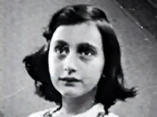
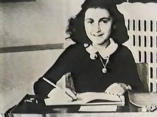
Anne’s diary. The diary Anne Frank quietly kept in hiding, escaping the Nazis’ clutches, captured hearts around the world. But some pages had deliberately been withheld. Their discovery has now cast new light on Anne as a person.
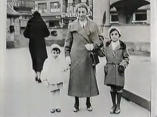
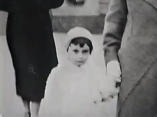
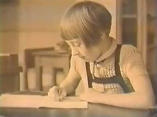
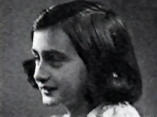
Summer 1933. Otto Frank fled his native Germany and moved to the Netherlands to begin a new life with his wife Edith, seven-year-old Margot and four-year-old Anne. That January, Adolf Hitler had become Germany's chancellor.The Franks began their new life in a comfortable Amsterdam apartment. Anne's primary-school friend and neighbor, Lucia van Dijk (photo left), often visited her apartment.

Anne's friend Lucia van Dijk: "Everything was beautiful and elegant. There were antiques in the spacious living room, and the kitchen was very large too. I never saw the bedrooms, but it was a really big home. Anne's home even had central heating. That was very unusual then."
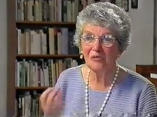
Hanneli Goslar
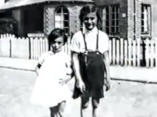
Anne also met her childhood friend Hanneli Goslar in this town.
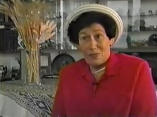
Anne's friend Hanneli Goslar: “My mother took me to the grocery store, and there was another woman there with a little girl. By chance, both she and my mother spoke only German. As they talked, they discovered that their homes were close to each other. A few days later, I went to kindergarten for the first time. My mother was very worried because I could not speak Dutch and had no friends. But when I arrived, Anne was there. So I ran over and hugged her.”
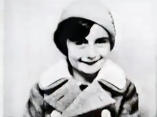
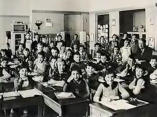
Thus Anne, like other Jewish refugees, settled into her new homeland.
For centuries the Netherlands had offered help to persecuted people. Many Jews, long persecuted across Europe, fled there seeking a safe home. The 140,000 Jews then living in the Netherlands believed that, in a country committed to neutrality, they could escape Nazi persecution.
Melissa Müller, who has recently written a biography of Anne, says:
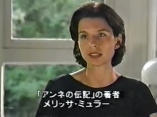
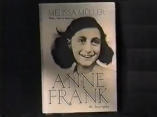
Melissa Müller, author of a biography of Anne: “The Netherlands had a large, long-established Jewish community that was integrated into the country. Anne's father Otto had also spent time there in his early twenties, because the family bank had a branch there. Otto spoke Dutch and knew the country. That was why he moved to the Netherlands.”
Miep Gies
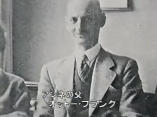
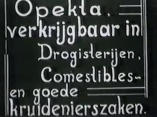
Otto founded a company in Amsterdam, a branch of a German firm manufacturing and selling pectin for homemade jam.
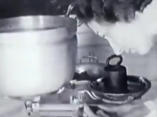
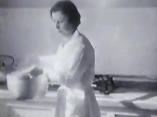
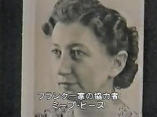
Otto's secretary Miep Gies appears in the company's commercial. She would later become an important helper to the Frank family.
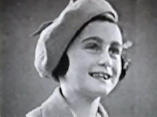
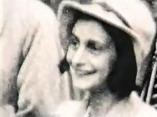
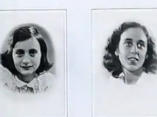
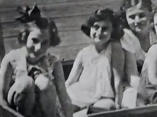
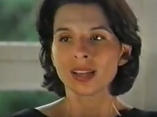
In this fortunate environment, Anne grew into an outgoing girl. Jacqueline (photo right) was her playmate.
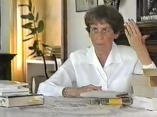
Anne's friend Jacqueline van Maarsen: “Anne cared very much about how she looked, especially her hair. She constantly brushed her beautiful dark hair to make it shine and put it in curlers every night. Even when she came to stay at my house, she went to the trouble of bringing her own curlers. It wasn't that she was always looking in a mirror, but she was very particular about her appearance.”
Anne's Boyfriend
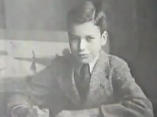
Edmond (photo at right) was Anne's boyfriend.
Anne's boyfriend Edmond Silberberg: “When I was sixteen, Anne was thirteen. In those days it was thought a little strange for a sixteen-year-old boy to take an interest in a girl three years younger. But Anne was completely different from other girls. I was utterly captivated by the way she thought and behaved. I remember clearly wanting to see her again.”
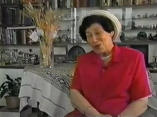
Anne's friend Hanneli Goslar: “My mother often said of Anne, ‘God knows everything, but Anne knows better.’”
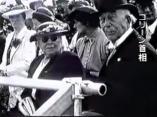
In 1939, Germany invaded Poland and the Second World War began. The Netherlands, which had remained neutral during the First World War, believed it could do so again.
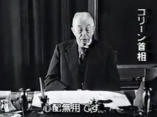
Prime Minister Colijn: ‘There is no need to worry. Do not let anxiety ruin your holiday.’
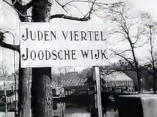
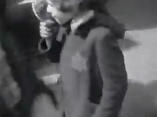
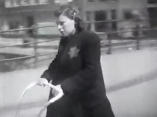
But in May 1940, German troops invaded the Netherlands. Rotterdam, one of the world's leading ports, was bombed and devastated. The Netherlands surrendered a few days later. Under Nazi German occupation, anti-Jewish policies were immediately implemented. All Jews were forced to wear a yellow star on their chest.
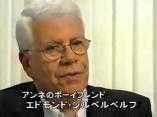
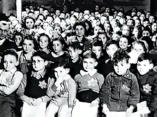
Anne's boyfriend Edmond Silberberg: “We could no longer go anywhere. Jews were forbidden to ride trams, and even our bicycles were taken away. So we could only walk, and even that was restricted to before eight in the evening.”
Jewish children were barred from public schools and forced to transfer to specially established Jewish schools. The Nazis began their plan to annihilate all the Jews of Europe.
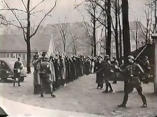
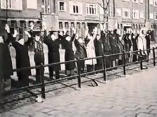
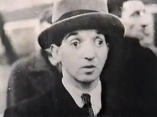
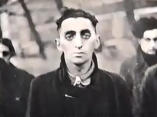
First, Jewish men were rounded up.
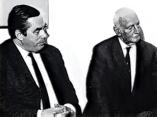
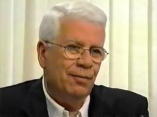
Otto's friend Cor Suijk (the person on the left in the photo at right) recalls those days as follows.
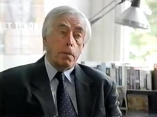
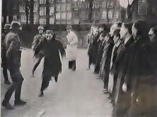
Otto’s friend Cor Suijk: ‘The sight of Jews running across the square and fleeing into restaurants and shops is still burned into my memory. Jewish men were being chased by police and soldiers. Watching the captured Jews being roughly thrown into trams was unbearable. The square was overflowing with screaming women and children. When the trams started moving, the women ran after them, calling the names of their husbands and sons. I could never forget that scene.’
Birthday Celebration
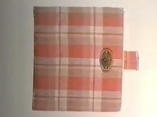
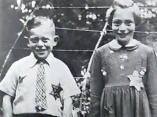
As Nazi madness intensified, Anne received a diary from her father Otto for her thirteenth birthday. Rising antisemitism was not confined to Nazi Germany. Dutch sympathizers welcomed this opportunity and unleashed their hatred of Jews. Amid all this, Anne wrote her diary in the form of letters to an imaginary friend.
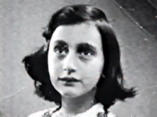
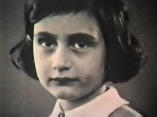
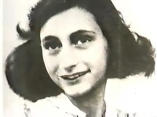
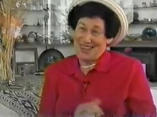
Anne's friend Hanneli Goslar: "Anne was always writing something at school. During breaks she wrote while hiding the paper. When I asked what she was writing, she told me not to pry and would not tell me."
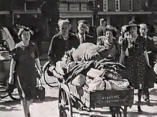
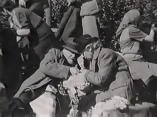
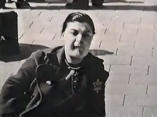
In 1942, Nazi anti-Jewish policy entered its next phase. Almost every Jew was about to be sent to a camp in Germany or Poland.
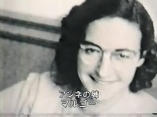 Anne's Older Sister
Margot
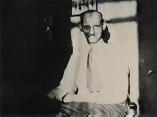 Otto...
Frank
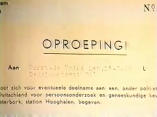
When sixteen-year-old Margot received a summons, Otto made a firm decision. The next day, the Frank family suddenly disappeared.
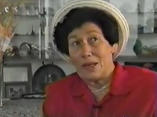
Anne's friend Hanneli Goslar: “I went to Anne's house and rang the bell repeatedly, but no one answered.”
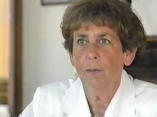
Anne's friend Jacqueline van Maarsen: “On the day Anne disappeared, I went to her house and looked for her diary, but could not find it.”
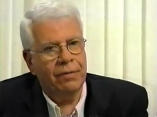
Anne's boyfriend Edmond Silberberg: “It was not unusual for people to disappear suddenly.”
The Secret Annex
Otto had converted part of the building housing his company into a hiding place.
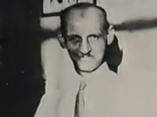
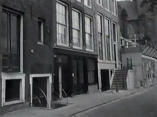
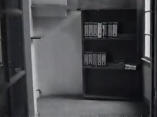
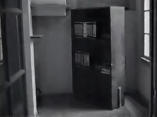
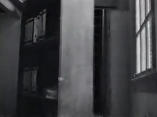
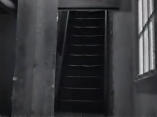

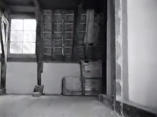 Climbing the stairs
The View
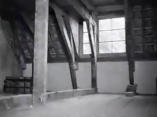 The left side of the room
 The View from the Window
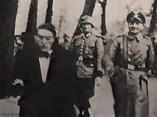
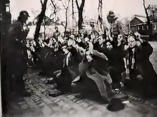
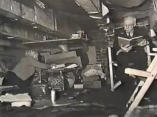
At that time, finding anyone willing to shelter Jews was extremely difficult. Only a minority found hiding places, and ten thousand of them were caught by the Nazis. More than half were discovered through denunciations. Statistics show that three-quarters of the 140,000 Jews in the Netherlands were murdered in Nazi camps.
Historian David Barnouw, Netherlands State Institute for War Documentation: ‘Thanks to Anne Frank, many Americans think the Dutch were a brave people who sheltered Jews. Of course, that was not true of everyone.’
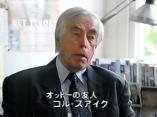
Otto's friend Cor Suijk: “My father listed eighty-one families who might shelter Jews. Only seven helped.
Those seven families hid eleven Jews until the end of the war. In those days, people thought that anyone in trouble must have done something wrong to bring it on themselves. So they believed there was no need to help such people.”
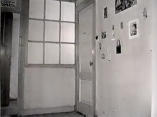
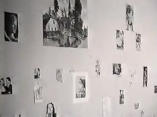
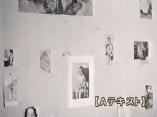
For two years, Anne continued writing her diary in hiding. In letters to her imaginary friend Kitty, she set down her secrets and thoughts. This first diary later became known as the ‘A text.’
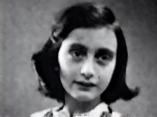
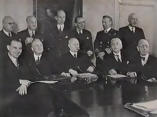
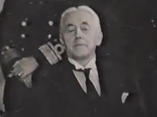
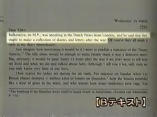
In hiding, Anne heard an appeal on the radio by Gerrit Bolkestein, education minister of the Dutch government in exile. He wanted to publish diaries and other accounts of the Dutch people's suffering under German occupation after the war. Anne, who dreamed of becoming a writer, decided to revise her original diary. This rewritten second diary later became known as the ‘B text.’
Laureen Nussbaum is a friend of the Frank family and an expert on Anne's diary.
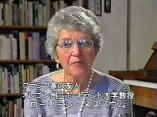
Frank family friend Laureen Nussbaum, professor at Portland State University, Oregon: “Anne finished the second diary in two and a half months. As she made a fair copy of the first diary, she revised its contents. On May 24, 1944, she decided to rewrite it. She gave it the title ‘The Secret Annex.’”
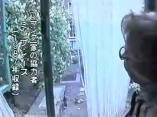
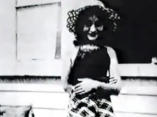
Miep Gies, who helped the Frank family (recorded in 1987): “Anne sat here thinking about all sorts of things. Her dreams, her thoughts—she must have written them all down. She was a lovely child.”
Betrayal by an Informer
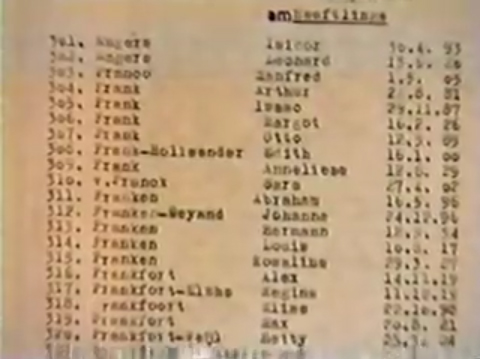 a list of prisoners and
what appears to be a document.
Otto Frank's name is there.
But before Anne could finish revising everything, an informer's betrayal led the Nazis to arrest those in the hiding place. In August 1944, the Frank family, like other Jews, was sent to a camp.
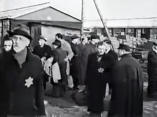
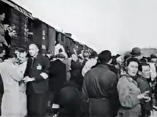
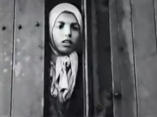
The family was sent to Westerbork camp in the northeastern Netherlands. Their journey into hell began there. About a month later, the Franks were put aboard a train for Auschwitz in Poland, where a life of torment awaited them.
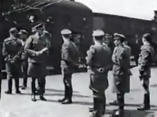


Two months later, as Soviet forces approached Auschwitz, some Jews were transferred to other camps. Separated from her daughters and left in Auschwitz, Edith soon died. Their father, Otto, survived and was liberated.


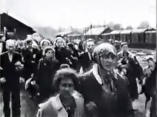
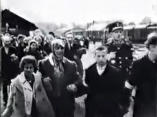
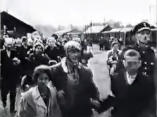
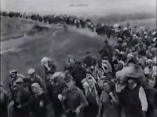
Bergen-Belsen
Meanwhile, Anne and her sister Margot were transferred to their third camp, Bergen-Belsen in Germany. Conditions there were appalling. Anne's friend Hanneli saw her with her head shaved, shivering in the cold.
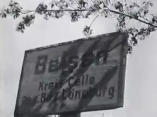
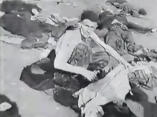
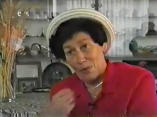
Anne's friend Hanneli Goslar: “A friend told me Anne was on the other side of the barbed wire. Late at night I went to the fence and called her name. After a while, I heard Anne calling mine. I was shocked when I saw her. She was so emaciated that she looked like another person.”
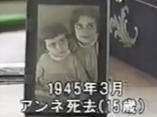
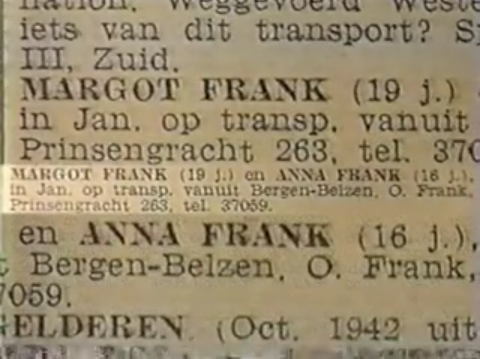
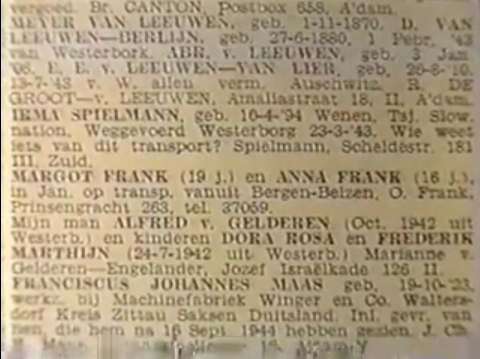
In March 1935, following Margot, Anne too died of typhus.
Publication of Anne Frank's Diary
Of the eight people in hiding, only Anne's father Otto survived. Returning to the Netherlands, he placed newspaper advertisements seeking information about his daughters.
 The Frank Family
helper Miep Gies
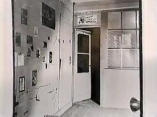
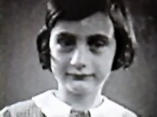
Miep Gies, who had helped the Frank family hide, found Anne's diary after they were taken away and carefully preserved it, intending to return it to Anne someday.
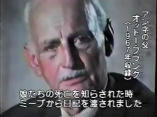
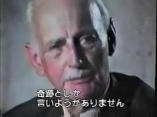
Anne's father Otto Frank (recorded in 1967): “When I learned that my daughters would not return, Miep gave me the diary. It can only be described as a miracle.”
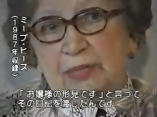
Miep Gies (recorded in 1987): “Then I took the diary out of the desk drawer. I handed it to him, saying, ‘A keepsake of your daughter.’ With the diary in his hands, he went into his room. I left him alone.”
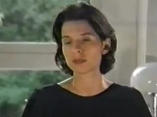
Melissa Müller, author of Anne Frank: The Biography: “Otto began preparing a manuscript from the two versions of the diary Miep had given him. This became the first published Diary of Anne Frank in 1947, the so-called C text.”
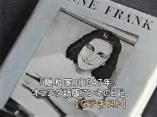 The Secret Annex (1947)
The Dutch Edition of Anne Frank's Diary
[C Text]
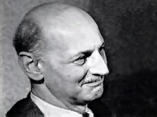
In fact, Otto struggled to publish Anne's diary. A publisher was hard to find. Even when it was finally published, the book hardly sold. But in the 1950s, everything changed.
 “THE DIARY OF ANNE FRANK”
PROCLAIMED BY CRITICS
“A FILM MASTERPIECE”
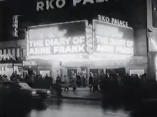 Neon sign reading “THE DIARY OF ANNNE FRANK”
(News audio): “The Diary of Anne Frank has premiered in New York. Exceeding expectations, it is breaking the theater's records.”
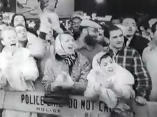
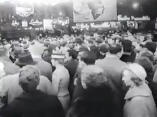
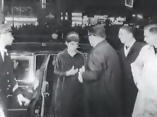
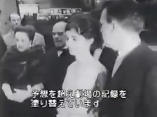
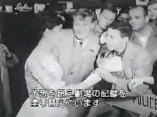
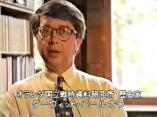
Historian David Barnouw, Netherlands State Institute for War Documentation: “The book became enormously popular after it was adapted for the stage and screen in America. In a sense, it was as though American audiences had carried Anne off.”
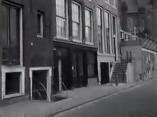
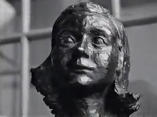
Eventually, the Frank family's hiding place opened to the public as the Anne Frank House, and Otto devoted the latter part of his life to the work of the Anne Frank Foundation.
The Five Missing Pages of Anne Frank's Diary
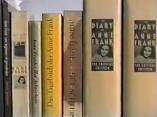
During the 1960s and 1970s, Anne's diary became a worldwide bestseller and was translated into about sixty languages.

Meanwhile, neo-Nazi groups had begun claiming that the Holocaust had never happened. They loudly insisted that Auschwitz was a fabrication and that Anne's diary, too, was a forgery by Jews. To silence the neo-Nazis, Germany's Federal Criminal Police Office began investigating the diary's authenticity in 1980. Investigators were sent to Otto's home in Switzerland to examine everything Anne had written.
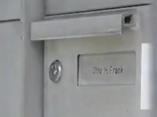 Mailbox
Otto H.Frank
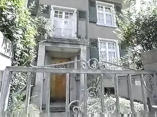 Otto's House
A few days earlier, Otto had summoned his trusted friend Cor Suijk and made a request.
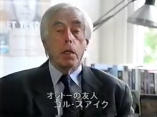
Otto's friend Cor Suijk: "—It was just before the German investigators arrived. Otto handed me five handwritten pages of Anne's diary and asked me to keep them for him. I said, 'What am I supposed to do? They need all of Anne's manuscript for the investigation.' Otto said these five pages had been cut and never printed, and he did not want the investigators to see them. I saw they were in Dutch and told him the investigators could not read Dutch. But Otto had already numbered every page of the diary manuscript except the five he did not want made public."
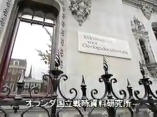
Otto died that year, and the manuscripts of Anne’s two diaries were donated to the Netherlands State Institute for War Documentation (photograph on the right). In 1986, the institute published a critical edition of Anne’s diary, making all the texts available.
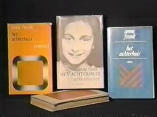
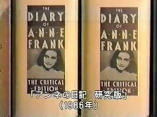 “The Diary of Anne Frank
Critical Edition'
1986
It compares and contrasts three versions: the original A text, the rewritten B text, and the C text published by Otto.
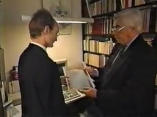
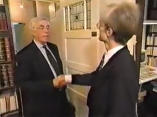
One of the editors, Herrold van der Stroom, is an expert on Anne's diary. On this day, he received from Cor Suijk the five disputed pages Otto had withheld. Otto had entrusted them to Cor in 1980. Nearly twenty years later, they were being seen for the first time. Herrold immediately examined the handwriting and established that the pages were genuine.
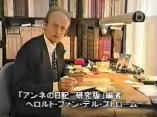
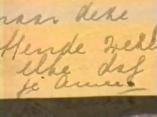
Gerrold van der Stroom, editor of The Diary of Anne Frank: The Critical Edition: "For example, the signature beneath the so-called letter to Kitty is evidence. There is a line below and to the right of the signature. This little stroke is a distinctive habit of Anne Frank's handwriting. That alone tells us these pages are genuine, written by Anne Frank herself."
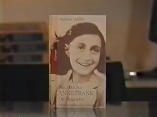
Why had Cor not published the pages Otto entrusted to him sooner? Otto had asked him to withhold them until their publication could no longer hurt either Otto or his second wife.

Otto's friend Cor Suijk: "When Otto handed me the five pages, he said he never wanted to answer questions about their contents. He entrusted them to me because he trusted me completely. So as long as there was any chance that he or his wife might be questioned,I was determined never to give them to anyone. Several months later, I visited him. When I said I still had those pages, he simply raised his hand in a gesture of rejection."

The five manuscript pages Otto withheld fell into two groups, orange and pale blue. On the orange pages, Anne wrote that she did not want anyone to see what she had written.

Gerrold van der Stroom, editor of the critical edition of Anne Frank’s diary: ‘If Otto had followed Anne’s words and not published it, we would not know about her. I am truly glad that did not happen. Ultimately, I think Otto did the right thing not only for us, but for Anne as well.’
Melissa Müller, author of a biography of Anne: "I think Otto misunderstood. When Anne wrote that she did not want anyone to see it, that was not her true intention—what she meant was that she did not want anyone invading her privacy. She never imagined that she would die and her diary be published in this form. After the war, she intended to use it as material for a novel."
Frank family friend Laureen Nussbaum, professor at Portland State University, Oregon: “That was a technique Anne used when thinking about how to begin a piece of writing.It was the same device as when she wrote at the beginning of her second diary that surely no one would be interested in what a little girl wrote. So Otto did not need to take it quite so seriously.”
Anne's mother, Edith Frank
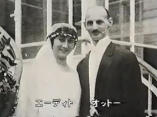
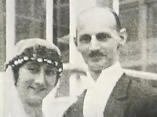 Edith
Otto
The withheld light-blue manuscript contained words of understanding and compassion for her mother Edith. Anne had realized that her father did not truly love her mother.
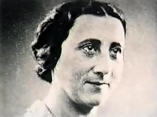
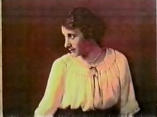
What kind of woman was Anne's mother, Edith?
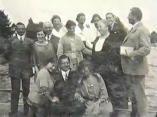
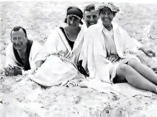
Edith's family, the Holländers, were devout and prosperous Jewish businesspeople. Edith had grown up wanting for nothing, in circumstances anyone might envy.
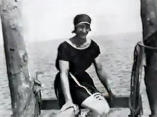
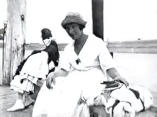
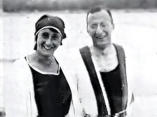
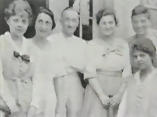

Melissa Müller, author of a biography of Anne: “Edith was never a particularly sociable woman. But as the photographs show, she was very lively. She was well educated, spoke several languages and played sports. In other words, she led a very rich life. Born into a wealthy family, Edith was always surrounded by the bustle of her cousins. But after she married and moved to Amsterdam, she became quieter and quieter. Her presence faded until she was almost like a shadow.”
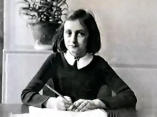
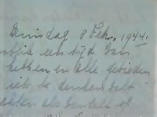
Anne understood her mother. At the same time, she knew why her father was cold toward her.
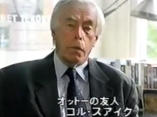
Otto's friend Cor Suijk: "Before marrying Edith, Otto had a very serious love affair that lasted several years. It may have affected his marriage. Anne had heard about it from her father too. In her diary, Anne writes about the effect Otto's first love had on his marriage to Edith."
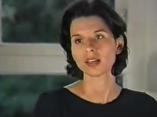
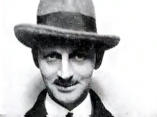
Melissa Müller, author of a biography of Anne: ‘During my research, I learned that the Holländer family was surprised that such a wonderful man as Otto had married Edith. People whispered that he must be after money.’
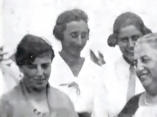
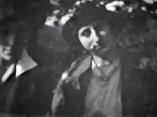
Until then, even specialists had paid little attention to Edith.
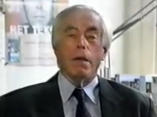
Otto’s friend Cor Suijk: ‘It is understandable that we know little about Edith. Very little has ever been written about her. Even the critical edition scarcely mentions her.’
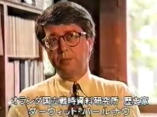
Historian David Barnouw, Netherlands State Institute for War Documentation: “So little is known about Anne's mother probably because attention after the war focused on Otto. And although people asked him about Anne, almost no one asked about his wife Edith. He did not want the subject of his wife raised either.”
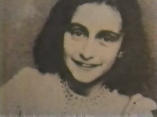
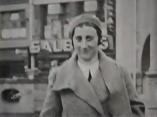
When Otto published Anne's diary, he removed the passages about her interest in sex and her harsh comments about her mother. The deleted passages were published in the critical edition of Anne's diary. But, of course, the pages Otto had kept hidden were not included. That portion was dealt with in a footnote.
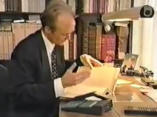
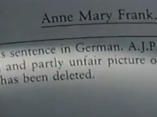
Herrold van der Stroom, editor of the critical edition of Anne's diary: “The footnote reads: ‘Here Anne gives an unfair view of her parents' marriage. It has therefore been omitted at the Frank family's request.’”
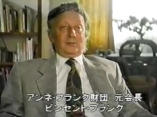
Former Anne Frank Foundation chairman Vincent Frank: ‘The board decided that passage would not be published. It was the greatest failure of my seventeen years as chairman. Everyone except me opposed publication. …It is regrettable.’
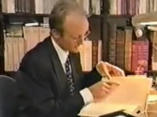
Gerrold van der Stroom, editor of the critical edition of Anne Frank’s diary: ‘The pale blue manuscript Otto withheld corresponds to the section we marked with dotted lines. We editors of the critical edition had assumed this part did not exist. So we were truly surprised when it emerged later. We could hardly believe it.’

Thus Anne's valuable account analyzing her parents' marriage and defending her mother was removed by Otto and remained unseen for eighteen years.
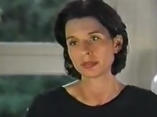
Melissa Müller, author of Anne Frank: The Biography: “By hiding these pages, Otto virtually betrayed his wife and daughter. This is the only part of the diary where Anne shows sympathy and understanding toward her mother.”
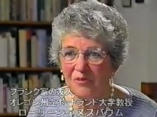
Frank family friend and Portland State University professor Laureen Nussbaum: ‘Anne’s observations were probably all too accurate. I think she saw the situation so precisely that it made Otto uncomfortable. He suppressed the pages not to stop Anne from siding with her mother, but rather because her account embarrassed him.’
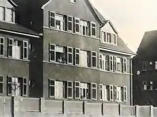
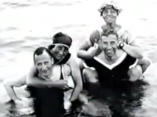
There was another reason for Edith's depression: she was desperately homesick for Germany.
Gertrud Naumann was a neighbor of the Franks in Frankfurt when they were newly married. After Edith moved to the Netherlands, Naumann received many letters from her expressing a wish to return home.
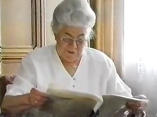
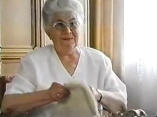
Frank family friend Gertrud Naumann: ‘It says here: “For us, the years spent in our Frankfurt home were truly wonderful.”’
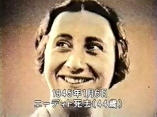 1945
January 6
Edith's Death
But Edith never saw her beloved Germany again. She died of hunger and disease in Auschwitz.
The Netherlands after the War
Even the Netherlands, far from the death camps, suffered greatly in the war. By the spring of 1945, just before its end, the country’s foundations had completely collapsed. When Queen Wilhelmina returned from exile in Britain at the war’s end, she saw a devastated, flooded land. The Allied counteroffensive brought Germany’s surrender and the liberation of the Netherlands. The end of Nazi German rule brought the Dutch people immense joy. They immediately destroyed the symbols of the hated Nazis.
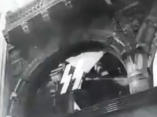
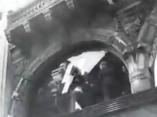 The SS banner
Citizens smashing it with hammers
Victorious Allied Supreme Commander Eisenhower and General Montgomery received ecstatic welcomes as heroes. Soldiers who had fallen fighting to liberate the Netherlands were buried with honor. The Dutch were trying to bury the past and move forward. Everyone wanted to forget the war, and no one wished to reopen the issue of the Jews under Nazi occupation.
Who Was the Informer?
News of January 4, 2017 — Was Anne's hiding place discovered by chance rather than through betrayal?
Open supplementary material
- Was Anne's hiding place discovered by chance rather than through betrayal?
- The arrest in Amsterdam, the Netherlands, of Anne Frank, author of The Diary of Anne Frank, and her family by Nazi Germany may have been a chance consequence of an investigation into forged ration coupons and other matters, rather than the work of an informer, as has generally been believed.
A new theory announced in December by the Anne Frank House museum in Amsterdam has attracted attention. Researchers analyzing newly discovered documents and other material found that the arrest of people connected to Anne's father, Otto Frank, for ration-coupon fraud, and suspicions of illegal employment at Otto's company, may have led to the search that resulted in the family's arrest.
Otto used the lower floors beneath the hiding place as company offices and storage. The museum concluded that the search targeted these offices and that the discovery of the family in hiding may have been merely accidental.
(Yomiuri Shimbun, January 4, 2017)
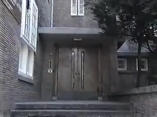
August 4, 1944. An informer, in what sounded like a woman's voice, telephoned to say that Jews were hiding at 263 Prinsengracht. SS officer Silberbauer was dispatched with Dutch police officers.
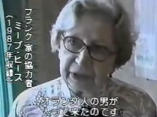
Frank family helper Miep Gies (recorded in 1987): ‘Around eleven in the morning, the office door suddenly opened. A Dutch man came in. He pointed a gun at us—and ordered us not to move. We froze. “It is all over,” a colleague whispered. We heard footsteps coming down the stairs, but could not see Anne and the others.’
The question of who informed on them remains.
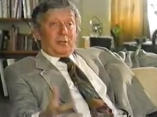
Former Anne Frank Foundation chairman Vincent Frank: ‘It is certain that the people in the hiding place were betrayed. It is probably also true that the informer was Dutch. Those who tried to help Jews included not just Dutch people but Germans and Austrians, too; but the informer was Dutch.’
In 1948, Dutch police questioned every employee of Otto's company to identify the person who betrayed the Frank family. Even Miep Gies and the others who had helped them came under suspicion.
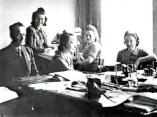

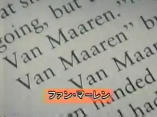 'Van Maaren'
Everyone alike suspected the warehouse worker Willem van Maaren.
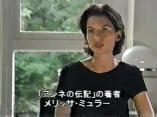
Melissa Müller, author of a biography of Anne: “The police focused on Willem van Maaren at that point, but had to abandon the investigation for lack of evidence.”
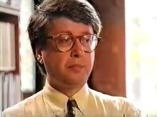
Historian David Barnouw, Netherlands State Institute for War Documentation: “Another investigation was conducted in 1963–64. This was because Simon Wiesenthal, a Jewish man pursuing Nazi war criminals, had tracked down Silberbauer, who arrested Anne's family. After the war, Silberbauer had returned to his native Vienna and rejoined the police. Under questioning, Silberbauer protested that he had indeed arrested Jews, but had only been following orders. He was surprised to learn that he himself had arrested the famous Anne Frank. Apparently, he foolishly asked whether his name appeared in Anne's diary.”
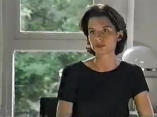
Melissa Müller, author of a biography of Anne: "In 1963, Silberbauer, the Nazi SS man who arrested the Frank family and the others in hiding, was found and could be questioned by the police. Hopes rose that this would prove Willem van Maaren had been the informer. But no conclusive testimony emerged, and the investigation was again closed. After Otto died in 1980, the Netherlands State Institute for War Documentation, to which Anne's manuscripts had been donated, began investigating the informer."
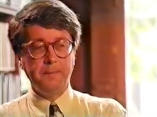
David Barnouw, historian, Netherlands State Institute for War Documentation: “Our investigation was no different from the previous two. In the end, we concluded that there was insufficient evidence to prosecute the warehouse worker Willem van Maaren. We could only conclude that no one knew exactly what had happened concerning the betrayal.”
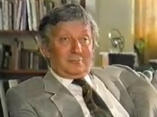
Vincent Frank, former chairman of the Anne Frank Foundation: “Judging from these findings, I get the impression that the investigation was inadequate. ...I believe a more thorough investigation could still produce an answer today.”
Writer Melissa Müller examined every available source in detail for her biography of Anne. She concluded that the warehouse worker Van Maaren was not the informer.


Melissa Müller, author of a biography of Anne: “After examining all the material, I found no evidence anywhere that he was the informer. Moreover, for forty years Miep Gies had consistently insisted that van Maaren was innocent. That interested me. Even in her memoir published in 1987, Miep argues that there was something wrong with the police.She says it was absurd to concentrate only on van Maaren while leaving someone who might have been the informer alone. So I asked Miep whether she had someone in mind. She replied that it was probably Lena Hartog-van Bladeren who had betrayed the Frank family.”
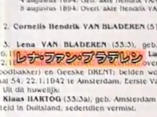 Lena van...
Bradelen
Lena worked for Otto's company, cleaning the building that contained the hiding place. Her husband, Lammert, was a warehouseman. The couple were questioned in the 1948 investigation but quickly released. During questioning, Lena lied, saying she had never worked in the building.
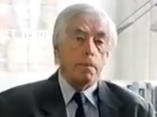
Otto's friend Cor Suijk: “Lena had a motive for informing on the Frank family. She told coworkers that she feared her husband, who worked in the building where they were hiding, might also be arrested if the family was caught. When I heard this, my first thought was that she might have arranged to inform on the Franks so that her husband could escape arrest. Later I spoke with Lena's niece, who said she could think of another sufficient motive for her aunt to have informed on the family. Lena had lost her only son. He had volunteered for the German army and been killed in the war. She was therefore in the depths of despair and may have felt that others should suffer too.”
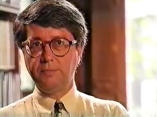
David Barnouw, historian, Netherlands State Institute for War Documentation: “When looking back at the history of Anne Frank and others who hid from the Nazis, the questions of who betrayed them and why are not particularly important. There certainly was betrayal. But even identifying the informer cannot change history. I understand people's interest. Yet most of the more than 10,000 Jews in hiding were caught directly by Germans. Even if over half were betrayed, not everyone was. Anne Frank's fame does not make the informer's identity important. For that family's history, it makes no difference.”

All the principal people connected with the betrayal of the Frank family have died. Identifying the informer now depends entirely on related information.The publication of Anne's long-concealed manuscript pages has deepened our understanding of Anne Frank. For two years she lived in fear in hiding, yet never lost her compassion for others or her hope of living.
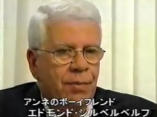
Anne's boyfriend Edmond Silberberg: “Of course, Anne is not only my Anne. She also represents the friends and the many innocent, good people I lost in childhood. Anne is truly a symbol of the tragedy that actually happened in our lives.”

Anne's friend Jacqueline van Maarsen: “Anne was not a special girl at all. Yet now everyone knows her. When someone in the street asks me where Anne Frank's house is, I feel something strange that I cannot quite describe.”
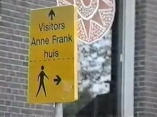
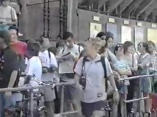
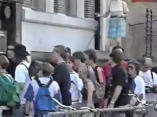
Visitors continue to come to Anne's house to this day.
〈End〉