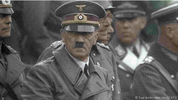

Adolf Hitler: The Road to Power
World War I
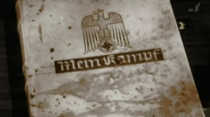
In 1924, Adolf Hitler wrote Mein Kampf, My Struggle. He concluded the hate-filled book with these words.
‘The state that rejects racial contamination will rule the world.’
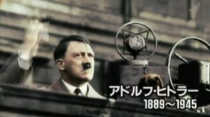
Hitler was born on April 20, 1889, and killed himself on April 30, 1945. How did an Austrian-born Hitler come to rule Germany? How did he create a chain of hatred? How did he drag the world into catastrophe? How did the phenomenon of Hitler worship arise in that era? Mein Kampf states:
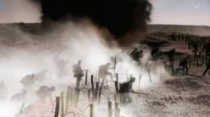
[World War I, 1914–1918] 'The First World War was the most unforgettable and sublime moment of my life.'
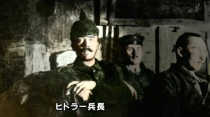
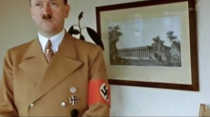
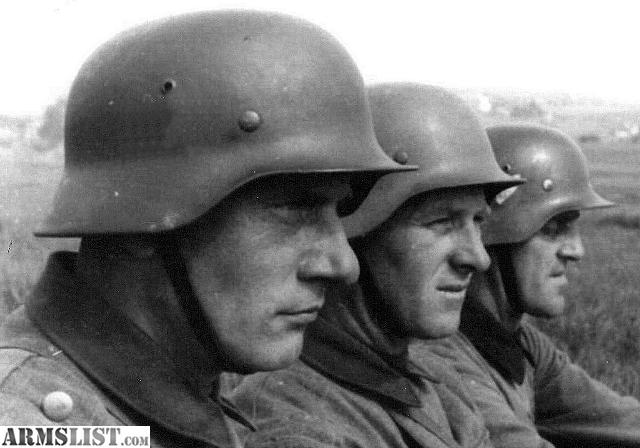
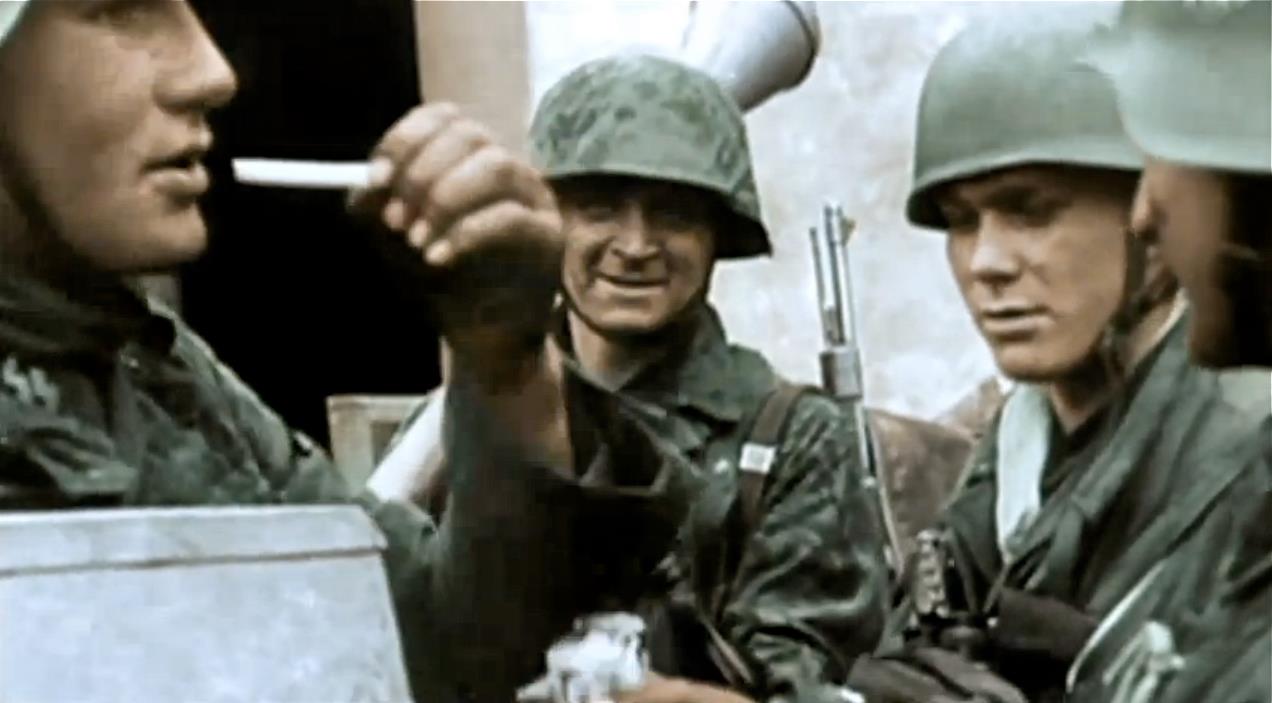
<Corporal Hitler> Hitler served in the First World War as a messenger in Bavaria's 16th Reserve Infantry Regiment. Running from trench to trench to deliver messages was dangerous work. He received the Iron Cross in recognition of his service. He continued to wear it beneath his Nazi Party badge.
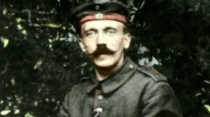
Amid the ferocious fighting of World War I, Hitler came to disregard human life and gradually became a fanatical nationalist. In the trenches, he developed a confused idea that one day he would speak as a witness to the age on behalf of his suffering comrades. That also meant entering politics. Hitler was skilled at exploiting soldiers' camaraderie.
〈1933〉This is a speech to factory workers after his service in the First World War.
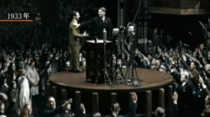
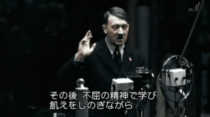
“My fellow German workers, I come from the same class as you. Throughout the four years of the Great War I was right beside you. Afterward, with indomitable spirit, I learned and struggled against hunger to rise this far. But my essential nature has not changed.”
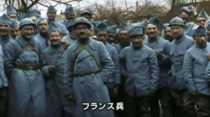
<October 1918> On October 13, 1918, near the war's end, Hitler was attacked with poison-gas shells and temporarily lost his sight. He was taken to a field hospital and later transferred to Germany. German forces at the front were then being forced back, and many officers and men became prisoners. German prisoners grew increasingly angry at the French soldiers' overbearing behavior.
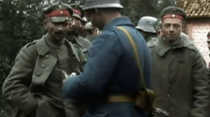 The pipe...
A French soldier taking it away
〈French soldiers〉Even the last pipes left in German soldiers' possession were confiscated by French troops.
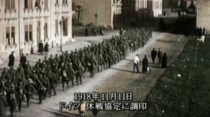
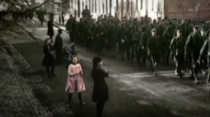
⟨November 11, 1918: Germany signs the armistice⟩ In November 1918, Germany surrendered and its army withdrew. The extreme right blamed Germany's defeat on unpatriotic elements who had agreed to the armistice.
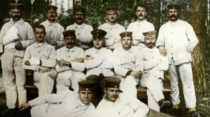
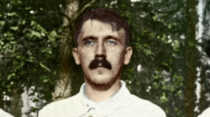
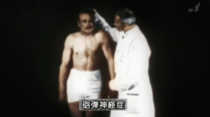 Shell Shock
His whole body constantly shakes violently, as if convulsing
Around this time came an event Hitler described as a turning point in his life. Treated in an army hospital, he began recovering his sight. The hospital treated combat stress reactions, or shell shock. While hospitalized, Hitler learned that the emperor had abdicated, Germany had become a republic, and defeat was certain. He later recalled hearing an inner voice at that moment.
'That voice called on me to liberate the German people and restore a great Germany.'
Delusions about Jews
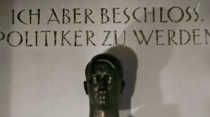
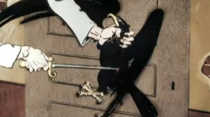
Above Hitler's bust were inscribed the words, “At this moment I decided to become a politician.” He was also possessed by a delusion: that the German eagle had been stabbed to death by Jews.
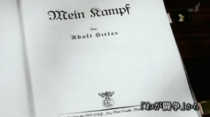
⟨From Mein Kampf⟩ “If during the war we had used poison gas even once against ten-odd thousand Jews who corrupt the people, millions of soldiers would not have died in vain.”
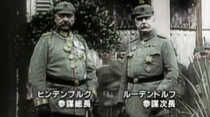 Left: Hindenburg
Chief of the General Staff …k
Right: Deputy Chief of Staff Ludendorff
At the end of 1916, Chief of the General Staff Hindenburg and Deputy Chief Ludendorff had ordered reports on any Jewish soldiers suspected of unpatriotic behavior.
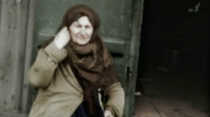
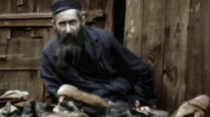
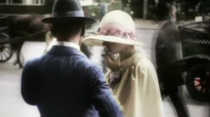
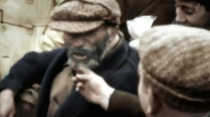 Mocking a beard
A Jewish man being...
Such antisemitism had existed for centuries. Whenever social conditions worsened, Jews were the first to be made scapegoats.
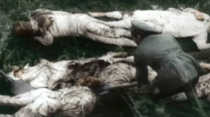
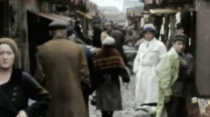
Massacres of Jews occurred in Russia in the early twentieth century, and many Jews fled to Germany and settled there.
Early Life and Mysteries
There is, however, one great mystery about Hitler: whether he truly had no Jewish ancestry. One closely guarded Nazi secret was the unknown identity of his paternal grandfather. His grandmother bore a son while unmarried, then married a miller named Johann Hitler. Under Nazi law, recognition as a German required proof that all four grandparents were non-Jewish. Since Hitler did not know his real grandfather, he could not prove that he had no Jewish ancestry.
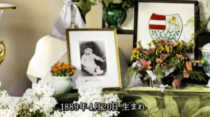
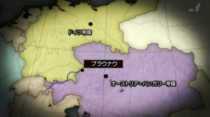
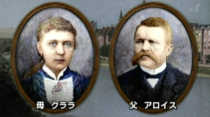
<Born April 20, 1889> Adolf Hitler was born on April 20, 1889, into a Catholic family in Braunau, then part of the Austro-Hungarian Empire. His father was a customs official who, after losing his wife, remarried a much younger cousin. <Mother: Klara> <Father: Alois> During Hitler's childhood, the family moved repeatedly as his father's postings changed.
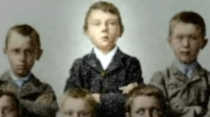
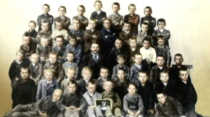
He was a model pupil in primary school and, at eight, helped at Mass in a monastery. He sang hymns and praised the priests' self-sacrifice and sense of mission.
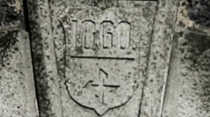
An unusually shaped cross was carved into the monastery wall. He remembered it and later used it as the model for the Nazi emblem, the swastika. In Hinduism, this shape is a symbol of good fortune representing humanity's eternal activity.
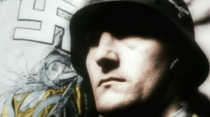
The Nazis, however, made it a symbol of tall, blond, blue-eyed Aryans. They added the interpretation that Aryans were superior to other races.
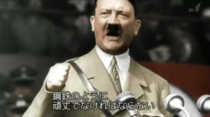
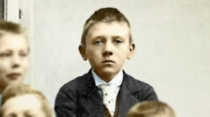
[Hitler's speech, 1938]: "German boys must be long-limbed, swift and tough as hares, and hard as steel. We are creating a new race."
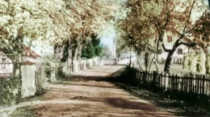
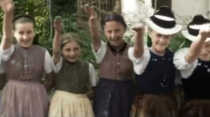
Hitler himself had been spoiled by his mother and was not a boy who lived up to this ideal. He returned to his homeland at turning points in his life. He also visited Austria before invading Poland, the act that triggered the Second World War.
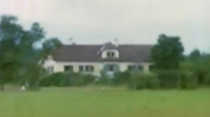
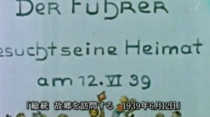
The house where he lived as a child. Footage filmed and edited by his mistress Eva Braun was titled ‘The Führer Visits His Homeland, June 12, 1939.’ 〈Photograph on the right: The Führer Visits His Homeland, June 12, 1939〉
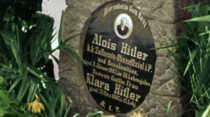
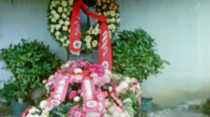
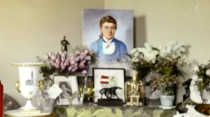
Hitler laying flowers on his parents’ grave. His father was strict and fond of drink, but Hitler felt no particular resentment toward him.
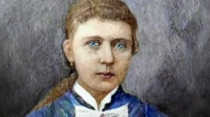
His mother, by contrast, who died of cancer at just forty-seven, was the only person Hitler truly loved. He kept her portrait close until his final moments in the bunker.
The Young Hitler — To Vienna
After his mother’s death, Hitler went to Vienna at nineteen. His dream was to study at the Academy of Fine Arts.
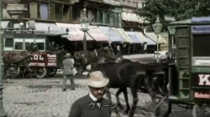
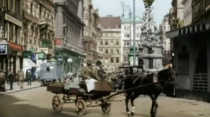
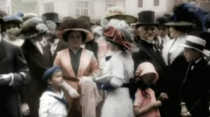
〈Vienna〉A small inheritance enabled him to live as he pleased. Vienna was then one of Europe's cultural centers. There he encountered the lifestyle of the upper classes.
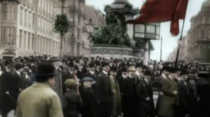
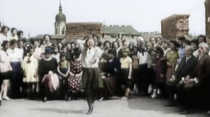
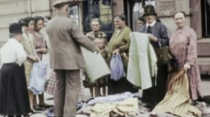
He also saw socialists campaigning beneath red flags. For the first time, he learned that many peoples lived in the empire: Czechs, Poles, Italians, Croats, and Jews. Hitler later wrote: “This seemed the very embodiment of a desecration of race.”
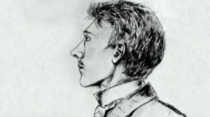
Hitler took the entrance examination for the Academy of Fine Arts. But having barely prepared, he failed. The footsteps of the First World War were drawing nearer.
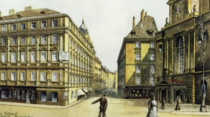
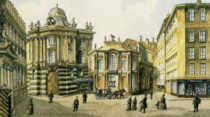
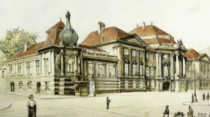
Hitler scraped a living by copying picture postcards and selling them to tourists.
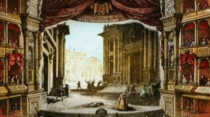
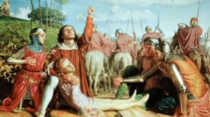
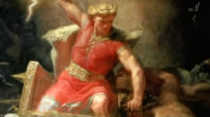
He spent his scant money attending the opera. Witnesses said he became absorbed in Wagner's works, even ecstatic. Hitler identified himself with legendary heroes. His favorite was Rienzi, the story of a young warrior given a mission to save the people.
Age Twenty-Five: A Born Orator
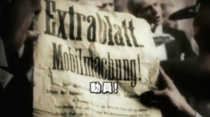
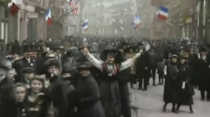
〈Mobilization! August 1914: the First World War begins〉In August 1914, when Hitler was twenty-five, the First World War began. Already living in Munich, Germany, to evade military service in Austria, he was swept up in the tide of extreme nationalism.
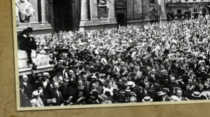
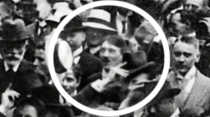
Hitler was among the crowds enthusiastically welcoming Germany's declaration of war. The Nazis used this photograph (left and right) to their advantage in the 1932 election. His opponents called it a composite, but Hitler really was there, and this war would change him.
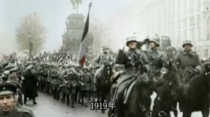
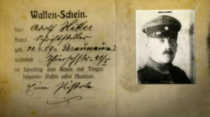
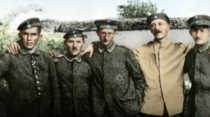
〈1919〉After four years in the army, Hitler returned to Munich. Now thirty, he wanted to remain in the military—the army guaranteeing the stability of Ebert's government, after the Social Democrat became the republic's first president.
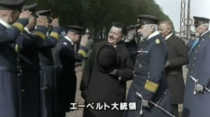
[President Ebert] Germany, newly a republic, had to deal with the Spartacists, a Marxist political organization seeking to seize power. With help from the nationalist Freikorps militia, the army suppressed the Spartacist League. Wanting somewhere to live and an officer's uniform, Hitler served the army devotedly. He became an intelligence operative and denounced comrades suspected of communism. His superiors, who sought to control the population by stirring up fear of communism, noticed his activities. They assigned him to reeducate returning German soldiers and prisoners of war.
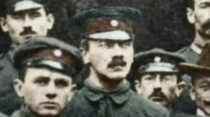
His superior at the time called him a born orator: ‘The audience is captivated by his impassioned appeals and comes to think as he does.’
Hitler himself recognized his talent. Eventually he used not just rhetoric but stagecraft to dominate audiences. [1933] This footage and sound were recorded in 1933. He knew how to build tension gradually and tell listeners exactly what they wanted to hear.
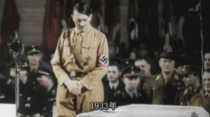
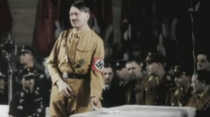
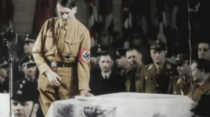
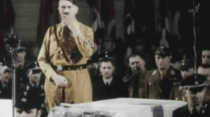
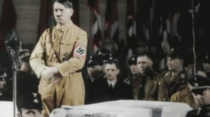
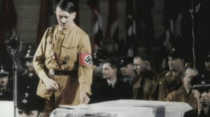
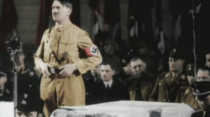 moves the table until the audience falls silent,
Touching his speech manuscript, bringing his hand to his mouth,
He keeps making gestures such as touching his belt.
By never ordering them to be quiet
Trying to capture the audience’s attention
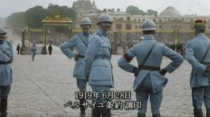
〈June 28, 1919: Treaty of Versailles signed〉Germany signed the humiliating Treaty of Versailles in June 1919. After months of discussion, the victorious powers imposed harsh peace terms, treating Germany as though it alone were responsible for the war. The treaty ordered Germany to pay enormous reparations. These placed a heavy burden on the German economy, and public discontent grew.
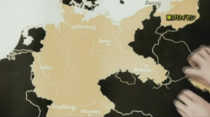
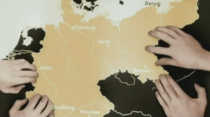
Germany also lost thirteen percent of its territory and ten percent of its population. Alsace-Lorraine returned to France. The entire left bank of the Rhine was demilitarized. Territory was also ceded to Poland, which had disappeared after being partitioned by neighboring states in the eighteenth century.
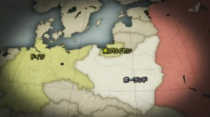
This made Germany’s East Prussia an exclave and gave Poland access to the sea. It would later become a flashpoint for the Second World War.
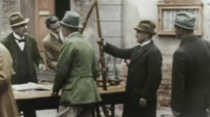
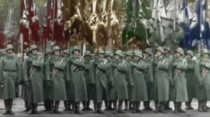
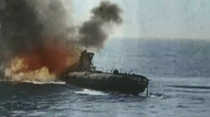
The victorious powers also demanded that Germany disarm its right-wing counterrevolutionary militias. It was like rubbing salt in a wound. Submarines were blown up, followed by battleships and aircraft. The German army was reduced to one hundred thousand men. Hitler, meanwhile, returned to Bavaria, where radical right-wing organizations were gaining ground.
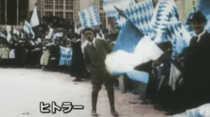
⟨Hitler⟩ This is the earliest footage of Hitler, taken when he joined a demonstration by the far-right German Workers' Party. In fact, he had infiltrated it on army orders to spy. Subsequently, however, he joined this German Workers' Party and became an active member.
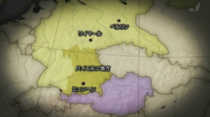
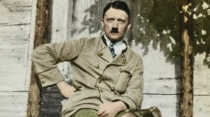
While the far right was strong in Bavaria, Berlin’s central government was center-left. Germany became known as the Weimar Republic after the city where the new constitution was drawn up. Continuing his activities in Bavaria, Hitler fiercely denounced the Weimar leaders who had signed the armistice and the Treaty of Versailles. Many veterans shared these sentiments.
Hess and Göring
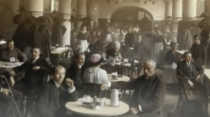
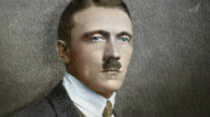
In August 1920, Hitler made his political debut with a speech at a beer hall frequented by veterans. His theme was: why are we antisemitic? His answer was that, beyond the instinctive hatred of Jews he had harbored since Germany's defeat, antisemitism readily attracted radical nationalists.
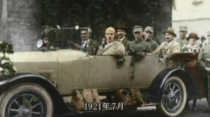
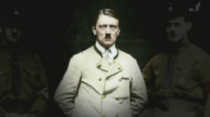
[July 1921] The German Workers' Party, to which Hitler belonged, made him its leader and presented him with a car as a symbol of authority. Hitler then changed the party's name to appeal to a broader audience and make its anticapitalist position explicit.
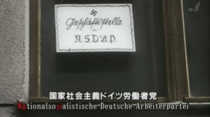
<National Socialist German Workers' Party — Nationalsozialistische Deutsche Arbeiterpartei> From the German Workers' Party to the National Socialist German Workers' Party: Nazi for short. At party headquarters in a Munich beer hall, Hitler designed the party emblem.
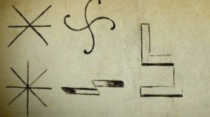
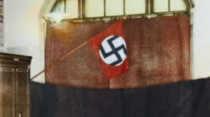
Mein Kampf states: “After countless deliberations, I chose a red background representing socialism, a white circle representing nationalism, and over it the swastika, the symbol of antisemitism.”
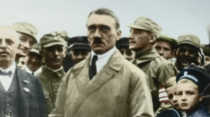
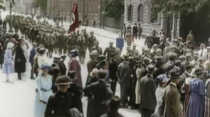
The SA was established to guard Party meetings. Uniforms came from surplus stock at customs offices of the former Austro-Hungarian Empire. Membership rose tenfold in a year, from 2,000 to 20,000. Behind this rapid growth was support from the racist secret society known as the Thule Society.
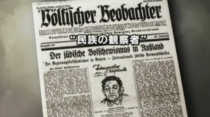
[1922] The newspaper published by the Thule Society changed its name and became the Nazi Party's organ. This racist newspaper was called the Völkischer Beobachter, the 'People's Observer.'
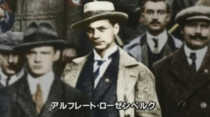
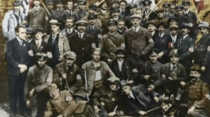
Editor and publisher Alfred Rosenberg was a member of the Thule Society and an antisemitic theorist. He would later become deeply involved in the Holocaust, the mass murder of the Jews.
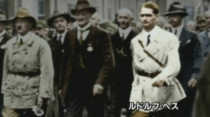
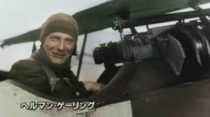
Rudolf Hess, a member of the Thule Society in his student days, also became Hitler's loyal accomplice. Another early recruit was the First World War hero Hermann Göring, one of Germany's celebrated fighter pilots. Unable to adjust to civilian life after the war, he identified with Hitler's ideas. Göring eventually became the Nazis' number two and helped establish concentration camps.
Germany's Crisis — Hyperinflation
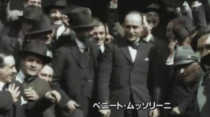
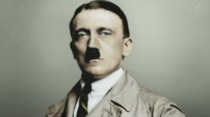
<Photo left: Benito Mussolini> Meanwhile in Italy, the Fascist Party led by Benito Mussolini had expanded its power and seized government. Would Hitler become Germany's Mussolini? The year 1923 would be a turning point.
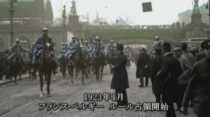
⟨January 1923: France and Belgium begin occupying the Ruhr⟩ On January 11, combined French and Belgian forces occupied the Ruhr, the heart of Germany's coal and steel industries, because Germany had refused to pay the reparations imposed by the Treaty of Versailles.
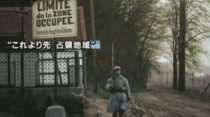
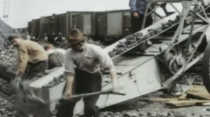
〈‘Occupied territory beyond this point’〉France and Belgium sought to take coal in lieu of reparations. The German government ordered miners and railway workers to strike. But France brought in replacement workers. No coal was left for the Germans. The situation was on the verge of exploding.
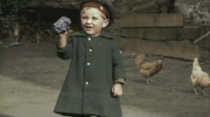 carrying coal
a little boy lifting up
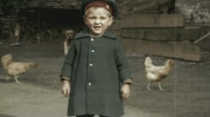
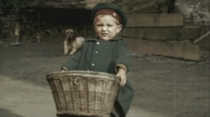
On March 10, French Lieutenant Colpin was assassinated, and his coffin was carried through several towns on the way home. Along the route, a French officer slapped a German who failed to remove his hat.
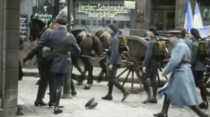
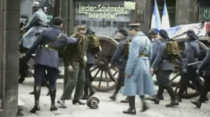
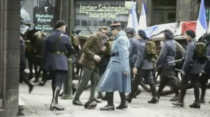
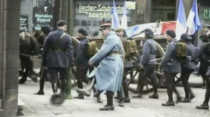
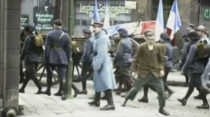 an officer’s knee
after kicking, fla—
slaps, and another
An officer kicks a hat away
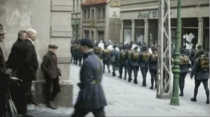
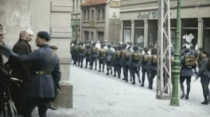
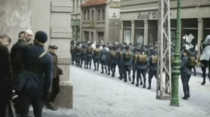 an officer at the far left
The person's head …
Clapping hands and flicking a hat away
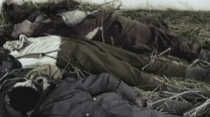
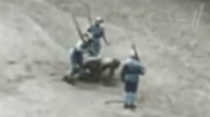
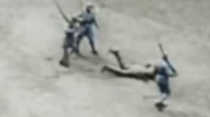
The Nazis used documentary footage like this to suit their purposes. German factory workers killed by French troops, for example. And the execution of the saboteur Schlageter. The Nazis turned him into a martyr.
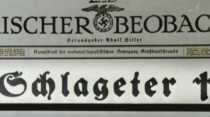
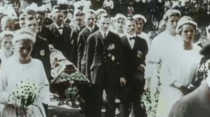
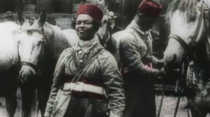
He also accused African soldiers from French colonies of raping German women. Once in power, Hitler ordered the sterilization of children born from such encounters. He fiercely condemned the weakness of Germany’s central government for accepting treatment akin to colonial subjugation.
The German people shivered in the cold and endured hunger.
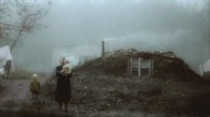
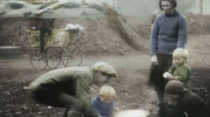
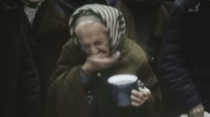
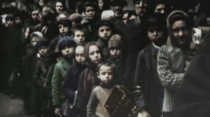
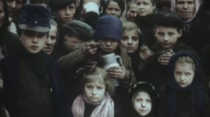
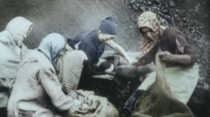
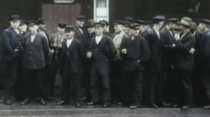
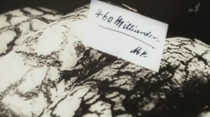
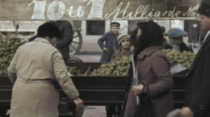
Germany had to import coal from France while also paying the wages of striking miners. To do so, the government issued enormous quantities of banknotes. The mark's value plummeted. A kilogram of potatoes cost one billion marks. A loaf of bread soared to 460 billion marks.
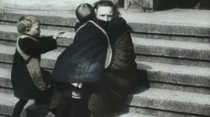
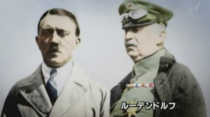
Amid rampant inflation and unemployment, Bavaria's far right elevated the First World War general Ludendorff to its leadership. Thanks to Ludendorff, Hitler was able to unite veterans. He planned a coup, marching on Munich and then Berlin. ‘The German people are suffering extreme poverty. If we do not act now, they will switch to the Communists.’
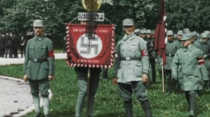
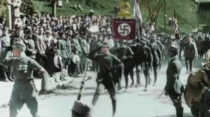
With help from sympathizers within the military, the Nazis secured weapons. In the end, however, the army and police remained loyal to the central government.
The Munich Putsch
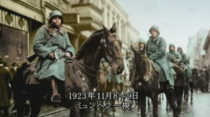
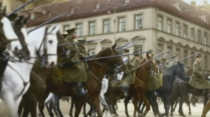
[Munich Putsch, November 8–9, 1923] It was a blow to Hitler. Yet he clung to the illusion that people would follow him and Ludendorff, and ordered his men to march toward the police barricade.
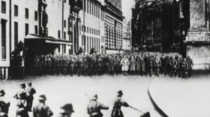
Hitler stands in the center wearing a white coat. In fact, this is a composite photograph made to fabricate the myth of his bravery. In reality, he was cowering behind his guards.
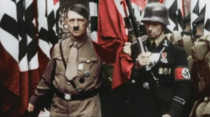
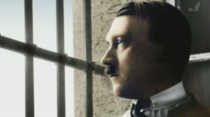
Police gunfire ended the coup, the Munich putsch, in failure. Hitler was arrested, and the Nazi Party was forced to suspend its activities.
〈February 26, 1924〉Three months later, the trial of the leaders of the Munich Putsch began. Hitler was charged with high treason and the murder of four police officers—crimes that could carry the death penalty.
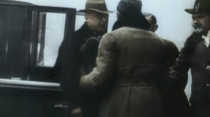
Ludendorff, who had not even been detained, arrived at court in a luxury car with his lawyer. With influential supporters on his side, he was acquitted and released. Hitler, who had even contemplated suicide, realized the court was less hostile than he had expected.
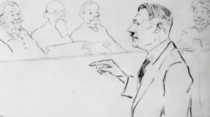
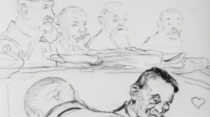
There he deployed his rhetoric to heap abuse on the government and the Jews. Hitler dominated the trial. The judges sympathized, and citizens crowded in to attend.
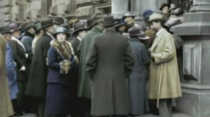
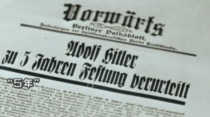 'Five years'
The sentence was far lighter than Hitler feared: five years' imprisonment. Moreover, he was housed in a comfortable cell in the countryside.
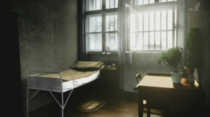
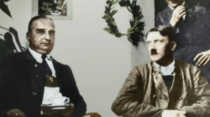
Although called a prison cell, it was more like a hotel. He could meet Nazi supporters whenever he wished. Some brought laurel wreaths to honor Hitler.
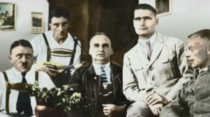
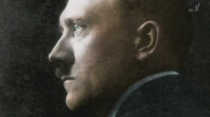
Eager for Hitler's return to politics, they devised schemes to secure his release. Realizing he would soon be freed, he decided to write a book explaining his outlook on life and political convictions. Hitler dictated, and Hess typed the words.
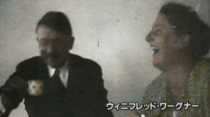
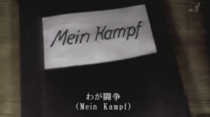
The paper was supplied by Winifred Wagner, daughter-in-law of the composer he revered. She, too, was a racist and deeply admired Hitler. He intended to call the book ‘Four and a Half Years of Struggle Against Lies, Stupidity and Cowardice.’ Told that this was too long, he settled on Mein Kampf, ‘My Struggle’ 〈My Struggle (Mein Kampf)〉.
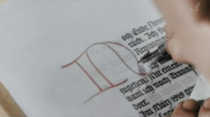
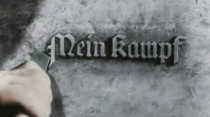
Mein Kampf was bound like a precious medieval manuscript. Hitler expounded his views on the struggle of the Aryans as the master race, territorial expansion, the eradication of communism, and the elimination of France and the Jews. According to Hitler, they did not even belong to humanity. Many readers at the time merely thought it a strange book and paid little attention. They never imagined it would lead to a tragedy costing as many as fifty million lives.
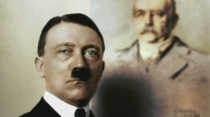
[1924] On December 20, 1924, Hitler was released as a model prisoner. He imagined himself the successor to Bismarck, who had laid the foundations of the German state. 'My days in prison convinced me that nothing could ever shake me again.' Yet Mein Kampf had sold only 20,000 copies and was a failure.
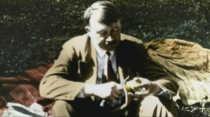
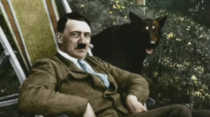
Hitler rented a small mountain retreat at Berchtesgaden in the Bavarian backcountry and began spending much of his time there.
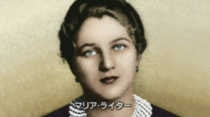
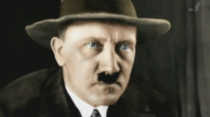
⟨Maria Reiter⟩ Here he met and began a romance with a lovely sixteen-year-old waitress, Maria Reiter. Maria wanted marriage, but Hitler refused and urged her to become his mistress. He believed marriage would obstruct his mission. Maria left.
Mein Kampf
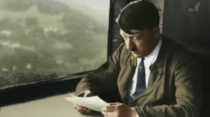
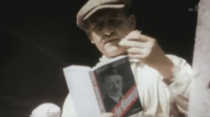
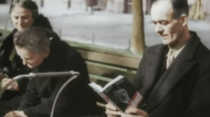
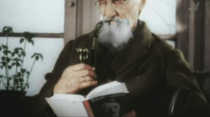
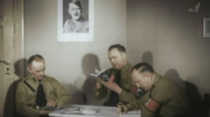
Hitler wrote a sequel to Mein Kampf. It chiefly described plans to expand Germany's living space into Russia. Mein Kampf, whose initial sales had been poor, became required reading for the people after Hitler seized power in 1933.
The state gave this book to couples getting married. A servant might denounce you if it was missing from your bookshelf.
One company presented the book to employees who distinguished themselves. Under the dictatorship, Mein Kampf sold more than eighty million copies and was translated into many languages. Enormous royalties enriched Hitler.
The SA Storm Troopers: Studying Gestures for Speeches
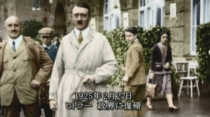
<February 27, 1925: Hitler returns to politics> Returning to February 27, 1925: after his release from prison, Hitler made his political comeback in Munich and regained leadership of the Nazi Party. The following day, an event occurred that gave him further momentum.
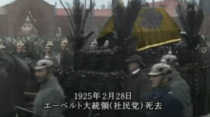
<February 28, 1925: President Ebert (Social Democratic Party) dies> Ebert, the first president of the Weimar Republic after the collapse of the German Empire, died at fifty-seven from complications of appendicitis. The public mourned the Social Democrat who had guided economic recovery. An election was held for a new president. The ban on the Nazi Party had been lifted. Ludendorff stood as the candidate of an alliance of far-right parties, but lost with just one percent of the vote. Hitler had secretly hoped for his defeat. His greatest rival had fallen. 'We finished him off,' Hitler boasted.
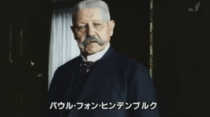
The German people chose Hindenburg, the First World War hero. 〈Paul von Hindenburg〉In 1971, as a young army officer, Hindenburg had also witnessed the proclamation of the German Empire at Versailles. He united the conservatives, alarming the left and other European countries.
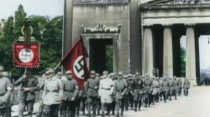
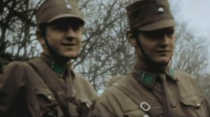
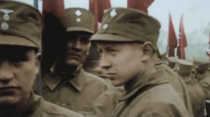
Meanwhile, Hitler's Nazi Party successfully extended its influence throughout Germany. Membership reached 170,000. The SA officially became the party's paramilitary organization. Their new uniforms gave them the name Brownshirts.
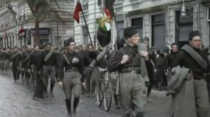
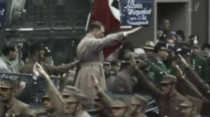
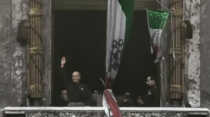
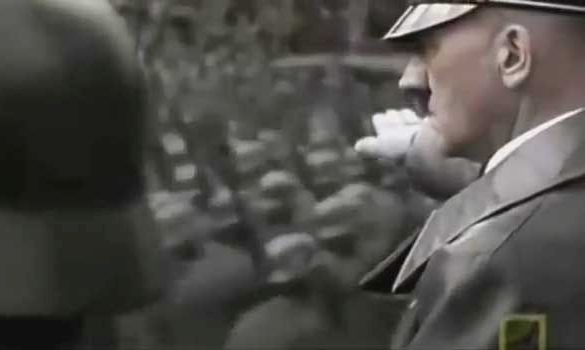
They copied Mussolini's Blackshirts, who had successfully marched on Rome a few years earlier. Another borrowing from Mussolini was the Roman-style salute, arm outstretched with a shouted greeting. For Mussolini it was ‘Long live the Duce’; for Hitler, ‘Heil Hitler’—‘Long live Hitler.’
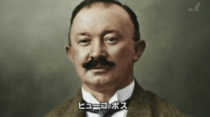
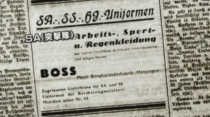
German designers created the SA uniforms. One was Hugo Boss, a designer from Stuttgart, who promoted the uniforms in his company's advertisements. Hugo Boss was a Nazi Party member.
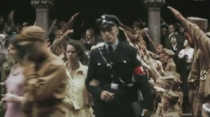
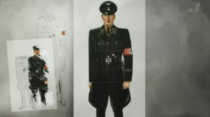
He also designed the intimidating black uniform of Hitler's newly established bodyguard, the SS, and the uniform of the Hitler Youth organization.
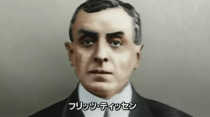
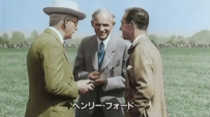
The enormous funds required were raised from Nazi Party members and wealthy supporters. One supporter, steel magnate Fritz Thyssen, was preparing his steelworks to manufacture new artillery. 〈Photograph on the left: Fritz Thyssen〉Henry Ford, the American car manufacturer and owner of the world’s largest automobile enterprise at the time, 〈photograph on the right: Henry Ford〉was also a Nazi supporter.
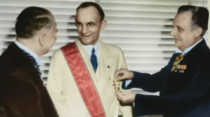
The antisemite Ford gave the Nazis all his sales profits in Germany. In addition, he personally donated $50,000 every year on Hitler's birthday—an extraordinary sum at the time. Ford was the first foreigner to receive the Grand Cross of the German Eagle.
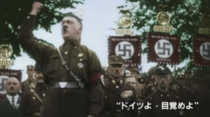
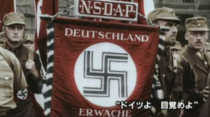
⟨1927⟩ Through grand party rallies and massive propaganda campaigns, the Nazis swayed public opinion and energized their supporters. Nazi flags loudly proclaimed Germany's awakening: “Germany, awake.” In 1927, Hitler held the party rally in the historic city of Nuremberg. It possessed the charm of medieval Germany, also evoking the world of his beloved Wagner. Hitler declared Nuremberg the very embodiment of his ideology. He also demanded absolute obedience to the Führer.
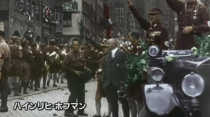
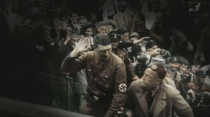
Hitler’s personal photographer, Heinrich Hoffmann, played a part in this. 〈Heinrich Hoffmann〉A longtime Nazi Party member devoted to his Life camera, Hoffmann was always beside Hitler. He took surprising photographs to show the public a private side of the great leader.
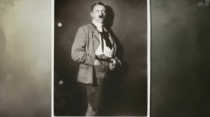
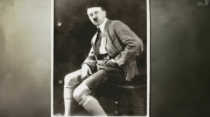
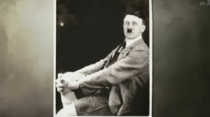
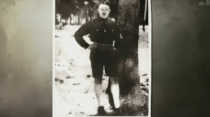
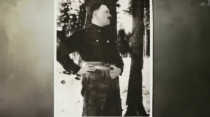
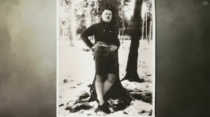
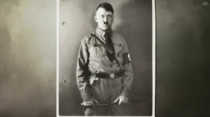
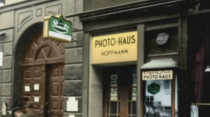
This was also intended to win women's votes. At Hoffmann's photographic studio in Munich, Hitler studied various intimidating gestures, taking inspiration from opera singers' performances.
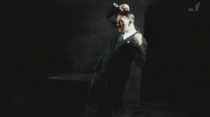
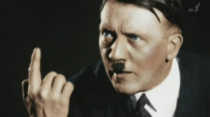
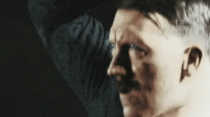
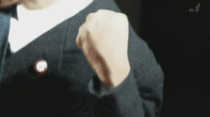
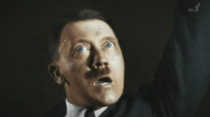
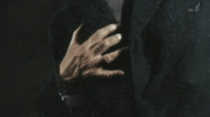
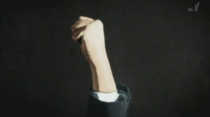
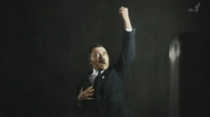
It was put to use at the first large-scale party rally.
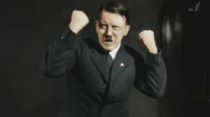
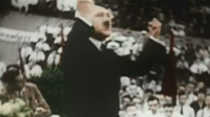
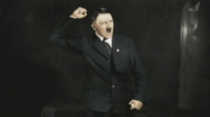
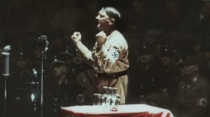
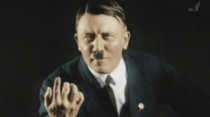
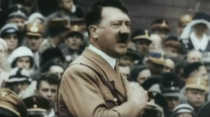
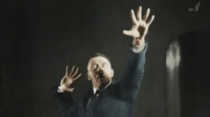
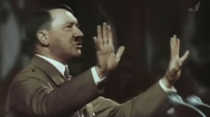
“The masses are effeminate and stupid, and stirring up hatred is the only effective way to manipulate them.”
An Attempt to Seize Power Through Hatred
Hatred. This was precisely the emotion the SA spread throughout Germany, beginning in Jewish neighborhoods.
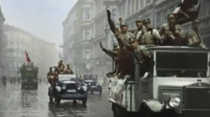
The Austrian Jewish writer Stefan Zweig witnessed the beginning of the violence. “At a whistle, SA men leapt from a truck with lightning speed and beat people mercilessly with clubs. At another whistle, they jumped back aboard and vanished as quickly as they had appeared. Fascist methods were executed with German precision.”
 passing by
suddenly pushes into
A person being ... down
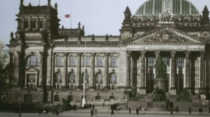
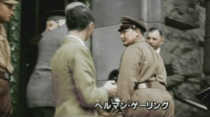
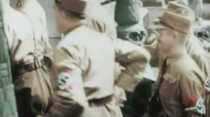
But at this stage, tighter control did not translate into votes. In the 1928 German parliamentary election, the Nazis won only 2.6 percent, fewer than a million votes. The Communists received three times as many, and the Social Democrats became the largest party with ten million votes. Nevertheless, the Nazis sent twelve new deputies to parliament in Berlin. Their arrival in SA uniforms caused a sensation. Hermann Göring was among them. [Hermann Göring] After being wounded in the Munich Putsch, Göring had become addicted to morphine and grown very fat.
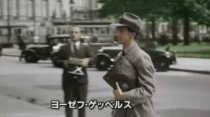
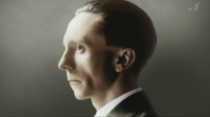
〈Joseph Goebbels〉Joseph Goebbels also made his political debut at this time. The philosopher Nietzsche once said: ‘Fanatical behavior is a form of expression of will attainable even by the weak and indecisive.’ Far from the Aryan appearance idealized by the Nazis, Goebbels had suffered from feelings of inferiority since childhood. But he possessed a devilish cunning.
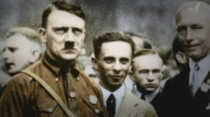
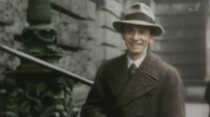
Originally a believer in Marxism, Goebbels changed after his fateful meeting with Hitler. He came to think: ‘The Jews refused to publish my book, and the communists threw society into chaos. Both must bear the blame. We shall enter parliament like wolves entering a sheepfold.’
But at this point no one yet understood the gravity of his words. Ordinary citizens saw Hitler as a man without consistent ideas or convictions. A Frankfurt newspaper commented: “He has carried wartime ideology forward unchanged and risen this far by primitive methods. It is as if he lives in the age of the Roman Empire's collapse.”
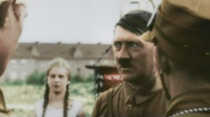
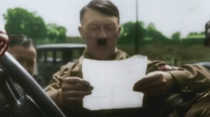
Germans thought Hitler would never succeed politically unless something extraordinary happened. British historian Ian Kershaw says: ‘Without the Great Depression of 1929 and the fragmentation of the bourgeoisie, liberals and conservatives, Hitler would have remained an eccentric on the political margins.’ But Hitler never gave up.
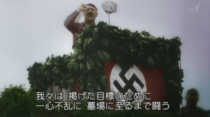
(Hitler's speech): “We will fight single-mindedly to the grave for the goals we have proclaimed.”