
Wilhelm Canaris
Admiral Canaris: An Anti-Hitler Spy
September 30, 1942. A train headed for Auschwitz. Most of its eight hundred passengers were Dutch Jews. That same day, an express train traveled from Germany to Switzerland. There were Jews aboard this train too: twelve passengers in all. If they reached Basel station, they would be free.
German Jew Irmgard Amson: “We arrived in Basel at dawn. What I remember is everyone tearing the Jewish badges off their sleeves. They did not care if their clothes tore. They ripped them off fiercely and stamped their feet on the floor. I will never forget it.”
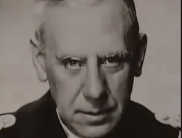
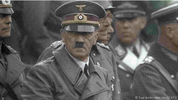
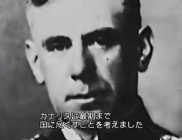
They were saved by one of Hitler's subordinates, a man who rescued hundreds: Wilhelm Canaris, chief of Wehrmacht intelligence (photo right).
Meanwhile, on the Eastern Front, Canaris also directed the fighting against partisans in the rear areas. The tasks were espionage, sabotage and word-of-mouth propaganda. It was a dirty war with heavy losses.
Intelligence training instructor R. Starlitz: “Of the agents operating behind the lines, no more than five to ten percent survived.”
Military men serving Hitler, struggling between obedience and conscience. Repression and protest. An opponent who helped Hitler. Saving people while ordering the deaths of others. Canaris did not know the answer.
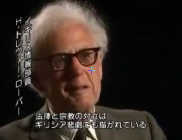
British intelligence officer H. Trevor-Roper: "The conflict between law and religion is also depicted in Greek tragedy. One must always question oneself and find an answer."
As Head of Intelligence
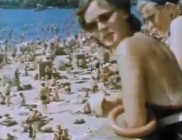
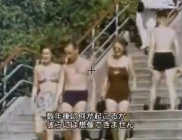
The summer of 1935. An age of illusions. They could not imagine what would happen a few years later. That year Canaris became head of intelligence. The intelligence service belonged to the Wehrmacht. This department moved forward with the new state.
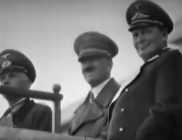
He was not captured on film on 'National Defence Day.' He disliked cameras, which left evidence behind.
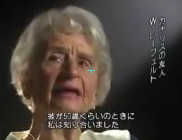
Canaris's friend W. Leefeldt: "I met him when he was about fifty. He was a very decent German who was proud to belong to the navy."
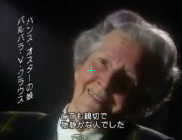
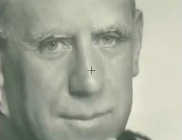
Barbara V. Kraus, daughter of Hans Oster: “Admiral Canaris was a very kind, quiet man.”
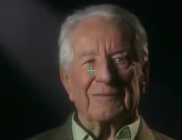
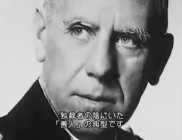
Canaris's subordinate R. Spitzy: “He was a small man who looked at you with innocent, round eyes. He enjoyed deceiving people.”
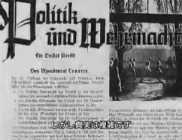
After the war he became a legend, the archetypal ‘good man’ in the dictator's shadow. But the truth is complicated. Initially he admired the ‘Führer’ and wrote these words.
“The armed forces should precisely carry out the Führer's wishes.” Though not a Nazi Party member, he considered Hitler a suitable head of state.
Klaus V. Dohnanyi, son of Dohnanyi: “He was an active patriot. Even democrats felt that Germany's situation in the 1920s, including the Treaty of Versailles, was terrible. Hitler was thought to be right because he swept that aside. The terror became known afterward. Few people sensed that he was a devil at heart.”
Canaris did not recognize the devil. Nor was he concerned about SS spying. He told someone who warned him, “These young men are quite enough for me.”
An Effective Intelligence Service: Joining the Resistance
Intelligence soon attracted attention and expanded its espionage. More agents and better equipment impressed the enemy.
British intelligence officer Bill Croom: "Canaris was a true professional, and his agents were excellent. I envied him."
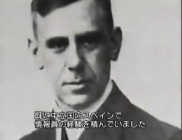
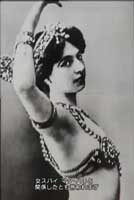
He knew Hitler personally. In 1933, Hitler visited the fleet at Kiel. They thought highly of one another. Canaris was then captain of the battleship Schlesien.He was a man Hitler needed, a man who had already accomplished much. He was decorated as a U-boat commander in World War I and had already gained intelligence experience in neutral Spain. He was arrested twice. On one occasion he escaped from Chile to Argentina, risking his life crossing the Andes. On the next, he escaped an Italian prison dressed as a clergyman. He was also said to have been involved with the female spy Mata Hari—a rumor he liked to spread.
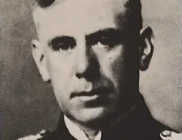
Rosa Luxemburg's murder trial saw him assist the perpetrator. At the court-martial, he imposed a lenient sentence: two years' imprisonment. Soon afterward, a military officer helped the perpetrator escape with a false uniform and papers. To Canaris, killing a communist was no crime. His superior praised the verdict as politically balanced. He would also begin rising through the ranks under the Nazi state.
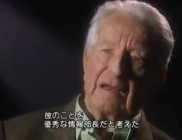
Canaris’s subordinate R. Spitzy: ‘Hitler considered him an excellent intelligence chief, without an equal.’
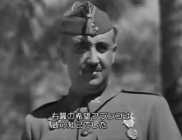
The first episode in his career mistakenly taken as proof of brilliance. In the Spanish Civil War of 1936, the enemy was once again the communists. Franco, the hope of the right, was his acquaintance. Franco asked Hitler to transport his troops from Morocco. Hitler, then in Bayreuth, hesitated over this venture. Canaris worked to dispel his doubts. Germany helped transport the troops, changing the course of the civil war. Franco and Canaris grew closer.
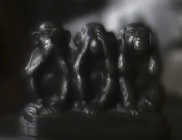
Canaris dreamed of retiring to a villa in Spain. A photograph of Franco stood on his office desk. Otherwise, there were only books on history, religion and philosophy—and a statue of the three wise monkeys, indispensable to his work.

Canaris's secretary Inga Haag: "The first monkey covered its mouth, the second its eyes, and the third its ears: speak no evil, see no evil, hear no evil. It was a warning to be careful."
Canaris himself was no exception. In 1938 Hitler demanded the Sudetenland. Czechoslovakia mobilized. The war Canaris feared was imminent. Risk war for the Sudetenland? Canaris understood the strength of the Czech army and feared the Western response. If necessary, he intended to defy Hitler.
September 12, 1936 (Hitler's voice): “The Germans of Czechoslovakia have no means to defend themselves. Let us protect them.”
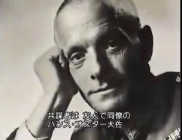
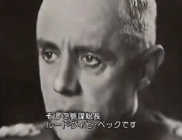
The conspirators were his friend and colleague Colonel Hans Oster (photo at left), and Chief of the General Staff Ludwig Beck (photo at right). They hesitated. Acting against Hitler meant treason. Canaris ordered a special unit to prepare to arrest Hitler. Their goal was still far off.

Canaris's secretary Inga Haag: “Everyone involved at the time was united, however much their views of the past differed. They had made thorough preparations to launch an actual rebellion.”
Friendship with Heydrich and the Rescue of Pastor Heiden
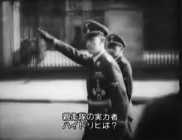
Suddenly there was a turning point. The British prime minister agreed to Hitler's annexation of the Sudetenland, aiming to gain time to prepare for war. He was welcomed as a messenger of peace.The conspirators temporarily dispersed. It was impossible to overthrow a man being acclaimed by the public. Canaris judged the situation coolly. Had the enemy discovered the plan? What about the powerful SS figure Heydrich (pictured right)? Canaris cultivated a close relationship with him, and they became riding companions. Was his association with this Hitler devotee a matter of duty or friendship?
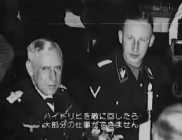
Hans Oster's daughter Barbara V. Kraus: “Heydrich had known the admiral for some time. Naturally, that friendship was carefully maintained. It was important to the admiral as head of intelligence. With Heydrich as an enemy, he could not have done most of his work.”

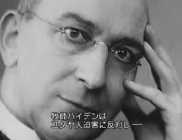
It was more than work. Heydrich moved across the street from Canaris, and their families socialized. A strange relationship within the Third Reich: a friendship between Canaris and the architect of mass murder. Even when the destruction of synagogues began, the relationship continued. In 1938, Canaris was shaken. His superior, Keitel, did nothing about his complaints.He tried to correct lesser evils within the greater evil. A strange relationship within the Third Reich: a friendship between Canaris and the architect of mass murder. Pastor Heiden opposed the persecution of Jews and was arrested by the Gestapo. Canaris rescued him.
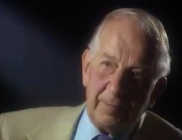
Pastor Heiden's son Siegfried Heiden: “That same afternoon, Canaris answered the interrogation by saying the pastor had not said that. That was how he escaped the trap. It was the best thing he did for my father.”
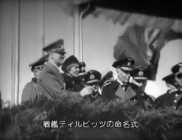
At the same time, he was an able assistant to the dictator. The christening of the battleship Tirpitz (photo left). Canaris was a guest of honor for his contribution to rearmament. His was the invisible front: espionage. He acquired many prizes, including an advanced American bombsight. A method for breaking French naval codes could be put to future use. Like intelligence agents, terrorism was exported on orders from the center. In Ireland, this meant supporting the IRA.
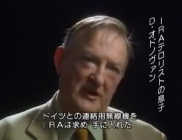
D. O'Donovan, son of an IRA terrorist: “The IRA asked for and obtained a radio to communicate with Germany. It also received money to buy weapons. It requested German military support as well, but that remained a dream and never materialized.”
IRA bomb attacks supported by German intelligence. Germany backed Britain's enemies, including Irish terrorists. Canaris bore responsibility for the victims. He protected the persecuted while directing wrongdoing, pursuing contradictory actions at the same time.
Attempts to Prevent War against the West
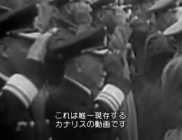
August 1939. The Condor Legion returned from Spain, a war for which Canaris had paved the way. He realized it was merely the prelude to a larger war. This is the only surviving film of Canaris (photo left; note: although recorded on motion-picture film, there is little movement). At the time, he and like-minded generals tried to avert disaster.
Canaris’s subordinate R. Spitzy: ‘He was a Christian to his core. He was deeply troubled, convinced that this senseless war would bring Germany’s end.’
Germany's end began a week early. On the morning of August 26, a unit attacked southern Poland. The first fighting of the Second World War was carried out by Canaris's men, because they had no radio. The general attack order was withdrawn that night, but they alone did not learn of the cancellation. Five days later, the dictator ordered the attack.
Canaris entered Warsaw shortly after its occupation and was appalled: destruction, deprivation and the first massacres. Again he complained to his superiors through proper channels; again he was rebuffed. Perhaps to atone for his loyal service, he helped people, protecting persecuted Poles and sending them abroad.
Countess K. Mańkowska, rescued by Canaris: “He said I need do nothing in London. His only request was that I tell them there were Germans who were not cruel. Not all were vile. If the Allies showed understanding and supported the resistance, perhaps they could form a common front.”
The front never materialized, and no generals supported it. He sought fellow conspirators to prevent the war of aggression against the West. They obeyed Hitler.
Hans Oster's betrayal of Hitler and Heydrich's discovery
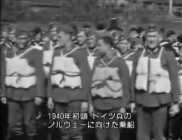
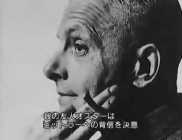
Early 1940: German soldiers embarked for Norway. Canaris tried to prevent it until the very last moment, while also making meticulous preparations. He knew nothing of the information being betrayed to the West. His friend Oster (right) had resolved to betray Hitler.
Hans Oster's daughter Barbara V. Kraus: "He said he had crossed the Rubicon and would answer to his conscience. He also said the day would come when he had to account for himself—to a power higher than Hitler."
To demonstrate the West's strength to Hitler, Oster passed details of the operation to the Dutch. Many soldiers still cannot forgive this method.
H. Christiansen, Brandenburg Division: “That was an act that sent your own soldiers to their deaths. Even if you want peace, you must not leak operations. While the traitor lives comfortably, the betrayed soldiers are attacked on the battlefield.”
May 1940: the attack on France. The West did not believe Oster's information. His actions came to nothing. Meanwhile, units under Canaris's command brought a swift victory. The Brandenburg Division's exploits helped win the blitzkrieg. The commander-in-chief at Verdun. Canaris, still unaware of his friend's betrayal, was also delighted. Preventing treason was another duty of intelligence. It cooperated with propaganda.
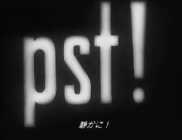
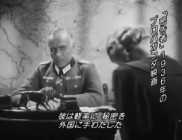
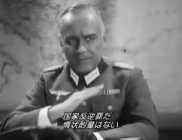
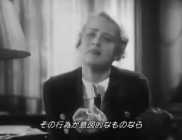
[Quiet!] The Informer, a 1936 propaganda film: "He carelessly handed secrets to a foreign country. An outright criminal act. If deliberate, it is high treason. There are no mitigating circumstances."
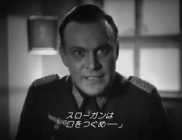
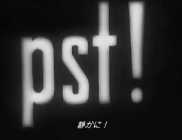
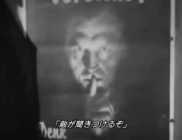
“The slogan was ‘Keep your mouth shut—the enemy is listening.’” ⟨Silence!⟩
Intercepted communications reported Oster’s actions. Canaris defended him for his own sake as well. But rivals in the SS also learned of them and used them as ammunition against the intelligence chief.
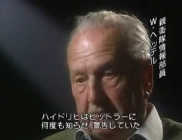
SS intelligence officer W. Höttl: "Heydrich saw through Canaris early on. He informed and warned Hitler repeatedly. Yet to Heydrich's surprise—and ours, since we knew the circumstances—Hitler valued Canaris highly and protected him for a long time."
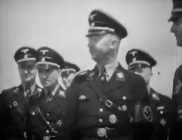
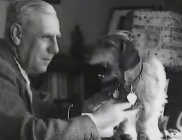
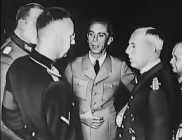
Himmler (the central figure in the left photograph) also protected him, as a counterweight to the ambitious Heydrich. (Canaris) maintained his friendship with Heydrich while competing with him for the intelligence service's standing. Canaris sensed defeat. He increasingly absented himself from meetings. Torn between evil and morality, he grew weary of his work—on every front.
Canaris's subordinate R. Spitzy: “He was afraid throughout the war. That was why he traveled and could not settle. He lost his peace of mind and would suddenly leave on a trip. Sometimes he returned after a week's absence. He was very unpredictable.”
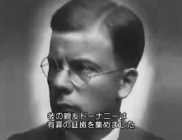
Subordinates reported the establishment of ghettos, the preliminary stage of mass murder. He gathered information. His close friend Dohnanyi (right) collected incriminating evidence for the day Hitler would be brought to trial. Later, these documents would bring disaster.
He took refuge in a dim Catholic church. Spiritual consolation.

Canaris's secretary Inga Haag: "You could tell from his expression that he was dejected. His eyes were clouded and sad."
Advice to Franco — The Road to Germany's Ruin
The trip to Spain was a diversion. A top-secret journey on Hitler's orders, to persuade Franco to conquer Gibraltar.
Canaris's subordinate R. Spitzy: “With the huge guns assembled at Sevastopol, the fighting would have been fierce, but we could easily have won.”
The naval base was the key to controlling the Mediterranean. Yet instead of carrying out his mission, he advised Franco to stay out. Because the refusal was amicable, Canaris retained his position afterward.
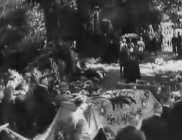
June 9, 1941, the Netherlands. The burial of Wilhelm II (photo left: the funeral procession accompanying Wilhelm II's coffin). The Germany Canaris believed in was buried with him. Then came the road to Germany's ruin: the invasion of the Soviet Union, against which Canaris had warned. He anticipated increasing numbers of bombers overhead, and knew that German armaments could not counter them.
To the supreme commander, the intelligence chief's forecast seemed pessimistic.
British intelligence officer Bill Croom: "It must have been hopeless: he gathered convincing intelligence, yet his superiors would not listen."
The Invasion of the Soviet Union: Heydrich's Death
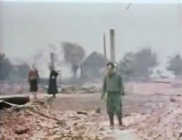
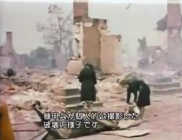
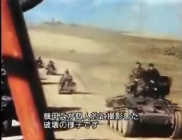
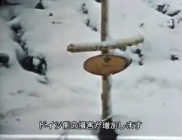
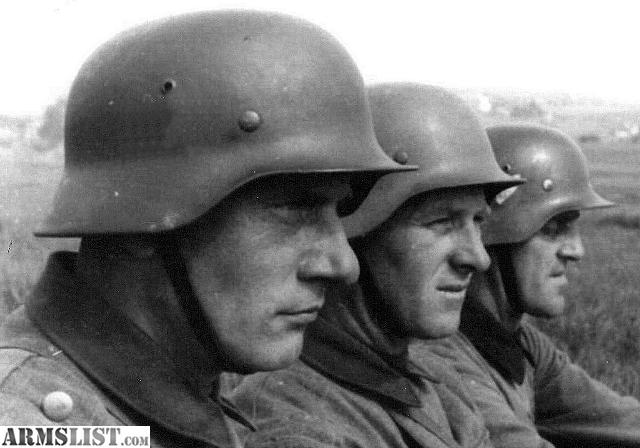
On June 22, 1941, the Wehrmacht began its invasion of the Soviet Union. These photographs of the destruction were taken privately by an armored soldier (the three photographs on the right).The offensive stalled in winter. German losses mounted, just as Canaris had predicted. (Photograph on the left: German soldiers’ graves on the battlefield.)
Dismissed as a scapegoat, he insisted on continuing his duties. He went to headquarters, asked the Führer to reinstate him and succeeded.

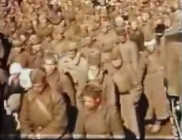
Canaris's secretary Inga Haag: “Canaris could speak to him directly. He knew how to deal with him. Hitler was very polite on those occasions and showed goodwill. He praised the intelligence service's work.”
Why did he seek a position of responsibility? To avert the worst. What was the worst? The intelligence service’s bloody work. Agents were selected from prisoners of war. Many died during training.
Intelligence training instructor R. Starlitz: “I saw it myself. People we had trained as agents were gathered just before an operation. Even after being equipped, some were afraid and refused the mission. Because they knew secrets, they were all killed. We did not kill them. But our intelligence superiors handed them over to the SS Security Service. I saw them just before their execution.”
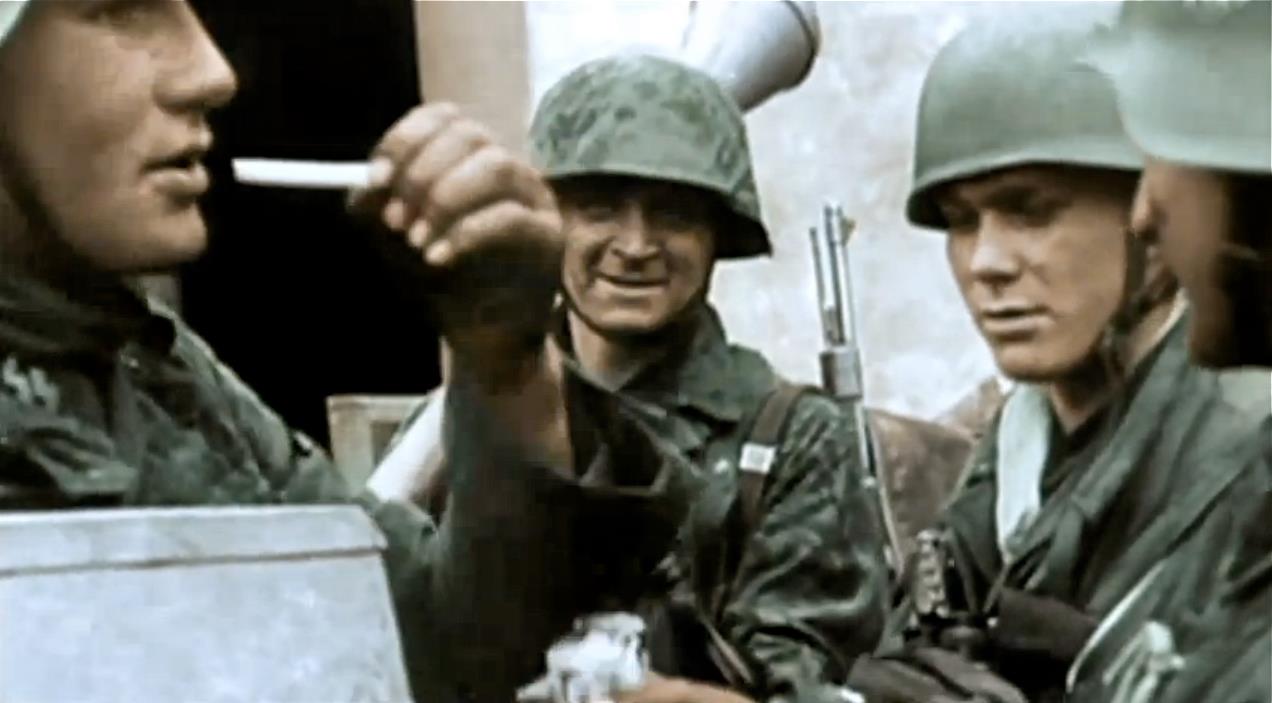
Agents who became afraid were shot. It was guerrilla warfare that also involved the Brandenburg Division. A former soldier offers this defense of the brutal fighting.
H. Christiansen, Brandenburg Division: “We did the same things as the partisans. We thought we had to, because wounded German soldiers had previously been attacked in transit. It was not a matter of fine principles. We had to protect ourselves.”
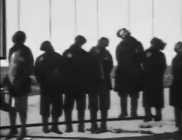
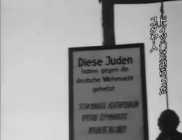
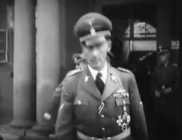
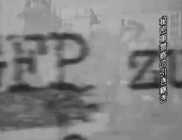
There were also people he could not protect: the victims of the Secret Field Police under Canaris. They were involved in killings behind the lines. (Photo right: [Jews who defied the German army]) The Secret Field Police was a Wehrmacht unit of 6,000 men, cooperating with the SS.Canaris bore responsibility for its actions. Heydrich (photo left) considered incorporating it into the SS. Canaris refused. They fought a paper battle over the unit.(Photo right: document, "Transfer of the Secret Police...") Before a decision was reached, his riding companion fell.
Canaris's subordinate R. Spitzy: “As I was going down the stairs, he called out behind me: ‘Have you heard? Heydrich has been killed.’ I said casually, ‘Well, that pig is dead.’ Then he told me to come at ten. When I did, he said: First, Heydrich was a human being too; do not speak ill of the dead. Second, that is no way to address an admiral.”
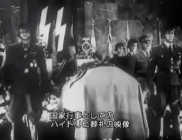
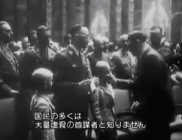
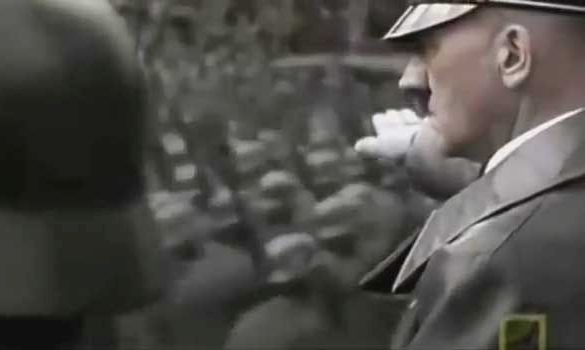
Footage of Heydrich's state funeral (photos at left and right). Much of the public did not know he had masterminded mass murder. Canaris wept over his friend's death.
Intelligence Operations Fail; Negotiations with the West Fail
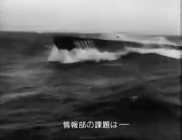
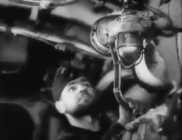
The intelligence service had to find out why U-boat losses in the Atlantic were mounting. They did not know that the Allies had cracked Enigma. It was a bitter defeat. Losses from the arrest of agents were also increasing. Their work seemed hopeless.
D. O'Donovan, son of an IRA terrorist: “Training was inadequate and the information outdated. I remember a man who came by U-boat and waited for a train at a nearby station. Apparently not noticing the rust on the rails, he waited for hours. The station had not been used for twenty years.”
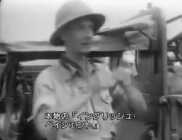
Intelligence activities moved far from the front: supplying weapons to Palestinians, financing the rebellion in Iraq, espionage in Egypt. The real "English Patient" was Count Almásy (pictured right), the model for the film. He, too, failed in his mission.
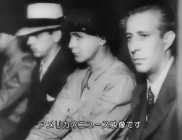
(Other agents under Canaris's command went) to America by U-boat. This was Operation Pastorius. The agents landed in Florida and New York. Their mission was to carry out explosive attacks and spread panic. But shortly after landing they were arrested by the FBI.This is American newsreel footage (left: the arrested agents). Six were executed in the electric chair. Hitler was furious.Those men (arrested and executed) were distinguished Nazi Party members. “Use Jews or criminals,” he (Hitler) said. Canaris seized on this. In consultation with Himmler, he designated Jews as intelligence agents and released them.

German Jew Dorothee Friess: “Apparently Himmler authorized it. We went to Switzerland as intelligence agents, supposedly to obtain information from the British and Americans.”
No one engaged in espionage. While thousands were sent to camps every day, the hundreds who were saved went to Switzerland or Spain. They remain grateful to this day.
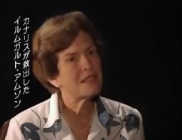
Irmgard Amson, rescued by Canaris: "One thing is one hundred percent certain: in 1942, we would not have survived unless we escaped the country."
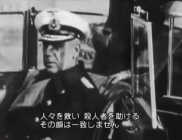
The man who saved people and the man who helped murderers do not fit together. Canaris knew about the camps, and knew he belonged to the regime. He could not overcome that burden.

Canaris's secretary Inga Haag: “I often thought he might kill himself. But his philosophy was: ‘I can help.’ He thought he could prevent a fair number.”
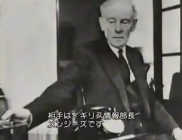
Canaris again contacted the West as a rebel, seeking a political solution. His counterpart was Britain's intelligence chief, Menzies (pictured right).
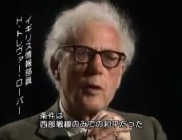
British intelligence officer H. Trevor-Roper: ‘The condition was peace only on the Western Front. Germany would continue fighting the Soviet Union in the east. But that was Germany’s policy all along. Hitler would welcome the removal of the threat behind him.’
The Western powers refused and broke off contact with him. Their alliance with the Soviet Union continued until Germany’s surrender. Germany’s disadvantage was now clear.
The Failed Assassination of Hitler
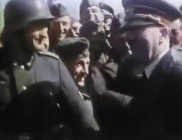
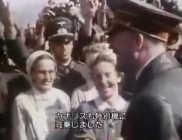
March 13, 1943. The dictator inspected the Smolensk air base. The photograph on the left was taken by Hitler's pilot. Canaris was also aboard the special aircraft. A bomb intended for an assassination was in the luggage. Oster and Dohnanyi were the ringleaders. How deeply was Canaris involved?

Canaris’s secretary Inga Haag: ‘He said he had not heard everything. He might be able to protect them to a degree, but he did not want to know the details.’
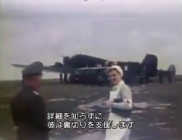
Without knowing the details, he supported the betrayal. The cold prevented the bomb from exploding. Canaris had long questioned whether killing the tyrant would solve anything.
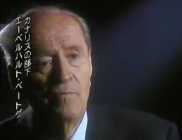
Canaris's subordinate Eberhard Bethge: “We were all convinced that this action would save Germany. It was necessary for Germany's salvation. To do it, we had to commit a crime and remove the leader. We had to bear that guilt ourselves.”
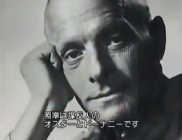
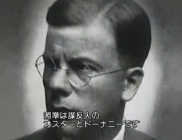
Under suspicion, he also weakened physically. In April 1943, intelligence offices were searched. The targets were the conspirators Oster (left) and Dohnanyi (right). Canaris could not protect them.
Canaris’s subordinate R. Spitzy: ‘Canaris could not move. He should have said something then. Even, “Do not enter the office yet; wait in the anteroom.” He could have contacted Keitel. Perhaps he could even have lodged an objection with Himmler or Hitler.’
He lacked that power. Himmler took control of intelligence, completing the apparatus of terror. Unable to resist, Canaris left his post.
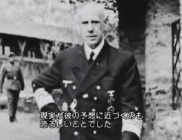
SS intelligence officer W. Höttl: "He knew he was on the way down. I could feel it. He had never been averse to retirement. He must have been frightened."
It was also terrifying to see reality approaching his prediction.
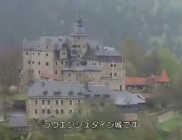
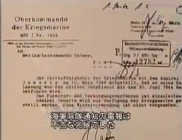
Canaris was under house arrest in eastern Bavaria at Lauenstein Castle (pictured left). No one could establish the respected admiral's guilt. A telegram notifying him of his discharge from the navy was an ominous sign.
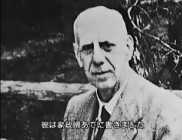
He wrote to his housekeeper: 'I want to go home.'
Canaris’s Arrest
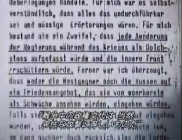
July 20, 1944: 'The Führer was unharmed.' Canaris learned of the assassination plot in Berlin. Though he knew nothing about it, he too was caught in the reprisals.He was arrested and interrogated. Fighting for his life, he denied everything. The interrogation record from the Gestapo cellar reads: 'A change of government during wartime is, of course, tantamount to a cowardly attack.'
As Berlin came under attack, he hoped for an end to the war. The prisoners were transferred.
Hans Oster’s daughter Barbara von Kraus: ‘In February 1945, Berlin came under heavy attack. They disappeared. We did not know their new contact address. Eventually a postcard arrived, with an innocuous message. There was no address. He probably could not write one.’
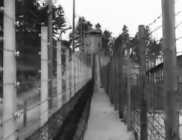
This is Flossenbürg concentration camp.
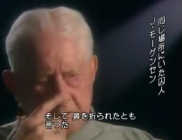
J. Mogensen, a prisoner held in the same place: ‘He said he had been severely tortured, and that his nose had been broken. Such methods were indeed commonplace. Torture and interrogation involved squeezing people hard. They must have done it to him, too.’
March 1945, in the headquarters bunker. A chance discovery: Canaris's diaries were found on a steel shelf. Hitler immediately ordered Canaris, Oster and Dohnanyi killed. On April 9, the admiral was hanged, on the orders of the man he had both opposed and assisted. How did he view his own guilt?
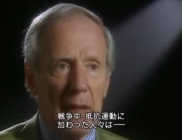
Dohnanyi's son Klaus V. Dohnanyi: “This is probably the most difficult question. Those who joined the resistance during the war had to conceal themselves and avoid detection. They had to remain within the machinery that was waging the war.”
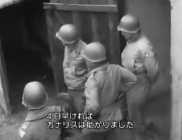
Shortly afterward, American troops liberated the few prisoners in the camp. Four days earlier, and Canaris would have survived. How would the victors have treated him? His former subordinate does not wish to know.
Intelligence instructor R. Starlitz: "We must not forget his operational orders—orders that sent people to their deaths. And he ensnared people to demonstrate the intelligence service's excellence. On the other hand, he rebelled. Though he saved some people's lives, many others died on his orders."
Canaris thought of serving his country to the end. His rebellion began when he learned that the supreme commander was a criminal. Yet he could not take the final step.
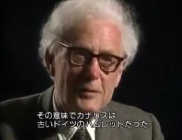
British intelligence officer H. Trevor-Roper: “Hamlet charged himself with stopping injustice and taking revenge. But he could not decide and remained where he was. In the end, he brought about the worst result. In that sense, Canaris was the Hamlet of old Germany.”