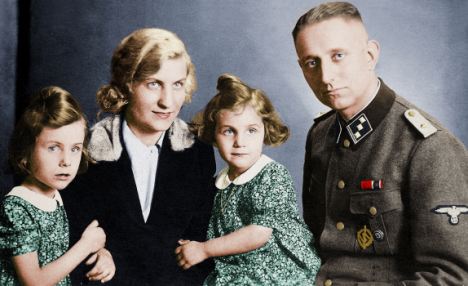

Monika Göth
Amon Göth's Daughter
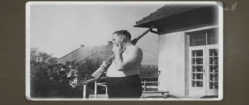
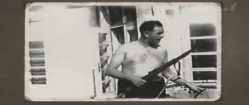
“There is a favorite photograph taken at Płaszów. My parents had dogs. I liked dogs too. There was a house with a garden, and there were horses.”
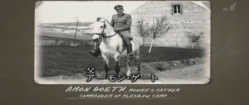
Father: Amon Göth, Monika's father. Commandant of Płaszów concentration camp (German name: Plaszow).
“When I asked, ‘What did Father do at the camp?’ Mother answered, ‘It was a labor camp.’ When I asked, ‘Wasn’t it an extermination camp? Then what did the prisoners do there?’ she snapped, ‘They worked, of course! What else would they do?’ According to Mother, there were no children or elderly people in the labor camp. I felt relieved: thank goodness. I convinced myself it had been a labor camp, not an extermination camp.”
“When I asked, ‘Father didn't do anything to the Jews, did he?’ my mother answered, ‘Well... He may have killed a few.’ ‘A few? What do you mean, a few? Two? Three? Four? How many?’ Her only reply was, ‘Well.’ The words ‘a few’ troubled me terribly, and I thought it might have been more. My mother remained silent. I pressed her: ‘How many is a few? Three? Four? Five? Six? Seven? Eight?’ ...I thought I was asking calmly.But my mother suddenly shouted, ‘I don't know!’ She seemed to lose her mind and rushed into the room. Then she came out with a long electrical cord and beat me violently with it. The plug hit my head. At that moment I realized I could learn nothing without disturbing her peace of mind.”
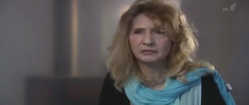
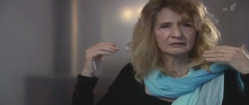
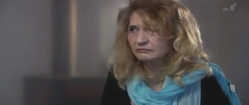
“I used to go to a pub in Munich often. The owner, Manfred, was tall and handsome, with beautiful black curls. He was always there serving customers, and I really liked him. …That day the bartender was off sick, so Manfred rolled up his sleeves, took off his watch, and washed the dishes himself. That was when I saw the tattooed number. Most of the customers had left, so I asked him, ‘Say…were you in a concentration camp? Which camp?’ ‘Somewhere you would not know,’ Manfred replied. And, ‘I do not want to talk about it anymore.’ Still, when I asked again, he answered, ‘Płaszów.’ ‘You were in Płaszów? Really?’ I asked. ‘You know Płaszów?’ he said, and I answered, ‘Of course. My father was in Płaszów. Do you know him?’ …He said there had been many people in Płaszów and he did not know everyone.I told him, ‘My father is Göth,’ but he did not know anyone by that name. I was convinced Manfred was making it up, and said, ‘Göth was the commandant of Płaszów! If you were there, you must know Göth.’ …Suddenly, the color drained from Manfred’s face. He glared at me and backed away. Behind him was a shelf lined with whiskey bottles. Still glaring at me, Manfred raised his voice. ‘You mean Getz…!’Polish people cannot pronounce Göth. ‘My father’s name is Göth, not Getz,’ I said. Until then he had not known my surname. Suddenly he shouted, ‘That murderer, that swine!’ I was shocked.”
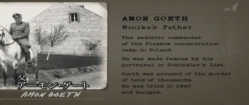
Monika's father, Amon Göth, was commandant of Płaszów concentration camp, portrayed in Schindler's List. He was hanged for mass murder.
About Amon Göth
From Wikipedia
While he was commandant of Płaszów, Amon Göth fell in love with Ruth Irene Kalder (Ruth Kalder) and divorced his then wife, Anny, with a view to marrying Ruth. Ruth came from Gleiwitz and was working as Oskar Schindler's secretary at the time. An attractive woman, she had flirted with Göth on Schindler's instructions to gain his favor, but this led to her actually becoming Göth's mistress. In November 1945, he fathered his second daughter, Monika Christiane Göth, with Ruth. Ruth lived in great luxury with Göth at Płaszów. Later, recalling those days, she said, “It was a beautiful time. My husband Göth was king, and I was queen. How could anyone not like that? My only regret is that it all came to an end.” Ruth generally did not want to know what was happening in the camp, but many witnesses have testified that she often quietly influenced Göth and saved individual prisoners from torture or execution by shooting.
After Göth's execution, Ruth applied to the American administration for permission to use his surname. Her reason was that they would have married but for the turmoil following the war. Göth's father Franz confirmed that his son had been engaged to Ruth, so the petition was granted and she took the name Göth. After the war she continued to defend her deceased husband. In an interview she said, 'He was not a cruel murderer. He was no different from anyone else. He was like other SS men. I do not deny that Amon killed some Jews, but not many. A camp like that is not an amusement park.' On January 9, 1983, while ill, she died by suicide with sleeping pills in Munich, seeking relief from her suffering and wishing not to burden her children.
In 1970, the second daughter, Monika, had a daughter, Jennifer, with a Black Nigerian student. Finding it difficult to combine work and childcare, she placed her in a church children's home and later put her up for adoption. Jennifer later published a book about her grandfather Amon Göth, Amon (Japanese title: My Grandfather Was Amon Göth). Monika married a German man in 1971 and had a daughter, Yvette, in 1976. Yvette became addicted to heroin and continues to undergo treatment. In 2001 Yvette had a son, whom she named David Amon Göth.
In 2002, Matthias Kessler interviewed Monika over two days and published the interviews as ‘Ich muss doch meinen Vater lieben, oder?’ (Japanese title: ‘Even So, I Cannot Help Loving My Father: The Life of Monika Göth, Daughter of the Concentration Camp Commandant in Schindler’s List’). In a 2005 interview, she said, ‘My father’s actions were horrific and abhorrent. It is good that they have been documented in detail. War criminals who are still alive should be pursued.’