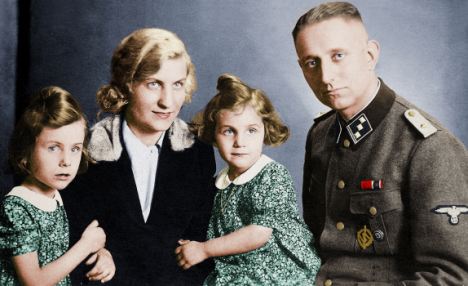
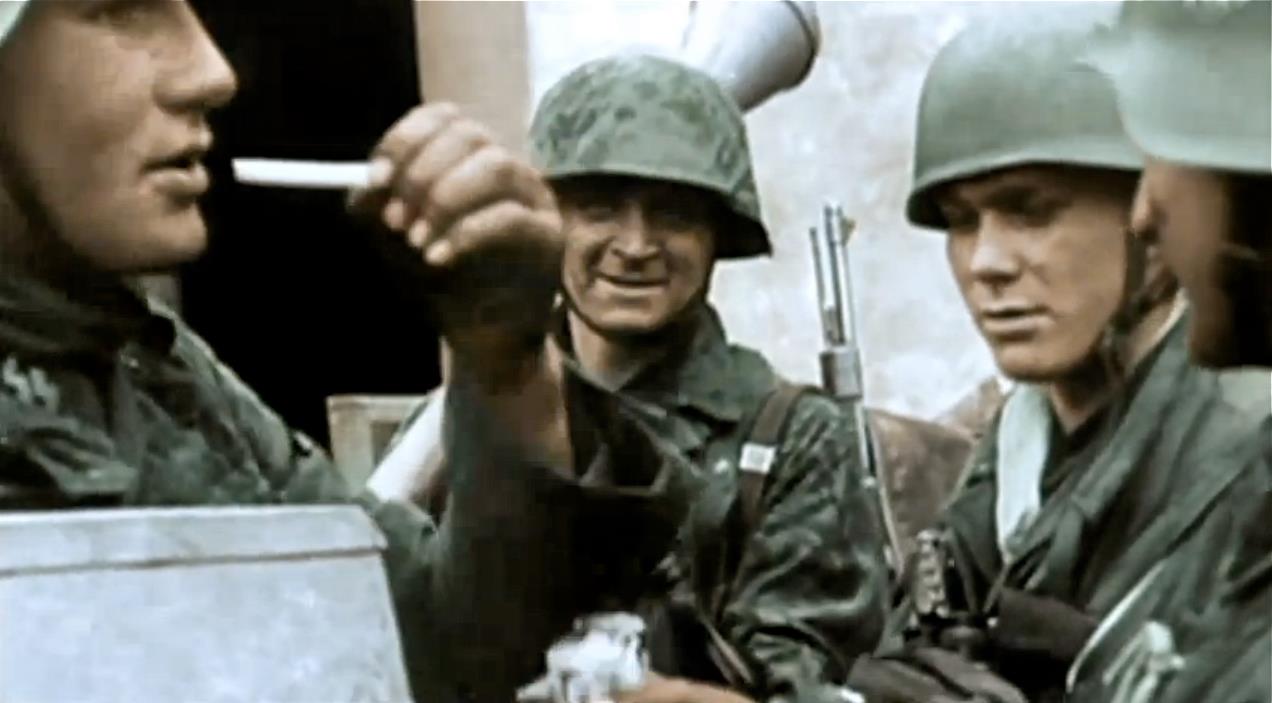

Adolf Eichmann
A Loyal Bureaucrat
Buenos Aires. On May 11, 1960, the moment of destiny was approaching for a man who had been on the run for fifteen years.
Z. Aharoni, Mossad (Israel's secret intelligence service): "'I have decided to accept my fate,' he said, almost to himself. He was German, and he understood what was happening. That meant he was Eichmann."
A year after being abducted by Israel's secret intelligence service, Mossad, Adolf Eichmann went on trial in Jerusalem. The man before the court had sent millions of Jews to their deaths.
[Audio from the courtroom: "Between 1939 and 1945, the defendant brought about the deaths of millions of Jews..."]
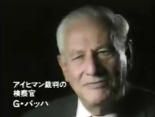
Eichmann trial prosecutor G. Bach: “He was the sort of person who would leave no impression at all if you saw him on a bus. But if something displeased him, he sometimes looked at people with terrifying eyes, like a tiger's.”
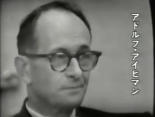 Adolf Eichmann
He wears a defiant smile in court.
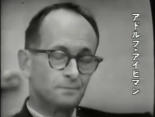
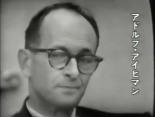
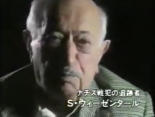
Nazi war-criminal hunter S. Wiesenthal: "Even if an absurd order had been issued to kill babies, for example, or people whose initials began with K, Eichmann would have carried it out exactly as instructed."
What on earth lay behind his unbelievable behavior?
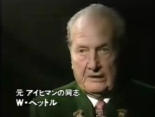
Eichmann's former comrade W. Höttl: “Eichmann's greatest desire was to receive Hitler's thanks. But that wish was never fulfilled. He remained obsessed with the dream, yet never achieved it.”
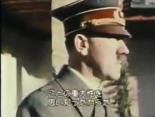
〈(Hitler’s voice) ‘The Jews were laughing. But now they can no longer laugh. They have realized the seriousness of the situation.’〉
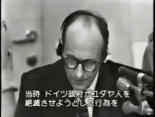
〈‘I regret and condemn the German government’s actions at that time in seeking to exterminate the Jews.’ (Eichmann’s statement in court)〉
Another Face
Conversations with his SS comrades reveal another side of Eichmann.
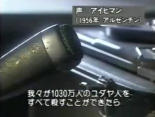
[Eichmann's voice (Argentina, 1956): "If we had been able to kill all 10.3 million Jews, I would surely have said with satisfaction: 'Now we have eradicated the enemy.'"]
On March 15, 1938, Hitler arrived in Eichmann's native Austria as its new ruler.
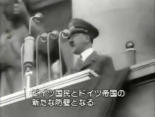
<Hitler's speech: 'From now on, Austria will be a new bulwark of the German people and the German Reich.'>
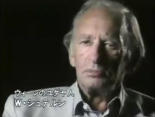
For Austria's 200,000 Jews, it was the beginning of an unprecedented nightmare. At that moment, one emotion dominated their hearts.
Viennese Jew W. Stern: “Anxiety. Anxiety about what on earth would happen next.”
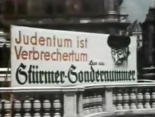
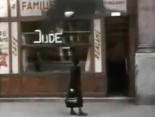
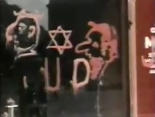
A dark age had arrived. Ominous signs of extermination appeared everywhere. Eichmann was among Himmler's entourage.
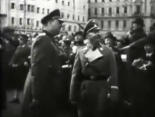 Himmler
(the person on the right)
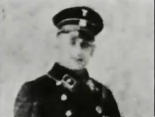 Eichmann
Early Life: Loyalty to a Diabolical Power
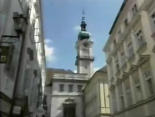
Eichmann was born in Solingen, Germany, and grew up in Linz, Austria.
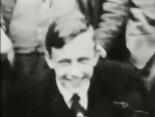
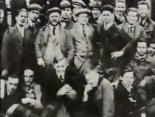
He attended the school Hitler had once attended, but, like Hitler, did poorly and eventually dropped out.
 EICHMANN LEUCHTEN
Eichmann Electrical Company
Leuchten means 'to shine,' 'radiance,' or 'to illuminate.'
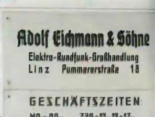
His father's company still exists. He first worked for an oil company but was dismissed in the economic crisis.
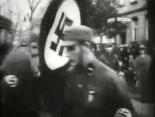
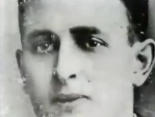
Searching for meaning amid a difficult life, he eventually encountered the Nazis. Seeking a reason for his existence, he joined the SS and devoted himself body and soul to this diabolical power.
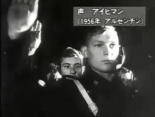
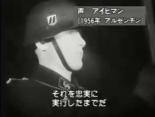
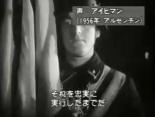
Eichmann's voice (Argentina, 1956): "We merely obeyed orders and carried them out faithfully. As SS men who valued order, we obeyed willingly."
Absolute obedience. That was Eichmann's creed.
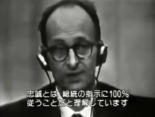
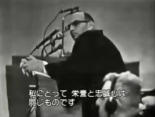
〈Eichmann: ‘I understand loyalty to mean following the Führer’s instructions one hundred percent. For me, honor and loyalty are the same thing.’〉
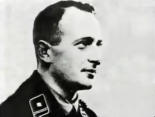
His superiors rated Eichmann highly: ‘Attitude toward Nazism—unconditional. Professional knowledge—excellent. Special abilities—negotiation, public speaking, organization.’
Expelling Jews and Self-Conceit
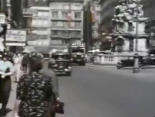
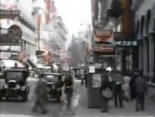
Vienna, 1938. Eichmann, the specialist, undertook the task of expelling all Jews. The Jewish quarter. Eichmann also took direct command.
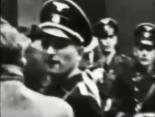
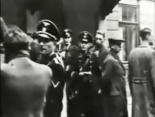
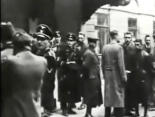
They relentlessly searched for Jews, seized them, and humiliated them. An exercise of overwhelming power. Thousands of Jews who witnessed this decided to flee.
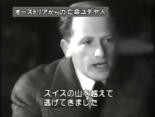
[Jewish refugee from Austria: "We had to leave Vienna within twenty-four hours, so we escaped across the Swiss mountains."]
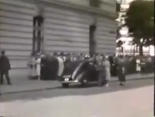
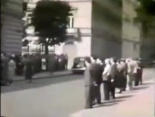
Jews began lining up outside the American embassy in Vienna.
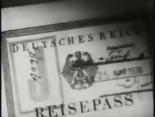
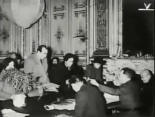
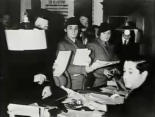
Still dissatisfied with the pace, Eichmann established an office for Jewish emigration to speed up their expulsion. There, paperwork could be completed with astonishing speed, but only in exchange for enormous sums. It was Eichmann's business venture built on deportation.
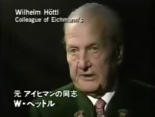
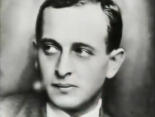
Eichmann's former comrade W. Höttl [Wilhelm Hottl]: “The important point is that Eichmann was a bundle of inferiority complexes. Everyone in senior positions in our line of work had a university education.Eichmann was almost the only exception, and that gave him a strong sense of inferiority toward the people around him. He threw himself into his work to prove how much he could accomplish without having gone to university. That continued throughout the existence of the Third Reich.”
Driven by feelings of inferiority, Eichmann rose spectacularly. Striding through his Vienna office, he embodied a man possessed by power.
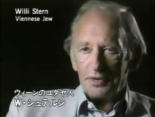
W. Stern [Willi Stern], a Viennese Jew: "He was relatively small, wore a perfectly fitted uniform, and strode about tapping his boots with a riding crop. He looked as if he could not bear to breathe air polluted by Jews for long. That was how he struck me."
In eight months, as many as 45,000 Jews visited the emigration office, and the expulsion plan advanced efficiently.
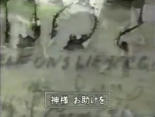 “God, help us.”
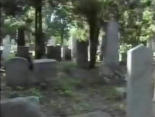
In Vienna's Jewish cemetery, words expressing the despair of those days are carved everywhere.
〈‘God, help us.’〉
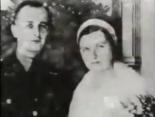
Eichmann was eager to flaunt his power: a top-of-the-line limousine and a personal chauffeur. All were ornaments displaying his achievements. His loyalty to his wife appears to have been less pronounced; colleagues testified that he had several mistresses.
Viennese Jew W. Stern [Willi Stern]: ‘He seemed a conceited, frivolous young man. He tried to attract attention by adorning himself. He really was an extremely vain man.’
The scene of a mass shooting
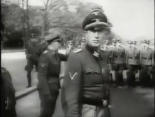
Reinhard Heydrich (photograph on the left), head of the Reich Security Main Office, highly valued Eichmann’s work. At one conference, he even presented Eichmann’s methods in Vienna as a model for all Germany.
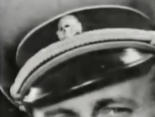
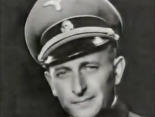
With his strong loyalty and administrative ability, Eichmann was summoned to Berlin and made head of the Jewish affairs section of the Reich Security Main Office. This section would eventually become an extermination headquarters.
When war began, ghettos were established throughout Poland to isolate Jews. But with no country willing to take them, plans for expulsion stalled. Eichmann devised alternatives: establish a Jewish state in southern Poland, or send Jews to Madagascar. An SS colleague advised him to consider a faster, more efficient way of disposing of them. That method was put into practice in German-occupied Soviet territory: mass shootings behind the front lines. Eichmann was horrified by what he saw.
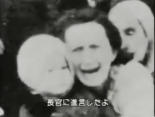
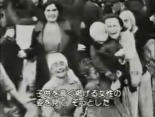
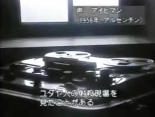
〈Eichmann's voice (Argentina, 1956): “I saw Jews being shot. I happened to arrive at the very last moment. I was horrified to see a woman holding her child up high. I told the chief: ‘This will not solve the Jewish question. It will only turn soldiers into sadists.’”〉
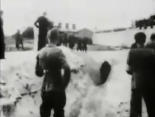
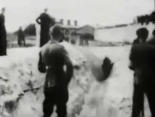
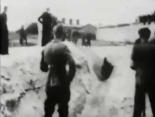
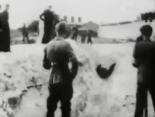
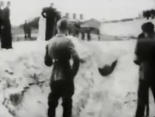 the actual shooting
the scene of ... killing
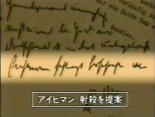
Yet Eichmann responded as follows to a Foreign Ministry inquiry about the deportation of Serbian Jews.
['Eichmann Proposes Shooting']
(Adolf Eichmann in court)
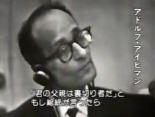
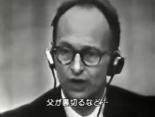
Presiding judge: "You reportedly said that if the Führer told you, 'Your father is a traitor,' you would shoot your father yourself."
Eichmann: “That my father would betray...”
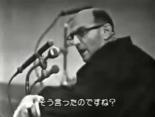
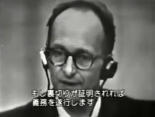
Presiding judge: "Hypothetically speaking. You did say that?"
Eichmann: “If betrayal is proved, I will carry out my duty.”
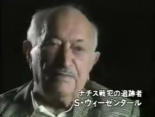
‘That man has no connection with conscience or morality.’ (Nazi war criminal hunter S. Wiesenthal)
Many victims were transported by special trains. Eichmann, the official responsible for Jewish affairs, of course knew the reality of the mass murder.
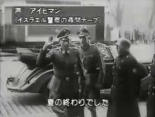
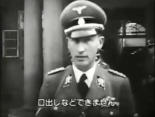
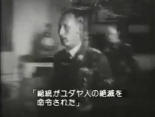
Eichmann's voice (Israeli police interrogation recording): “It was late summer. Heydrich summoned me and said: ‘The Führer has ordered the extermination of the Jews.’ I accepted it silently. I could not interfere.”
Proposal to Use Poison Gas
Eichmann carried out deportation work quietly but zealously. Soon he began looking for a new method of killing to replace inefficient shootings. In summer 1941, he visited the concentration camp at Auschwitz and met its commandant, Rudolf Höss. How could the Jews arriving in mass deportations be dealt with efficiently?

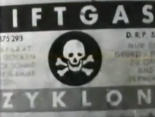
At this point, Eichmann began considering the use of poison gas. A few weeks later, in September 1941, gas was used at Auschwitz for the first time. A man enthusiastic about the final solution to the Jewish question and eager to develop new methods: that was how Commandant Höss described Eichmann.
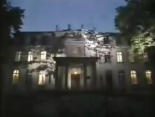
As the mass murder of Jews continued, leading members of the Reich Security Main Office gathered at a villa beside Lake Wannsee. The principal agenda item was the Final Solution to the Jewish Question. Its chief, Heydrich, chaired the meeting.
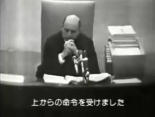
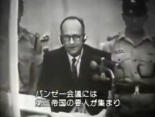
〈‘At the Wannsee Conference, leading figures of the Third Reich gathered and received orders from above. I merely followed them.’ (Eichmann in court)〉
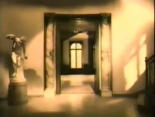
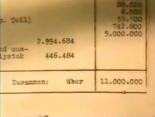
Eichmann, who was keeping the minutes, meticulously calculated how many Jews could be slaughtered. The answer was eleven million. No blood flows on paper. Kill, remove, exterminate: such words spoken at the Wannsee villa were excluded from the official record.
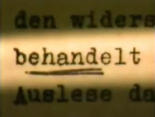
Eichmann translated those words as follows: 'The victims will be dealt with accordingly.'
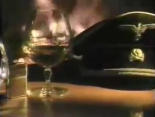
After the meeting, Eichmann could be seen relaxing beside the fireplace with Heydrich and Gestapo chief Müller.
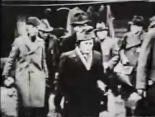
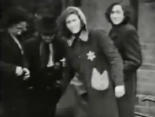
Jews were rounded up one after another. Scenes like this in Dresden occurred throughout German-occupied territory. Eichmann's subordinates were stationed locally to ensure everything proceeded smoothly. Bookkeepers helped run Eichmann's enterprise.
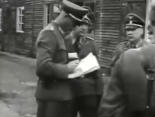
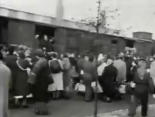
Jews transported like livestock. Eichmann drew up the timetables for the death trains in Berlin.
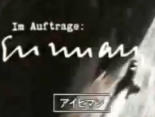 [Eichmann]
The German State Railway also cooperated fully. The fare for each Jew was four pfennigs per kilometer. A one-way ticket, of course. There was no return.
Theresienstadt Concentration Camp
〈Eichmann’s signature〉Countless lives extinguished by a single signature. Theresienstadt concentration camp, sixty kilometers from Prague, became the setting for a propaganda film promoting the image of a humane camp. Its effective director was, of course, Eichmann.
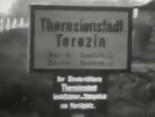
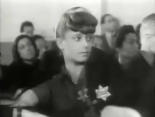
He was trying to deceive the whole world. Eichmann inspected the concentration camps under his charge dozens of times. To the victims, his visits were nothing but an ominous sign.
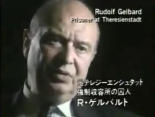
R. Gelbard [Rudolf Gelbard], former Theresienstadt concentration camp prisoner: "Whenever Eichmann came to the camp, everyone grew anxious. Usually some people would be deported to an even worse camp. Eichmann had immense power and could determine life and death at will."
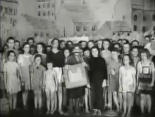
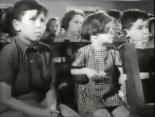
For these children, Theresienstadt was merely a way station to hell. Their final destination was the Auschwitz extermination camp. In the summer of 1942, Eichmann inspected how many Jews the extermination camps could accommodate.
Eichmann's voice (Argentina, 1956): "When I saw people being burned, I could not stop trembling—I had to think about something else. Seeing that scene that day, I prayed to distract myself. I always do that when I want to escape something unpleasant. You may laugh, but I believe in God the Father, the Holy Spirit and Jesus Christ."
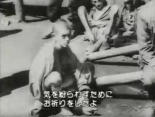
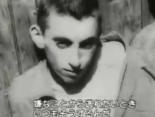
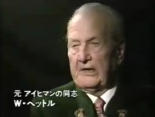
Eichmann's former associate W. Höttl: “He was not a particularly strong person psychologically. Seeing the gruesome sight of bodies being burned seems to have shocked him considerably. But he tried to hide that weakness from others. He always carried strong liquor in a flask and took a swig whenever something happened. Each time I saw him do that, I thought his nerves must be getting the better of him again.”
Zeal for Deportation and Mass Murder
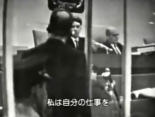
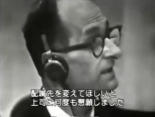
(Eichmann in court): "I merely carried out my work with an iron will. But its dreadful misery pained me, and I repeatedly begged my superiors to transfer me."
Eichmann participated in mass murder without dirtying his own hands at the scene. He devoted his passion to keeping the death trains on schedule and considered even the slightest delay in deportation a disgrace.
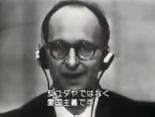
Eichmann trial prosecutor G. Bach: ‘He said he had never felt hatred.’
“It is patriotism, not antisemitism.” (Eichmann's statement in court.)
G. Bach, prosecutor at the Eichmann trial: "But I cannot believe those words. I cannot imagine someone without hatred for the victims carrying out such acts. It is simply impossible. What he did was that dreadful."
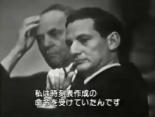
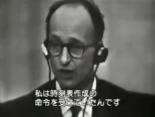
(Eichmann speaking in court): “I had been ordered to draw up timetables.”
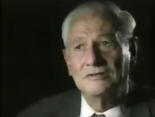
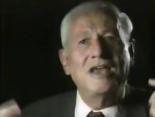
Eichmann trial prosecutor G. Bach: ‘Once, several thousand Jews in Romania were killed by militia and thrown into a river. Eichmann reportedly flew into an uncontrollable rage when he heard. Not for humanitarian reasons.It was because such things made accurate statistics impossible. Even if the Romanian Jews were to be killed, without knowing the exact numbers some might escape. That was why Eichmann was furious.’
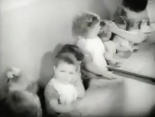
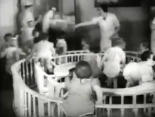
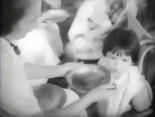
Eichmann mercilessly sent even small children to the camps. To him, every Jew was merely a number in a statistic.
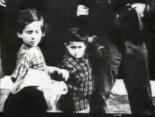
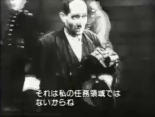
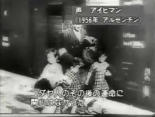
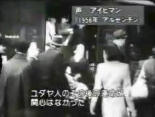
Eichmann's voice (Argentina, 1956): "I had no interest in the Jews' subsequent fate. That was outside my area of responsibility. Whether they lived or died was irrelevant. Once they had been processed, I did not care."
In March 1944, the massacre of Jews began in Hungary as well.
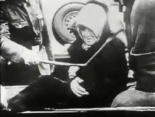
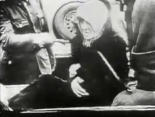
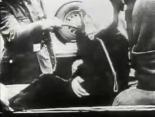
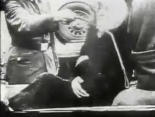
On his thirty-eighth birthday, Eichmann began the task of forcibly deporting the 700,000 Jews living in Hungary.
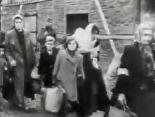
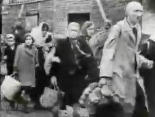
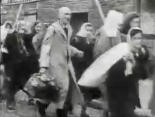
Forced deportations began in the provinces.
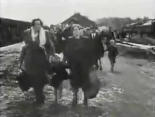
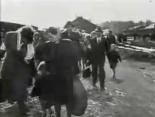
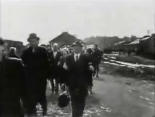
The greatest misfortune for the Jews was that the Hungarian authorities willingly cooperated with the Nazis.
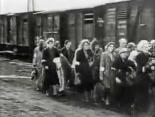
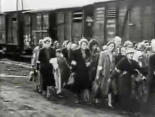
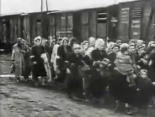
Eichmann established headquarters in a Budapest hotel and directed the deportation plan. In just two months, as many as 450,000 Jews were forcibly deported.
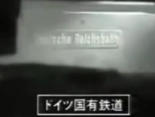 [German State Railway]
A German State Railway plate stamped onto a freight car
Large numbers of people were packed into cramped carriages, and some died before reaching the camps. It soon became clear that the reassuring words had been lies.
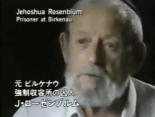
J. Rosenblum [Jehoshua Rosenblum], former Birkenau concentration camp prisoner
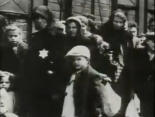
"Unlike Polish Jews, Hungarian Jews did not know Birkenau was part of Auschwitz. We were told we were going to a family camp. The reality was very different."
By the summer of 1944, the outcome of the war was virtually settled. Still Eichmann stubbornly kept the trains running. For him, carrying out his mission came before victory or defeat in war, or the fate of his country.
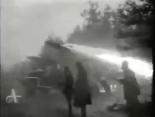
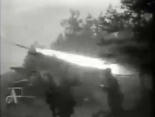
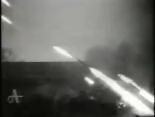
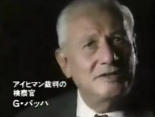
G. Bach, prosecutor at the Eichmann trial: "Although German troops on the Eastern Front desperately needed reinforcements and supplies, Eichmann gave priority to deporting Jews. He reportedly told friends, 'I know our country is losing the war. But my war is still being won.' Then he went to Auschwitz and had the pace of killing increased further."
Carrying out the task became increasingly difficult. Hungary's leader, Miklós Horthy, stopped cooperating with deportations. Eichmann, however, refused to accept this quietly.
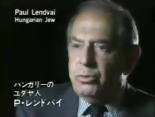
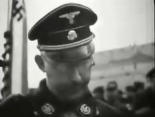
Hungarian Jew P. Lendvai [Paul Lendvai]: "I had a girl cousin, a second cousin, who was a year younger than I was. She and her mother were deported to Auschwitz. Miklós Horthy, who held the office of prime minister, had stopped cooperating with the deportations and lodged a protest with Germany. Nevertheless, Eichmann used cunning methods to round up Jews around Budapest. He must have been determined to continue the deportations at any cost."
Himmler, the SS’s supreme leader, also tried to halt deportations with a view to peace with the Allies.
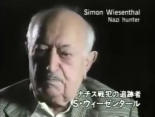
Nazi war-criminal hunter S. Wiesenthal [Simon Wiesenthal]: "On hearing that, Eichmann reportedly became extremely agitated and shouted: Why are we suddenly stopping?"
The Jews of Budapest
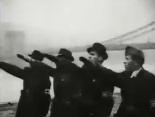
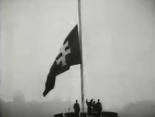
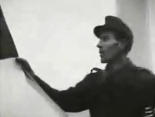
In October 1944, a coup in Hungary brought down Miklós Horthy. A radical fascist regime came to power. For Eichmann, it was more than he could have wished for.
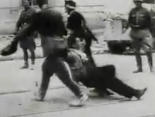
A storm of roundups of Jews swept through the capital, Budapest, too.
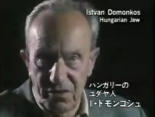
Hungarian Jew I. Domonkos [Istvan Domonkos]: “After the coup, severe persecution began. Whenever the Hungarian fascists found Jews, they would harass them on some pretext and try to rob them of everything. In the worst cases, people were seized, taken to the banks of the Danube, and shot dead.”
Tens of thousands of Jews in Budapest desperately searched for refuge. Many lives were saved by hiding places like small islands in a sea of hatred. More than a hundred sites marked with yellow stars appeared across Budapest. This Liberty Square was one of them.
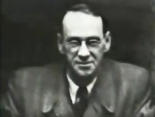 Raoul
Wallenberg
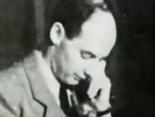 Karl
Lutz
It was begun by courageous diplomats such as Raoul Wallenberg and Switzerland’s Carl Lutz. Using their privileges, they tried to save as many Jews as possible from the storm of slaughter.
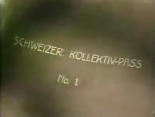
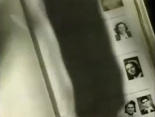
Anyone whose name appeared on this list received a protective passport and shelter in protected premises. More than 100,000 Jews were saved in this way.
A Sense of Personal Danger
As resistance activities intensified, Eichmann began to fear for his safety.
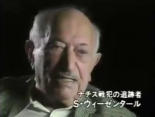
Nazi war-criminal hunter S. Wiesenthal: “If anyone tried to photograph him, he flew into a rage and tried to pull the film out of the camera. Apparently he sometimes paid afterward for cameras he had broken. He must have sensed that he would eventually be a wanted man.”
Eichmann’s fears were by no means mere imagination.
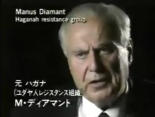
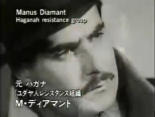
M. Diamant [Manus Diamant], formerly of the Haganah (Jewish resistance organization): “We were planning to assassinate Eichmann, even at the cost of our own lives. If we could kill Eichmann and die with him, that would be an honorable death.”
But the plan was canceled at the last moment for fear of reprisals against the Jews of Budapest.
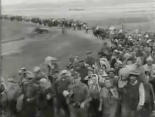
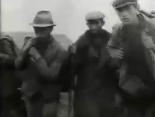
Allied bombing finally stopped the death trains, but Eichmann still would not abandon his plan. He had 50,000 Jews from Budapest deported to Austria on foot.
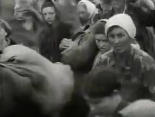
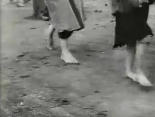
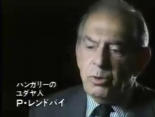
Hungarian Jew P. Lendvai: “We kept walking and walking. Even so, we barely reached the outskirts of Budapest. There, people too exhausted to walk under their own power were shot in the column. They were shot dead before my eyes. It really was a race against death.”
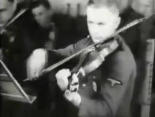
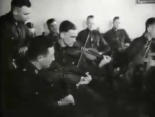
⟨♪⟩ Nazi Germany plays the music of death. Conducting the performance, of course, is Eichmann.
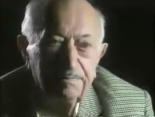
Nazi war-criminal hunter S. Wiesenthal: "A young officer asked, 'Sir, how many Jews are you going to dispose of?' Eichmann replied, 'More than five.' By five he meant five million. The officer asked again, 'When the war is over, won't the whole world demand to know what happened to those five million?' Eichmann replied coldly and clearly: 'A hundred deaths are a painful tragedy. A million deaths are merely a statistic.'"
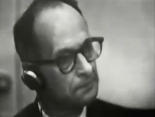
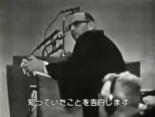
(Eichmann in court) "The deportation orders had to be carried out. I confess that I knew death awaited them afterward."
Eichmann knew the fate of the Jews he deported.
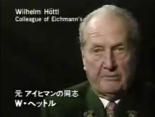
Eichmann's former associate W. Höttl [Wilhelm Hottl]: “He told me four million had died in extermination camps, and two million through killing squads and epidemics in the camps: six million in total.”
Flight

December 1944. As Soviet troops advanced, Eichmann fled Budapest. Shortly before the war ended, SS leaders had taken refuge in the Austrian mountains.

Eichmann tried to organize a final resistance to the Allies from his native Austria. But his superiors had already given up on continuing the war.
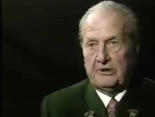
W. Höttl [Wilhelm Hottl], Eichmann's former comrade: “Eichmann complained to me: The chief did not welcome me; he merely sent me British gold coins through his adjutant. To hell with gold coins. That is not what I want. I have money. What I want is an order telling me what to do next.”


But no orders came, leaving him unable to act. Finally, on a comrade's advice, Eichmann began his escape. American troops captured him en route, and he became a prisoner of war.
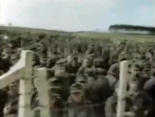
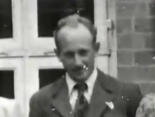
Afraid his identity might be exposed at any moment, Eichmann even contemplated suicide. Yet he escaped again and began a new life. Barth, Eggmann, Heminger—he used one new name after another and moved from job to job.
At the Nuremberg trials, Eichmann's crimes were exposed in his absence, and a serious hunt began. Yet his flight would continue for another fifteen years.
Buenos Aires
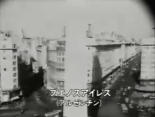
 Buenos Aires
(Argentina)
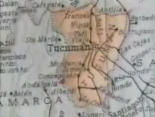
Buenos Aires, 1950. Eichmann began a new life under the name Ricardo Klement. He left the city for the countryside, where it was easier to hide.
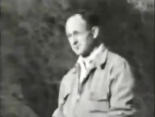
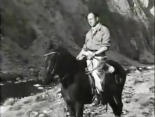
But in his new work researching water, he revealed a surprisingly high degree of incompetence.
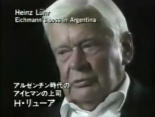
H. Lühr [Heinz Luhr], Eichmann's superior in Argentina: “His work lacked precision. You could see it clearly from the way he collected data. He simply had no ability to organize his work properly.”
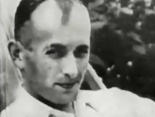
Eichmann tried to seal off his past completely.
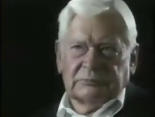
H. Luhr [Heinz Luhr], Eichmann's supervisor in Argentina: "If you asked anything about his past, you never received an answer. His expression did not change, as though he had heard nothing."
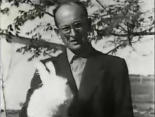
After being dismissed, Eichmann again drifted from job to job: rabbit breeding, dry cleaning and factory work. He then returned to the city and lived quietly for several years as Ricardo Klement. But information from a Jewish man set Israel's secret intelligence service, Mossad, in motion.
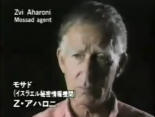
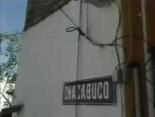
Z. Aharoni [Zvi Aharoni], Mossad (Israeli secret intelligence service): “We went to the house on Chacabuco Street (photo at right) simply to establish what sort of house it was and who lived there. But when we arrived, the house was completely empty, and a painter was painting the interior walls. If that German was Eichmann, I thought, he must have caught wind of us and fled.”
Eichmann had moved out of that house two weeks earlier. Zvi Aharoni began his relentless pursuit. Eventually he learned that Ricardo Klement lived on Garibaldi Street in the San Fernando district. Continuing his surveillance, Aharoni found enough matching characteristics to become certain that the German was Eichmann.
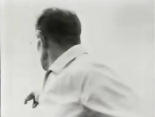
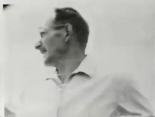
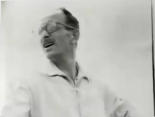
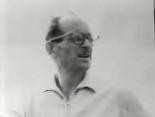
He contacted headquarters and recommended moving to the next stage. Four secretly taken photographs proved decisive in persuading headquarters to act.
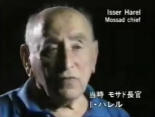
I. Harel [Isser Harel], then head of Mossad: “We never intended to kill Eichmann. We wanted to capture him and put him on trial in Israel.”
Mossad's Eichmann Operation
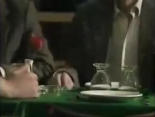
April 1960: the Eichmann operation began. Eleven Mossad agents arrived in Buenos Aires and started preparing to capture him. Operating in unfamiliar territory was no easy task even for them, but Eichmann, too, had no way of knowing they were closing in.
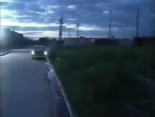
May 11, 1960, Garibaldi Street. Having thoroughly investigated Eichmann’s daily route, Mossad agents parked a car between the bus stop and his home and waited patiently for his return. That day Eichmann came home later than usual.
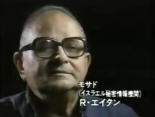
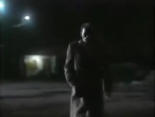
R. Eitan, Mossad (Israeli secret intelligence service): “Aharoni was the first to spot him. But then we noticed that Eichmann had his hand in his pocket. He might have a gun concealed there. That thought put us on our guard.”
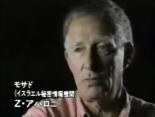
Z. Aharoni [Zvi Aharoni], Mossad (Israeli secret intelligence service): “When Eichmann approached, one of our men stepped in front of him. We wanted to speak to him first before seizing him. Eichmann ran, so we chased him. After three or four meters he fell into a ditch and cried out.”
R. Eitan, Mossad (Israeli secret intelligence service): “Then Eichmann cried out: ‘Urrgh!’ (Note: a somewhat muffled voice.) That was what it sounded like.”

Z. Aharoni [Zvi Aharoni], Mossad (Israeli secret intelligence service): “Eitan was still sitting in the back seat, so I shouted,‘Hurry up and help! There's no need to hide anymore!’ Then we pulled Eichmann out of the ditch and shoved him into the car.”
In a Buenos Aires café, Mossad chief Isser Harel awaited a report.
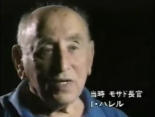
I. Harel [Isser Harel], then head of Mossad: “It was already around midnight when two of my men suddenly appeared at the café. They were visibly exhausted and their clothes were dirty. But the instant I saw their radiant expressions, I knew the operation had succeeded.”
An interrogation took place at the safe house. The central issue, of course, was the true identity of the man called Ricardo Klement.
Z. Aharoni [Zvi Aharoni], Mossad (Israeli secret intelligence service): “First I asked his name. The answer was Ricardo Klement. I asked further: what was your name before that? The answer was Otto Henning. That was indeed a name he had used, but we did not know it. At that rate, I thought we might never get him to admit he was Eichmann. So we asked many questions about Eichmann's personal characteristics: shoe size, neck size, clothing size, birthday, SS and Nazi identification numbers. Finally I asked: what was your name when you were born? He answered: Adolf Eichmann. He said it without any hesitation. It was the moment that could be called the ultimate climax of the operation.”
Trial and Death Sentence
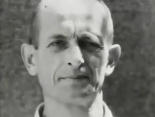
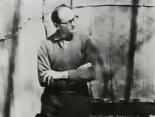
Abduction, detention, and trial.
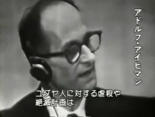
(Adolf Eichmann in court): "Let me state my opinion clearly. The massacres and plans to exterminate the Jews constitute a crime of almost unparalleled gravity in history."
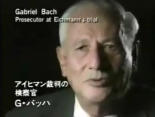
Eichmann trial prosecutor G. Bach [Gabriel Bach]: "I cannot believe that statement was Eichmann's true voice. Those words were simply an attempt to defend himself. They were certainly not his real feelings. I can say that with almost one hundred percent certainty."
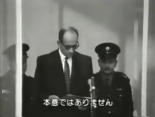
(Eichmann in court): "It was my misfortune. Carrying out such atrocities was not my wish."
But if ordered to do so.
(Voice of Eichmann [Argentina, 1956]) ‘If put in charge of a camp, one could hardly refuse. If ordered to kill Jews there, one would have no choice but to carry it out.’
Eichmann was sentenced to death for crimes against humanity and crimes against the Jewish people. He was executed on June 1, 1962. After his body was cremated, the ashes were scattered in the Mediterranean.
〈End〉