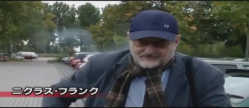
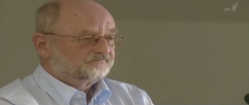
Niklas Frank
Hans Frank's Son
[Former East Germany]
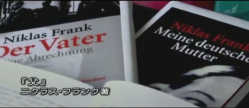
The Father, by Niklas Frank
Niklas Frank
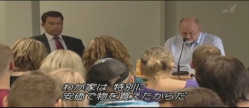
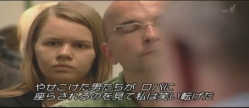
“My mother was grateful to Hitler, because our family could buy things unusually cheaply. I laughed helplessly at the sight of emaciated men being made to sit on donkeys. When the donkeys kicked up their hind legs, the men were thrown off.
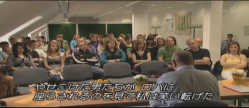
The men got up slowly. The Germans repeatedly made them sit down and slapped the donkey's rump. What a wonderful afternoon it was. I drank cocoa with the officers."
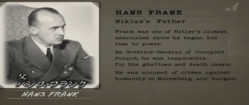
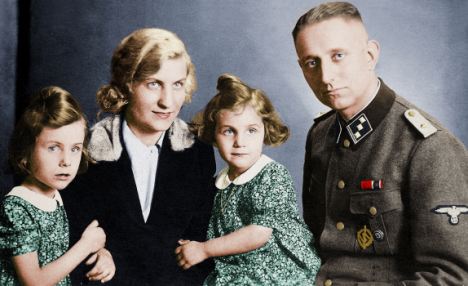
Niklas's father, Hans Frank, was a close confidant of Hitler. As governor-general of Nazi-occupied Poland, he oversaw ghettos and concentration camps. Tried at Nuremberg for crimes against humanity, he was hanged.
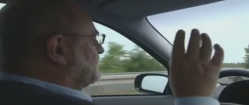
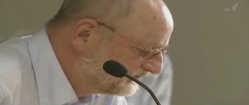
“For many years now, I have visited schools whenever invited. I read aloud from my writings criticizing my parents. It is meaningful time. At first the pupils are shocked, because I deliberately use foul language to condemn my father and teach them that there are people like me who cannot love their parents. I break a taboo. That is how I reach young people who love their parents and depend entirely on them. When I tell them frankly what my parents did, they understand that it is possible to be unable to love even one’s own parents. Of course, I am—a special case. I was born into the Frank family. People who deserve condemnation must be condemned, even if they are your own parents.”
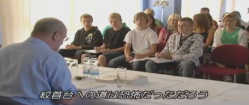
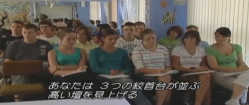
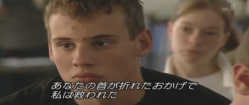
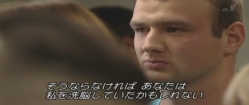
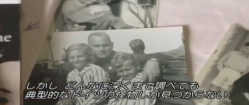
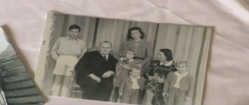
"—I imagined your death. The walk to the gallows must have been terrifying. Driven from one guard to the next, sweat running down your back to your buttocks. With chains around your ankles, you shuffle along. Then your arms are bound, as has been done since ancient times. You look up at the high platform with its three gallows.Beneath them are black curtains. Which curtain will conceal you? They make you climb thirteen steps, put a hood over your head and a rope around your neck. Because your neck broke, I was saved. Otherwise, you might have brainwashed me.I am fortunate to be able to find the remnants of your life in European and American archives. I can investigate without being misled by anyone's lies. Yet however deeply I search, all I find is a typical German monster."
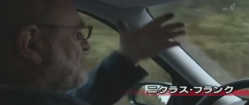
“It does not matter whether the audience is large or small. That is irrelevant. I read aloud again and again, even if it places a great burden on me. Every day, before many young and elderly people, I condemn my parents. I tell myself they deserve it. —I do not trust Germans, myself included. Once, after reading to a gathering of elderly people, I said, ‘It is wonderful that you have come to my reading. But frankly, I do not trust a single one of you. If the economic situation deteriorates, you may think as you did back then and follow a strong leader again. You may exclude ethnic minorities and imprison them. Who can say for certain that it will not happen? Even if concentration camps are not built, murders will occur here and there. That is how Germans will try to protect their own jobs. That is what I fear.’”
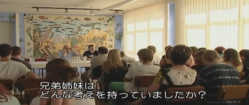
Student: “What did your brothers and sisters think?”
“There were five of us siblings, but my last surviving brother died this March. He alone supported me. Whenever I showed him my findings, he would say, ‘You have proved Father's crimes. Even so, I love Father.’
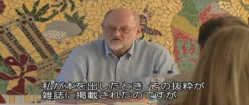
I had another older brother. When excerpts from my book appeared in a magazine, he immediately wrote to the editor: “My younger brother Niklas is a great liar. Not a word is true. He has always been the troublemaker in our family.”
One of my sisters often said, “I don't want to outlive Father.” He was forty-six when he was executed. My sister, named Brigitte like our mother, had cancer. Though she could have lived longer, she killed herself at forty-six.
My eldest sister emigrated to South Africa with her husband. She supported the apartheid regime. The last time I spoke to her on the telephone, I asked how she was, and she began saying this:‘If six million Jews were cremated—I calculated how long it would take to burn each one. The result was just 1.6 seconds. So it was all fabricated.’ That sister died in South Africa. And so I was left alone.”
Audience member: "I was moved to tears. Truly moved. ...I'm sorry. What happened in your childhood hurt you so deeply. Have your wife and children made up for that? Have you recovered what you lost long ago? Did they help you write the book? I would like to hear something positive at the end."
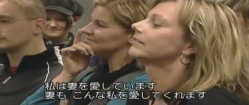
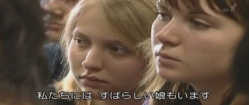
"I love my wife. My wife loves me, too, just as I am. We have a wonderful daughter. Unfortunately, she is our only child. She already has three children of her own.Our grandchildren visit often and sometimes turn into 'domestic terrorists.' Without them, I would probably be fatter. Even amid such happiness, deep down I am awarethat, although I know the commandment 'Honor your father and mother,' I simply cannot obey it. I keep my emotions under control at readings, so when they end,I feel relieved. Like any other child, I desperately wanted my parents' love. As I have for the past 30 years, I will keep searching for new facts.I cannot help it, because I hope to find even one positive fact about my father. That he saved someone's life, a Jew or a Pole... But I still have found nothing."